- Prices seen as falling through 2025 as wages, demand languish
由于工资和需求低迷,预计 2025 年物价将下跌 - Long-term deflation could be major setback to China’s economy
长期通货紧缩可能成为中国经济的重大挫折
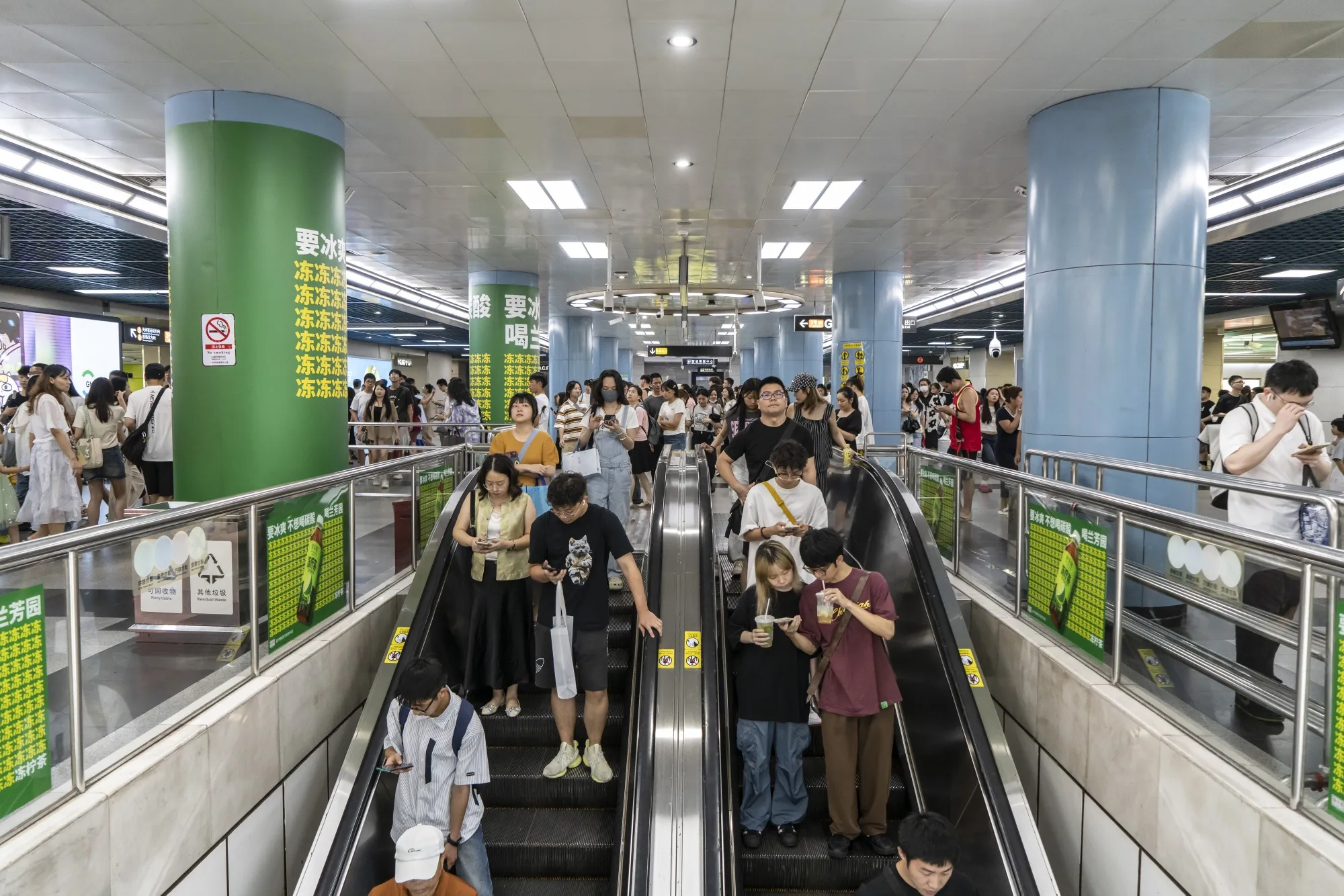
“We are definitely in deflation and probably going through the second stage of deflation.”
Photographer: Qilai Shen/Bloomberg 摄影师沈其来/彭博社
"我们肯定处于通货紧缩之中,而且可能正在经历通货紧缩的第二阶段"。
By Bloomberg News 作者:布隆伯格新闻 2024 年 9 月 9 日格林尼治标准时间+8 18:30
Deflation stalking China since last year is now showing signs of spiraling, threatening to worsen the outlook for the world’s second-largest economy and raising calls for immediate policy action.
自去年以来,通货紧缩一直困扰着中国,现在又出现了螺旋式上升的迹象,有可能使这个世界第二大经济体的前景恶化,并引发了立即采取政策行动的呼声。
Data released Monday confirmed that apart from food costs, consumer price growth barely registered in large swathes of the economy at a time when incomes are sagging.
周一公布的数据证实,除食品成本外,在收入减少的情况下,大部分经济体的消费价格几乎没有增长。
A broader measure of economy-wide prices known as the gross domestic product deflator will likely extend its current five-quarter drop into 2025, according to Bloomberg Economics and analysts at banks including BNP Paribas SA. That would amount to China’s longest streak of deflation since data began in 1993.
据彭博经济公司(Bloomberg Economics)和法国巴黎银行(BNPParibasSA)等银行的分析师称,被称为国内生产总值平减指数(Gross Domestic Product Deflator)的衡量整个经济价格的更广泛指标很可能会将目前连续五个季度的降幅延续到 2025 年。这将是中国自 1993 年有数据以来最长的连续通货紧缩。
“We are definitely in deflation and probably going through the second stage of deflation,” said Robin Xing, chief China economist at Morgan Stanley, citing evidence from wage decreases. “Experience from Japan suggests that the longer deflation drags on, the more stimulus China will eventually need to break the debt-deflation challenge.”
"摩根士丹利首席中国经济学家邢彦斌援引工资下降的证据说:"我们肯定处于通货紧缩之中,而且很可能正在经历通货紧缩的第二阶段。"日本的经验表明,通货紧缩拖得越久,中国最终将需要更多的刺激措施来打破债务-通货紧缩的挑战。"
China's Economy-Wide Prices in Longest Decline Since 1999
中国经济整体价格创 1999 年以来最长跌势
Broad measure of prices contracts for fifth straight quarter in 2Q 2024
2024 年第二季度广义价格连续第五个季度收缩

The danger for China is deflation could snowball by encouraging households reeling from falling paychecks to cut back on spending, or delay purchases because they expect prices to fall further. Corporate revenues will suffer, stifling investment and leading to further salary cuts and layoffs, bankrupting families and firms.
中国面临的危险是,通货紧缩可能会像滚雪球一样越滚越大,这将促使因工资下降而感到焦虑的家庭削减开支,或因预期价格会进一步下跌而推迟购买。企业收入将受到影响,从而抑制投资,导致进一步减薪和裁员,使家庭和企业破产。
Private surveys show that’s already starting to happen. In sectors of the economy favored by the government — such as electric vehicle-manufacturing and renewables — entry-level salaries declined by almost 10% in August from a peak in 2022, according to findings by Caixin Insight Group and Business Big Data Co.
民间调查显示,这种情况已经开始发生。根据财新洞察集团(Caixin Insight Group)和商业大数据公司(Business Big Data Co., Ltd.)的调查,在政府青睐的经济领域,如电动汽车制造和可再生能源,8 月份的入门级薪资比 2022 年的峰值下降了近 10%。
A survey of 300 company executives by the Cheung Kong Graduate School of Business showed growth in labor costs last month was the weakest since April 2020, when China’s initial Covid lockdowns began to ease.
长江商学院对 300 名公司高管进行的一项调查显示,上个月的劳动力成本增长是 2020 年 4 月以来最弱的,当时中国最初的 Covid 封锁开始缓解。
Economists See China's Deflation to Persist
经济学家认为中国通货紧缩仍将持续
GDP deflator, a broad measure of prices, have declined for five quarters
国内生产总值平减指数(衡量物价的广泛指标)已连续五个季度下降

It’s a cycle the world has seen before in Japan starting in the 1990s during a period that came to be known as its “lost decades” — when a grinding stagnation followed a burst bubble in real estate and financial markets.
从 20 世纪 90 年代开始,日本进入了一个被称为 "失去的十年 "的时期--房地产和金融市场泡沫破灭后出现了严重的停滞。
While Chinese officials have sought to stifle discussion about deflation, warning analysts to avoid using the term, it’s beginning to enter public dialogue. Former central bank Governor Yi Gang last week said rooting out deflation has to take priority for policymakers, a rare admission by a prominent figure in China that falling prices are threatening the outlook.
尽管中国官员一直试图扼杀有关通货紧缩的讨论,警告分析师避免使用这一术语,但通货紧缩已开始进入公众对话。前央行行长易纲上周表示,根除通货紧缩必须成为政策制定者的首要任务,这是中国知名人士罕见地承认物价下跌正在威胁经济前景。
Yi called for “proactive fiscal policy and accommodative monetary policy” and said officials “should focus on fighting deflationary pressure,” at a panel discussion at the Bund Summit in Shanghai on Friday. China’s immediate goal should be to turn its GDP deflator positive in the coming quarters, he said.
在周五于上海举行的外滩峰会小组讨论会上,易纲呼吁采取 "积极的财政政策和宽松的货币政策",并表示官员们 "应集中精力应对通货紧缩压力"。他说,中国的近期目标应该是在未来几个季度将国内生产总值平减指数转为正值。
So far, officials have given no sign of any significant shift from their cure-all of encouraging production rather than addressing weak demand with steps such as greater government spending on public services and consumer subsidies.
到目前为止,官员们还没有任何迹象表明,他们的万灵药已经发生了重大转变,即鼓励生产,而不是通过增加政府的公共服务支出和消费者补贴等措施来解决需求疲软的问题。

In a sign price pressures are becoming even more subdued, China’s core inflation — which strips out volatile items such as food and energy — cooled in August to the weakest in more than three years. Expectations for deflation are spilling into markets, stoking a bond rally that’s sent yields to record lows and stoked official concerns that banks have become too exposed to interest-rate risks.
中国的核心通胀(剔除食品和能源等波动较大的项目)在 8 月份降至三年多来最弱,这表明物价压力正变得更加低迷。对通货紧缩的预期正蔓延至市场,刺激债券反弹,使收益率跌至纪录低点,并加剧了官方对银行过于暴露于利率风险的担忧。
The weak price pressures are evident in the growth pace of China’s nominal GDP, which expanded just 4% in the second quarter — well under the nation’s real economic growth goal of around 5% this year.
中国名义国内生产总值(GDP)在第二季度仅增长了4%,远远低于中国今年 5%左右的实际经济增长目标。
At times of weak price gains, nominal expansion is a more useful indicator because it better reflects changes in wages, profits and government revenue, Luo Zhiheng, chief economist at Yuekai Securities Co., wrote in a note earlier this month.
岳凯证券公司(Yuekai Securities Co., Ltd.)首席经济学家罗志恒在本月早些时候的一份报告中写道,在物价上涨乏力的时候,名义扩张是一个更有用的指标,因为它能更好地反映工资、利润和政府收入的变化。

For Jack Liu, a 37-year-old sales engineer of aluminum products in southern China, the impact hit home after realizing he no longer ordered extra eggs at breakfasts.
对于 37 岁的中国南方铝制品销售工程师杰克-刘(Jack Liu)来说,当他意识到自己不再在早餐中多点鸡蛋后,这种影响就深入人心了。
Plummeting market demand forced his company to cut prices and sell at a loss last year. That slashed his income to less than a 10th of what once exceeded 1 million yuan ($141,000), making mortgage payments a struggle.
市场需求的急剧下降迫使他的公司去年不得不降价销售,并出现亏损。这使他的收入锐减到不足曾经超过 100 万元人民币(14.1 万美元)的十分之一,还贷也变得十分困难。
“The country doesn’t admit there’s deflation,” said Liu, who lives in Foshan in Guangdong province. He has a modest following of 1,100 people on the Instagram-like Xiaohongshu, where he warns regularly about the danger of deflation.
"住在广东佛山的刘先生说:"国家不承认存在通货紧缩。他在类似 Instagram 的小红书网站上有 1100 名粉丝,他经常在上面警告通货紧缩的危险。
The speed of the deterioration in China’s price outlook has taken the market by surprise.
中国物价前景恶化的速度之快令市场措手不及。
Inflation was weaker than forecast in three of the past four months, growing just 0.6% in August — an increase due largely to a 2.8% pickup in food prices. Core inflation last month rose just 0.3% to remain below 1% for an 18th month.
过去四个月中有三个月的通胀率低于预期,8 月份仅增长了 0.6%,这主要是由于食品价格上涨了 2.8%。上个月的核心通胀率仅上升了 0.3%,连续第 18 个月保持在 1%以下。
Underscoring the drag on inflation, producer prices have been falling since late 2022. Manufacturers’ raw material and selling prices both contracted for the second month in August, official data shows, while charges by services and construction companies shrank at the fastest pace since April 2020.
自 2022 年底以来,生产者价格一直在下降,这凸显了通胀的拖累。官方数据显示,制造商的原材料和销售价格在 8 月份连续第二个月收缩,而服务和建筑公司的收费则以 2020 年 4 月以来最快的速度缩减。
The dilemma is that even monetary expansion in China could be deflationary by being mainly directed at the supply side of the economy, Michael Pettis, a senior fellow at the Carnegie Endowment for International Peace, wrote in an article last month.
卡内基国际和平基金会(Carnegie Endowment for International Peace)高级研究员迈克尔-佩蒂斯(Michael Pettis)在上个月的一篇文章中写道,中国面临的困境是,即使货币扩张主要针对经济的供应方,也可能导致通货紧缩。
Meanwhile, the deflationary mindset is starting to take hold. Consumer confidence is hovering at a record low, and households report a growing willingness to save instead of spending or buying homes.
与此同时,通货紧缩的心态开始占据上风。消费者信心徘徊在历史最低点,家庭越来越愿意储蓄而不是消费或买房。
For Liu, the aluminum industry worker, as the pain deepens, the solution lies with policymakers in Beijing. “The government needs to at least take some concrete measures,” he said, “to lift consumption and improve people’s expectations.”
对于铝业工人刘来说,随着痛苦的加深,解决之道在于北京的决策者。"他说:"政府至少需要采取一些具体措施,""拉动消费,改善人们的预期。