Robotics has catapulted Beijing into a dominant position in many industries
机器人技术使北京在许多行业占据主导地位
Matt Oliver 马特·奥利弗Industry Editor 行业编辑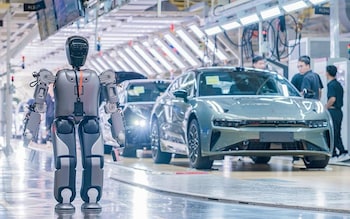
12 October 2025 1:00pm BST
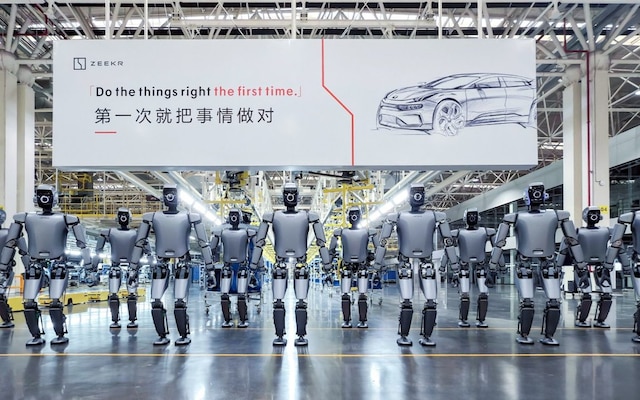
Pictured: ZEEKR’s Intelligent Factory in Ningbo, China. The country is now viewed as a leader in advanced robotics
图为 ZEEKR 位于中国宁波的智能工厂。中国目前被视为先进机器人技术的领导者。
“It’s the most humbling thing I’ve ever seen,” said Ford’s chief executive about his recent trip to China.
“这是我见过的最令人谦卑的事情,”福特首席执行官在谈到他最近的中国之行时说道。
After visiting a string of factories, Jim Farley was left astonished by the technical innovations being packed into Chinese cars – from self-driving software to facial recognition.
在参观了一系列工厂后,吉姆·法利对中国汽车所采用的技术创新感到惊讶——从自动驾驶软件到面部识别。
“Their cost and the quality of their vehicles is far superior to what I see in the West,” Farley warned in July.
法利在七月份警告称:“他们的成本和车辆质量远远优于我在西方看到的车辆。”
“We are in a global competition with China, and it’s not just EVs. And if we lose this, we do not have a future at Ford.”
“我们正与中国进行全球竞争, 而且不仅仅是电动汽车 。如果我们输掉这场竞争,福特就没有未来了。”
The car industry boss is not the only Western executive to have returned shaken following a visit to the Far East.
这位汽车业巨头并不是唯一一位在访问远东后感到震惊的西方企业高管。
Andrew Forrest, the Australian billionaire behind mining giant Fortescue – which is investing massively in green energy – says his trips to China convinced him to abandon his company’s attempts to manufacture electric vehicle powertrains in-house.
矿业巨头 Fortescue 的澳大利亚亿万富翁安德鲁·福雷斯特 (Andrew Forrest) 表示,中国之行让他放弃了公司内部生产电动汽车动力系统的尝试。Fortescue 正在大力投资绿色能源。
“I can take you to factories [in China] now, where you’ll basically be alongside a big conveyor and the machines come out of the floor and begin to assemble parts,” he says.
“我现在可以带你去(中国的)工厂,你基本上会站在一个大型传送带旁边,机器从地板上出来,开始组装零件,”他说。
“And you’re walking alongside this conveyor, and after about 800, 900 metres, a truck drives out. There are no people – everything is robotic.”
“你沿着传送带走,走了大概八九百米,一辆卡车就开出来了。里面没有人——一切都是机器人。”
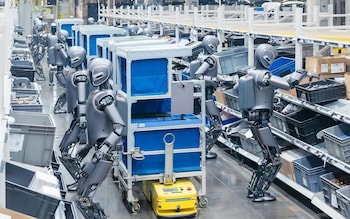
Other executives describe vast, “dark factories” where robots do so much of the work alone that there is no need to even leave the lights on for humans.
其他高管描述了巨大的“黑暗工厂”,其中机器人独自完成了大量工作,甚至不需要为人类开灯。
“We visited a dark factory producing some astronomical number of mobile phones,” recalls Greg Jackson, the boss of British energy supplier Octopus.
英国能源供应商 Octopus 的老板格雷格·杰克逊回忆道:“我们参观了一家生产大量手机的黑暗工厂。”
“The process was so heavily automated that there were no workers on the manufacturing side, just a small number who were there to ensure the plant was working.
“该过程高度自动化,制造方面没有工人,只有少数人负责确保工厂正常运转。
“You get this sense of a change, where China’s competitiveness has gone from being about government subsidies and low wages to a tremendous number of highly skilled, educated engineers who are innovating like mad.”
“你会感觉到一种变化,中国的竞争力已经不再依赖于政府补贴和低工资,而是依赖于大量疯狂创新的高技能、高学历的工程师。”
High-tech transformation 高科技转化
It’s also a far cry from the cheap “Made in China” goods that many Westerners have associated with the “workshop of the world” in the past, underscoring how much cash has been poured into upgrading China’s industrial processes.
这也与过去许多西方人将廉价的“中国制造”与“世界工厂”联系起来的商品相去甚远,凸显了中国在升级工业流程方面投入了多少资金。
Far from being focused on low-quality products, China is now viewed as a leader in rapidly-growing, high-value technologies such as electric vehicles (EVs), batteries, solar panels, wind turbines, drones and advanced robotics.
中国不再专注于低质量产品,而是被视为电动汽车、电池、太阳能电池板、风力涡轮机、无人机和先进机器人等快速增长的高价值技术领域的领导者。
A big part of that transformation is down to the country’s focus on automation – which has been encouraged by the ruling communist government and heavily supported with state subsidies, grants and local government policies.
这种转变很大程度上归功于该国对自动化的关注——执政的共产党政府鼓励自动化,并给予国家补贴、拨款和地方政府政策的大力支持。
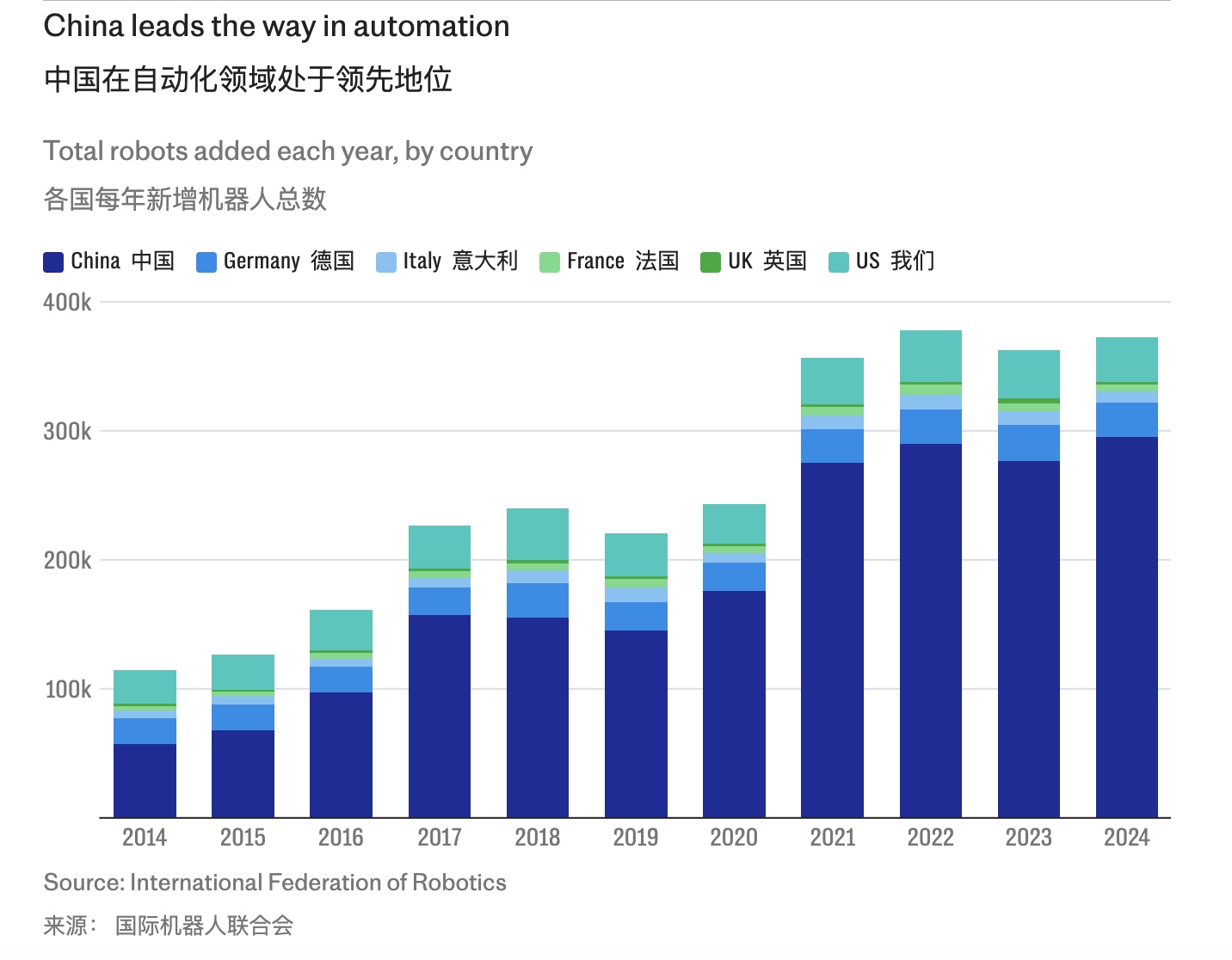
Figures recently released by the International Federation of Robotics (IFR) show this has led to a dramatic and high-tech transformation of China’s industrial base over the past 10 years.
国际机器人联合会(IFR)最近发布的数据显示,过去 10 年来,这推动了中国工业基础的巨大转型和高科技转型。
Between 2014 and 2024, the number of industrial robots deployed in the country rocketed from 189,000 to more than two million.
2014年至2024年间,中国工业机器人部署数量将从18.9万台飙升至200多万台。
These can typically include everything from robot arms used for welding, assembly and loading, spider robots used for high-speed “pick and place” movements and overhead gantry robots for precision tasks such as 3D printing.
这些通常包括用于焊接、组装和装载的机械臂、用于高速“拾取和放置”运动的蜘蛛机器人以及用于 3D 打印等精密任务的高架龙门机器人。
The overall number of robots added in China last year was 295,000, compared to 27,000 in Germany, 34,000 in the US and just 2,500 in the UK.
去年中国新增机器人数量为 295,000 台,而德国为 27,000 台,美国为 34,000 台,英国仅为 2,500 台。
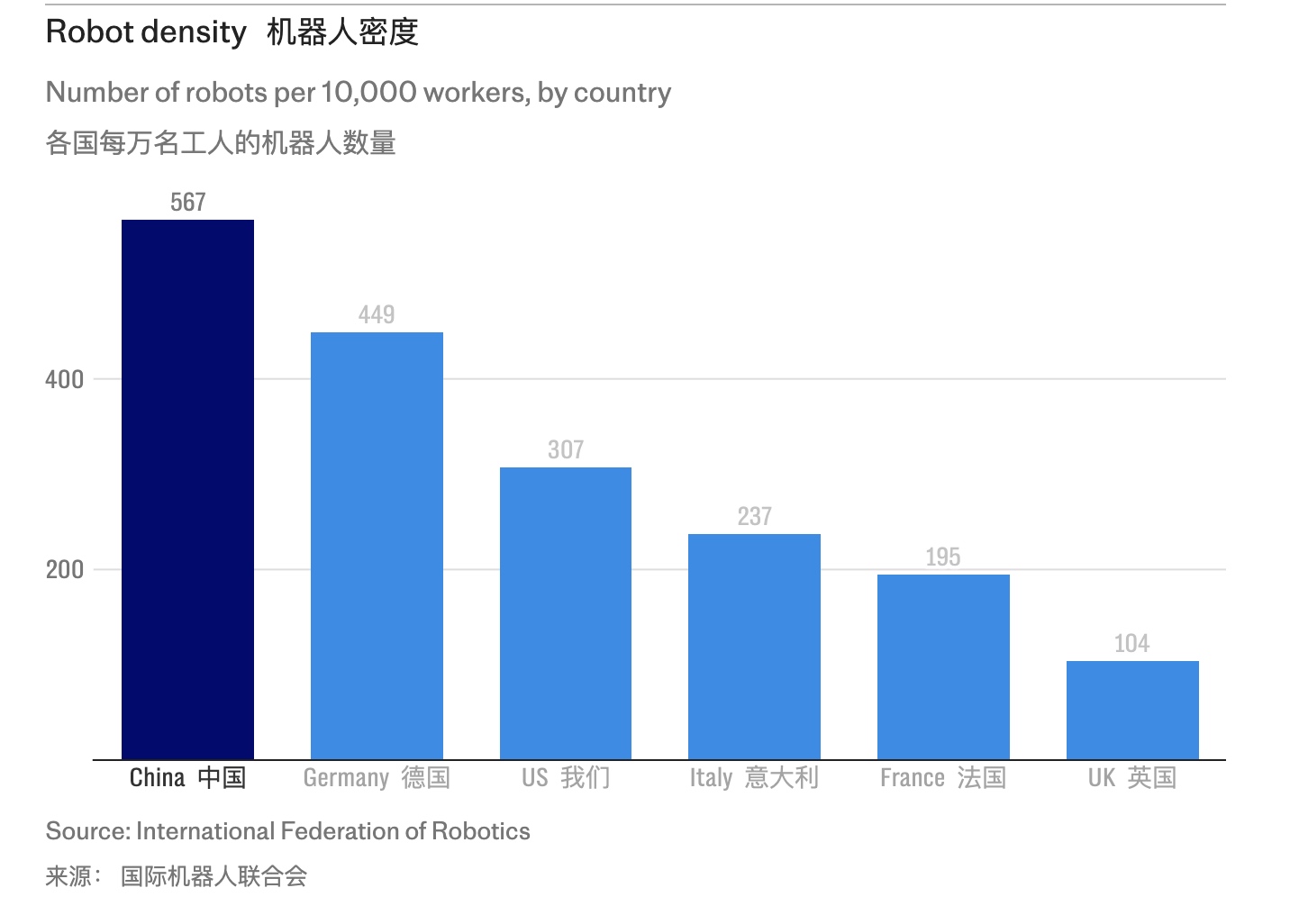
And while it would be easy to put this disparity down to population size alone, China also blows its western rivals out of the water when it comes to robot density. It now boasts 567 robots for every 10,000 manufacturing workers, compared to 449 for Germany, 307 for the US and 104 in the UK.
虽然人们很容易将这种差距仅仅归咎于人口规模,但在机器人密度方面,中国也远远超过了西方竞争对手。目前,中国每10,000名制造业工人就拥有567台机器人,而德国为449台,美国为307台,英国为104台。
More automation is seen by many as good for productivity, the all-important measure of how much an economy gets out of what it puts in.
许多人认为,自动化程度的提高有利于提高生产率,而生产率是衡量一个经济体投入产出比的重要指标。
Many analysts also note that China’s growing share of worldwide manufacturing gives it increasing leverage over global supply chains – and would make it a formidable opponent in a war.
许多分析人士还指出,中国在全球制造业中所占的份额不断增长,使其在全球供应链中拥有越来越大的影响力,并可能使其成为战争中一个强大的对手 。
But alongside Beijing’s stated desire to dominate industries of the future, Rian Whitton, an expert at Bismarck Analysis, says increased automation is also an attempt to mitigate the impact of the country’s ageing population.
但除了北京方面宣称希望主导未来产业之外,俾斯麦分析公司的专家里安·惠顿表示,提高自动化程度也是为了减轻中国人口老龄化的影响。
“China has quite a notable demographic problem but its manufacturing is, generally, quite labour-intensive,” he says.
他说:“中国存在相当明显的人口问题,但其制造业总体上是劳动密集型的。”
“So in a pre-emptive fashion, they want to automate it as much as possible, not because they expect they’ll be able to get higher margins – that is usually the idea in the West – but to compensate for this population decline and to get a competitive advantage.”
“因此,他们想先发制人地尽可能地实现自动化,这并不是因为他们期望能够获得更高的利润——这通常是西方的想法——而是为了弥补人口下降并获得竞争优势。”
As part of its so-called Made in China programme, local authorities have offered large tax breaks that reimburse firms for a fifth of their spending on industrial robots. This is under a policy known as “jiqi huanren” – which translates to “replacing humans with machines”.
作为“中国制造”计划的一部分,地方政府提供了巨额税收减免,为企业提供五分之一的工业机器人支出补贴。这项名为“机器换人”的政策,意为“用机器代替人类”。
Western manufacturers in trouble
西方制造商陷入困境
But this technology, coupled with the vast output of Chinese manufacturers, spells serious trouble for traditional Western brands.
但这项技术,加上中国制造商的巨大产量,给传统的西方品牌带来了严重的麻烦。
The most visible sign of this upheaval is on our roads, where Chinese-made electric and hybrid cars are taking a growing share of sales.
这种变革最明显的标志就是我们的道路, 中国制造的电动和混合动力汽车占据了越来越大的销售份额。
In Britain, Shenzhen-based BYD multiplied its September sales by a factor of 10 this year – overtaking far more established brands such as Mini, Renault and Land Rover.
在英国,总部位于深圳的比亚迪今年 9 月份的销量增长了 10 倍,超过了 Mini、雷诺和路虎等更知名的品牌。
But unlike the “tragic” cars once mocked by Jeremy Clarkson and his colleagues on Top Gear, BYD’s recent efforts have been praised for both their low prices and their well-appointed interiors.
但与杰里米·克拉克森及其同事在《Top Gear》节目中嘲笑的“悲剧”汽车不同,比亚迪最近的努力因其低廉的价格和精良的内饰而受到称赞。
“The most striking thing about their automotive industry is the pace and the speed with which it operates,” says Mike Hawes, the chief executive of the Society of Motor Manufacturers and Traders (SMMT).
英国汽车制造商和贸易商协会 (SMMT) 首席执行官迈克·霍斯 (Mike Hawes) 表示:“他们的汽车行业最引人注目的是其运作的速度和节奏。”
“They can develop and execute models in probably half of the time most European car makers can.”
“他们开发和执行车型的时间大概是大多数欧洲汽车制造商的一半。”
Sander Tordoir, the chief economist at the Centre for European Reform, a think tank, says Europe and Britain must try to boost their own deployment of robotics if they want to keep up with the pace of innovation in China – while also keeping their manufacturing industries alive.
智库欧洲改革中心首席经济学家桑德·托尔多尔表示,如果欧洲和英国想要跟上中国的创新步伐,同时保持其制造业的活力,就必须努力推动自身机器人技术的部署。

‘Robotics, if deployed well, can lift economic productivity greatly,’ says the chief economist at the Centre for European Reform
欧洲改革中心首席经济学家表示,“如果部署得当,机器人技术可以大大提高经济生产力。”
“Robotics, if deployed well, can lift the productivity of your economy greatly. And if China is extremely good at it, then we should try to catch up because, like China, a lot of Europe is ageing,” he says.
“如果机器人技术应用得当,可以大幅提升经济生产力。如果中国在这方面做得非常好,那么我们应该努力迎头赶上,因为和中国一样,欧洲很多国家也正在步入老龄化。”他说道。
“The second reason to care is because the robotics sector is high value and has spillovers for the military industrial sector, so the fact that China may be ahead is also significant from a security standpoint.
“值得关注的第二个原因是,机器人行业价值很高,并且对军事工业领域具有溢出效应,因此从安全角度来看,中国可能处于领先地位也具有重要意义。
“I think the debate is about how to use industrial policy to build competitive markets, and that will inevitably include some support to offset China’s distortions and advantages, which are not all market-driven.”
“我认为争论的焦点是如何利用产业政策来建立竞争性市场,这必然会包括一些支持措施来抵消中国的扭曲和优势,而这些扭曲和优势并非全部由市场驱动。”
Britain is falling behind
英国正在落后
The risk, however, is that “we don’t create the new, or we trap workers in the old instead of trying to leap forward,” Tordoir warns, pointing to the tendency of politicians to prevent ageing steel and car factories from closing instead of encouraging the creation of newer, high-tech jobs for workers to move to.
然而,风险在于“我们没有创造新事物,或者我们让工人陷入旧境地而不是努力向前迈进”,托尔多尔警告说,他指出,政客们倾向于阻止老化的钢铁厂和汽车厂关闭,而不是鼓励为工人创造更新的高科技工作岗位。
But Britain’s record on robots is poor and it has struggled to add more than a few thousand per year, despite already having less than half as many as France.
但英国在机器人方面的记录很差,尽管英国的机器人数量还不及法国的一半,但每年新增机器人数量仍难以超过几千台。
Last year, UK robot additions fell by 35pc.
去年,英国机器人数量下降了35%。
Whitton, at Bismarck Analysis, argues that Britain, which has lagged other countries in productivity growth, should focus on trying to improve its competitiveness by incentivising the adoption of more robotics as well as machine tools.
俾斯麦分析公司的惠顿认为,生产力增长落后于其他国家的英国应该致力于通过鼓励采用更多的机器人和机床来提高其竞争力。
He says this would have a bigger impact than past tax-breaks designed to boost research and development spending and plant machinery adoption.
他说,这将比过去旨在促进研发支出和工厂机械采用的税收减免产生更大的影响。
“It doesn’t appear that dilly dallying around tax changes is doing a hell of a lot,” says Whitton.
惠顿表示:“看起来,在税收改革问题上犹豫不决并没有起到多大作用。”
“But I see the Government throwing billions of pounds each year at completely speculative rubbish like green hydrogen or to fulfil renewable [energy] obligations contracts and I just think, ‘Well, why not five billion a year in grants for capital equipment?
“但我看到政府每年向绿色氢能等完全投机性的垃圾项目或履行可再生能源义务合同投入数十亿英镑,我就想,‘好吧,为什么不每年拨款 50 亿英镑用于资本设备呢?
“That would arguably get a bigger bang for our buck than a lot of the energy-related industrial policies we pursue.”
“这无疑比我们推行的许多能源相关产业政策更能带来效益。”
Counter-intuitively, Whitton says countries which had more automation during the first “China shock” of the 2000s – which flooded the world with cheap goods – managed to hold on to a greater share of industrial jobs.
与直觉相反,惠顿表示,在21世纪初第一次“中国冲击”期间,那些自动化程度更高的国家——廉价商品涌入世界——成功地保住了更多的工业就业岗位。
“People talk a lot about how automation will lead to job losses,” he adds. “But actually, the job losses are going to be disproportionately in the countries that don’t automate.”
“人们经常谈论自动化将如何导致失业,”他补充道,“但实际上,在那些尚未实现自动化的国家,失业人数将更加严重。”
In other words, failing to modernise will almost certainly lead to more dark factories in the West. But the kind where no work at all is happening.
换句话说,如果不能实现现代化,西方几乎肯定会出现更多“黑暗工厂”,而且是那种根本没有任何生产活动的工厂。