- Chinese equities trail global ones for a fourth year running中国股市连续第四年落后全球股市
- CSI 300 Index is near the lowest level since early 2019沪深300指数接近2019年初以来最低水平
By Abhishek Vishnoi and Winnie Hsu作者:Abhishek Vishnoi 和 Winnie Hsu
2024年9月10日 at GMT+8 10:21
A deepening selloff in Chinese stocks is exacerbating a crisis of confidence in the world’s second-largest economy, heaping pressure on policymakers to halt the downward spiral.中国股市的深度抛售正在加剧世界第二大经济体的信心危机,给政策制定者带来了阻止经济螺旋式下滑的压力。
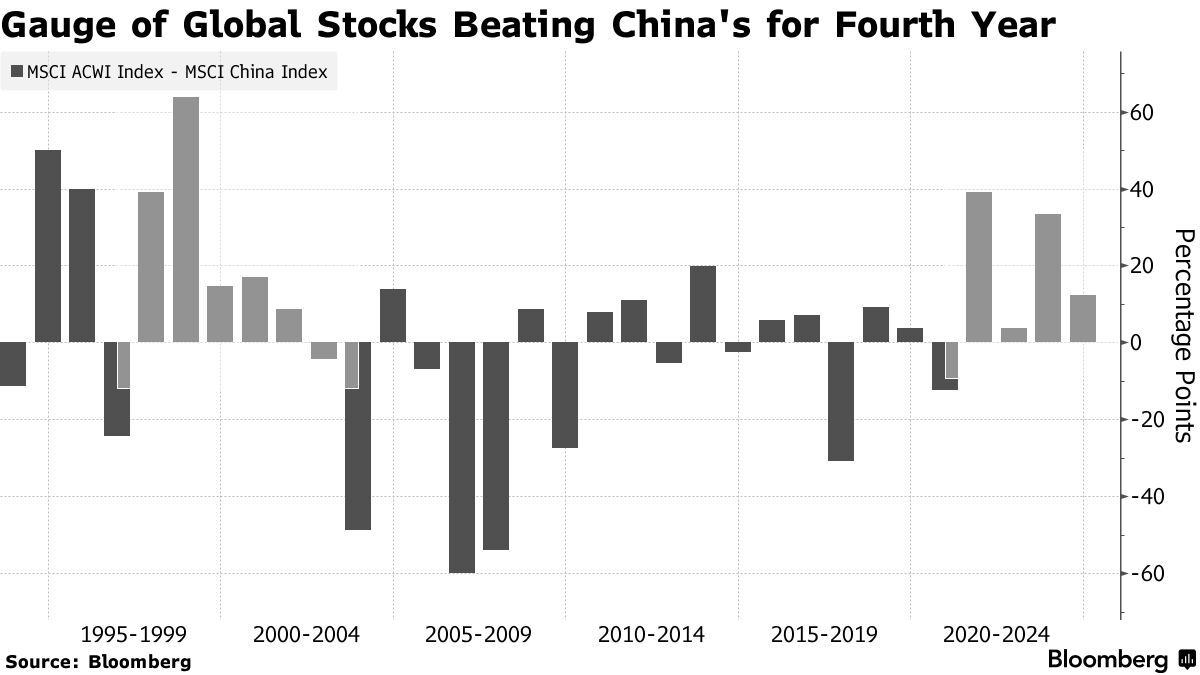
A benchmark index of the nation’s onshore shares is near the lowest levels since January 2019, yet another reflection of the depth of the market gloom. Down almost 7% this year, the CSI 300 Index is staring at an unprecedented fourth annual drop, while an MSCI Inc. gauge of Chinese stocks is heading for its longest stretch of underperformance versus global equities since the turn of the century.中国境内股票基准指数接近 2019 年 1 月以来的最低水平,这再次反映了市场低迷的程度。沪深300指数今年下跌近7%,正面临史无前例的第四次年度下跌,而摩根士丹利资本国际公司(MSCI Inc.)对中国股市的衡量标准正面临世纪之交以来与全球股市相比最长的一段表现不佳的时期。
Selling pressure is mounting as China’s property crisis drags down consumer spending and geopolitical tensions simmer before US elections in November. The risk for Xi Jinping’s government is that the market slump further erodes confidence among consumers and businesses, spurring a deflationary feedback loop for the economy. That’s one reason why state-backed funds have spent billions of dollars trying to prop up stock prices, to little avail.随着中国房地产危机拖累消费者支出,以及 11 月美国大选前地缘政治紧张局势加剧,抛售压力不断加大。习近平政府面临的风险是,市场低迷进一步削弱消费者和企业的信心,引发经济的通货紧缩反馈循环。这就是为什么国家支持的基金花费数十亿美元试图支撑股价但收效甚微的原因之一。
While investors have urged authorities to roll out more forceful economic stimulus, Beijing has so far shown no appetite for the kind of big bang measures that helped revived the economy and stock markets in past cycles.尽管投资者敦促当局推出更有力的经济刺激措施,但迄今为止,北京方面对过去周期中帮助经济和股市复苏的大规模措施没有表现出兴趣。

“It’s been an amazingly bad period for markets — the problem is the economy is in a worse place than I thought six months ago,” Ron Temple, chief market strategist at Lazard Asset Management, said in a Monday interview in London. “The longer the government refuses to create any major demand stimulus, the longer the consumer confidence damage will persist, and the harder it will be to resolve.”拉扎德资产管理公司(Lazard Asset Management)首席市场策略师罗恩·坦普尔(Ron Temple)周一在伦敦接受采访时表示:“对市场来说,这是一个极其糟糕的时期——问题是经济状况比我六个月前想象的还要糟糕。” “政府拒绝制定任何重大需求刺激措施的时间越长,消费者信心受损的持续时间就越长,解决起来就越困难。”
It’s not that policymakers haven’t acted to fix the problems. Just this year, state funds are estimated to have purchased around $66 billion worth of exchange-traded funds to prop up stocks through mid-August. Restrictions have been tightened over quant trading and short selling in a bid to reduce volatility, while companies are urged to boost buybacks and dividend payouts. In February, China replaced the head of its securities regulator in a surprise move.这并不是说政策制定者没有采取行动解决这些问题。仅今年,截至 8 月中旬,国家基金估计已购买了价值约 660 亿美元的交易所交易基金,以支撑股市。为了减少波动性,对量化交易和卖空的限制已收紧,同时敦促企业增加回购和股息支付。今年二月,中国出人意料地更换了证券监管机构负责人。
For investors, however, the measures have been underwhelming. And China doesn’t seem willing to pursue a different economic track that will empower businesses. The risk is that the stock market will be stuck in a limbo as China enters an era of slow growth, lacking the vigor of an emerging market and the stability of a developed one.然而,对于投资者来说,这些措施并没有给人留下深刻印象。中国似乎并不愿意走一条赋予企业权力的不同经济轨道。风险在于,随着中国进入低增长时代,缺乏新兴市场的活力和发达市场的稳定性,股市将陷入困境。
China’s poor performance is in stark contrast to a bull run in global stocks this year, underscoring investors’ skepticism towards Xi’s vision of China. The CSI 300 is now close to levels seen in early 2019, whereas benchmarks in the US, Japan and India have nearly — or more than — doubled their levels during this period. Increased state control over private businesses and growing trade rifts as China seeks industrial self-sufficiency are among the fundamental causes that have made the nation’s stocks unpalatable for many.中国的糟糕表现与今年全球股市的牛市形成鲜明对比,凸显了投资者对习近平的中国愿景的怀疑。沪深 300 指数目前接近 2019 年初的水平,而美国、日本和印度的基准指数在此期间几乎或超过两倍。随着中国寻求工业自给自足,国家对私营企业的控制不断加强,贸易裂痕日益扩大,这些都是导致中国股市对许多人来说难以接受的根本原因。

In all, about $6.5 trillion has been wiped out from the market value of Chinese and Hong Kong stocks since a peak reached in 2021. That’s almost equal to the size of Japan’s equity market. On Tuesday, the CSI 300 index fell as much as 0.7% before recovering to finish 0.1% higher as data showed exports unexpectedly accelerated in August. The gauge is down almost 4% in September after a four-month losing streak.自2021年达到峰值以来,中国内地和香港股市的市值总共蒸发了约6.5万亿美元。这几乎相当于日本股市的规模。周二,沪深 300 指数一度下跌 0.7%,随后因数据显示 8 月份出口意外加速而回升,收盘上涨 0.1%。在连续四个月下跌之后,该指数在 9 月份下跌了近 4%。
While there have been a few rebounds over the past several years, most have flopped in a matter of weeks as the grim economic reality hit home. There were hopes that things might be different this year as Chinese benchmarks advanced from February through mid-May. That has proved to be another false dawn as economic weakness persisted and earnings failed to recover.尽管过去几年出现了一些反弹,但随着严峻的经济现实的打击,大多数都在几周内崩溃了。随着中国基准指数从 2 月持续到 5 月中旬,人们希望今年情况可能会有所不同。事实证明,这又是一个虚假的曙光,因为经济持续疲软,盈利未能恢复。
Earnings per share for the MSCI China Index fell 4.5% from a year earlier in the second quarter, the worst performance in five quarters, according to data from Bloomberg Intelligence.彭博资讯(Bloomberg Intelligence)的数据显示,第二季度MSCI中国指数每股收益同比下降4.5%,为五个季度以来最差表现。
“The China and Hong Kong investors I know are so disappointed, they are cutting down their already low exposure, feeling hopeless,” said Steven Leung, executive director at UOB Kay Hian Hong Kong Ltd, who’s been covering the market for 30 years. “Quantitative easing-type government liquidity is the only way out.”“我认识的中国大陆和香港投资者非常失望,他们正在削减本已很低的风险敞口,感到绝望,”大华继显香港有限公司执行董事史蒂文·梁(Steven Leung)表示,他已经在市场上工作了30年。 “量化宽松式的政府流动性是唯一的出路。”
The latest economic data released from China have intensified such concerns. Deflation stalking China since last year is showing signs of spiraling, with expectations that a broader measure of economy-wide prices known as the gross domestic product deflator will likely extend its current five-quarter drop into 2025. The danger is deflation could snowball by encouraging households to cut back on spending, or delay purchases because they expect prices to fall further. Corporate revenues will suffer, leading to further salary cuts and layoffs.中国公布的最新经济数据加剧了这种担忧。自去年以来困扰中国的通货紧缩正显示出螺旋式上升的迹象,人们预计,被称为国内生产总值平减指数的更广泛的整体经济价格衡量指标可能会将目前五个季度的跌幅延续到 2025 年。家庭削减开支或推迟购买,因为他们预计价格会进一步下跌。企业收入将受到影响,导致进一步减薪和裁员。
A growing number of Wall Street analysts are predicting China may miss its economic growth goal of about 5% this year. While that may alarm Beijing, policymakers appear to be in a bind.越来越多的华尔街分析师预测中国今年可能无法实现约5%的经济增长目标。尽管这可能会让北京感到震惊,但政策制定者似乎陷入了困境。
The People’s Bank of China is wary of cutting interest rates aggressively and further widening the gap with US rates, which would add depreciation pressure on the yuan. President Xi’s focus on the quality of growth has also seen Chinese officials hold off on aggressive stimulus moves. After a deleveraging push to deflate a property bubble led to the current crisis and scores of defaults among developers, authorities are reluctant to dramatically shift tack lest it builds up unwanted leverage.中国人民银行对大幅降息和进一步扩大与美国利率差距持谨慎态度,这将增加人民币贬值压力。习近平主席对增长质量的关注也导致中国官员推迟了激进的刺激举措。在为抑制房地产泡沫而采取的去杠杆化行动导致当前的危机和开发商的大量违约之后,当局不愿大幅改变策略,以免积累不必要的杠杆。
“The market has been looking for a policy boost, but policy has been coming at piecemeal pace. It’s like putting a patient on life support not performing a desperately needed surgery,” said Hao Hong, chief economist for Grow Investment Group. “To instill confidence back into the economy, the government should stop all market-interfering activities, and let the market and people do their work.”“市场一直在寻求政策提振,但政策的出台步伐是零碎的。这就像让病人依靠生命维持系统而不是进行急需的手术一样,”Grow Investment Group 首席经济学家洪浩表示。 “为了给经济重拾信心,政府应该停止一切干扰市场的活动,让市场和人民发挥作用。”