The country was once the model of capitalist decline. But those recessionary decades are finally over. Where will Tokyo flex its muscles?
该国曾是资本主义衰落的典范。但这几十年的衰退终于结束了。东京将在哪里大展拳脚?
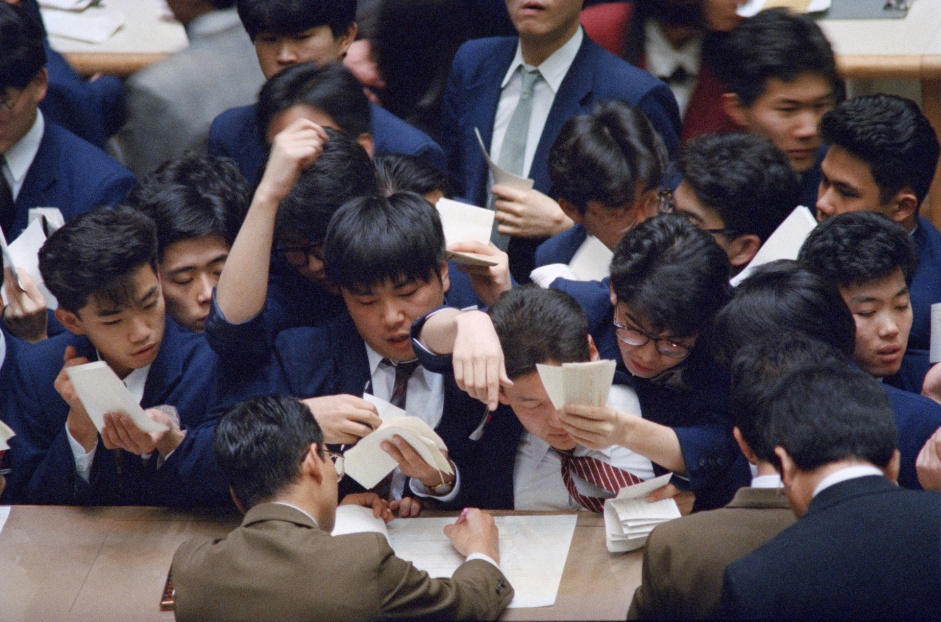
Losing it: Japanese traders in January 1990 as the bubble started to burst. Photographer: Bon Ishikawa/AFP/Getty Images
损失惨重:1990 年 1 月,泡沫开始破灭时的日本交易员:Bon Ishikawa/法新社/盖蒂图片社
2024 年 4 月 25 日格林尼治标准时间+8 03:00

By Gearoid Reidy 作者:Gearoid Reidy
Gearoid Reidy is a Bloomberg Opinion columnist covering Japan and the Koreas. He previously led the breaking news team in North Asia, and was the Tokyo deputy bureau chief.
Gearoid Reidy 是彭博社的观点专栏作家,主要报道日本和朝鲜问题。他曾领导北亚突发新闻团队,并担任东京分社副社长。
When I moved to Japan, the country was searching for a way out of a long era of economic decline. The Japanese had called it ushinawareta junen — the Lost Decade. But they were wrong. The first Lost Decade would become a second, and then a third. In 2003, during the overlong rainy season when I arrived, the gloom refused to dissipate. About 13 years earlier, on Dec. 29, 1989, the economy had reached a historic peak when the Nikkei 225 Stock Average hit a high of 38,915.87 points. But since then, the downturn would not be banished — much like the stifling low-pressure front that hung over Tokyo when I made my way into the largest metropolis on earth.
我搬到日本时,日本正在寻找摆脱长期经济衰退的出路。日本人称之为 "失去的十年"(ushinawareta junen)。但他们错了。第一个 "失去的十年 "变成了第二个,然后是第三个。2003 年,在我抵达时正值漫长的雨季,阴霾仍未消散。大约 13 年前,也就是 1989 年 12 月 29 日,日经 225 指数创下了 38,915.87 点的历史新高,经济达到了顶峰。但从那时起,经济衰退就再也没有消失过--就像我来到这个地球上最大的大都市时,东京上空笼罩着令人窒息的低气压一样。
The malaise was not immediately visible to me. I’d come as part of an exchange program to teach English in rural Hiroshima. Like many of my generation around the world, I’d been exposed to Japanese culture since my childhood in Ireland and it seemed a good fit for someone fresh out of college: It was sophisticated, technologically advanced and far enough away from home.
我并没有立即感受到这种颓废。我是作为交流项目的一部分来到广岛农村教英语的。和世界各地的许多同代人一样,我从小就在爱尔兰接触到日本文化,对于一个刚从大学毕业的人来说,这似乎是一个很好的选择:日本文化成熟、技术先进,而且离家很远。
But as I became attuned to life in Japan, the symptoms — like those of a chronic illness — became clearer. Deflation was persistent; cost-cutting was everywhere. Brands targeting price-conscious customers were ubiquitous — such as fast-fashion pioneer Uniqlo, which had just begun to venture overseas. Unemployment was just a shade off a postwar high. The media fretted over freeters and NEETs, buzzwords for young people who’d fallen out of the labor market1. That manifested in vicious ways: 2003 would see the peak for suicides, with more than 34,000 people taking their own lives. Meanwhile, homelessness was surprisingly visible. In Tokyo’s Ikebukuro station a few months after my arrival, a man accosted me in halting English, then dropped to his knees to beg for coins.
但是,随着我逐渐适应日本的生活,这些症状--就像慢性病的症状--变得越来越清晰。通货紧缩持续存在,成本削减无处不在。以价格敏感型顾客为目标的品牌无处不在--比如快时尚先驱优衣库,它刚刚开始进军海外市场。失业率与战后的最高点仅有一线之差。媒体对 "自由职业者 "和 "NEETs"(脱离劳动力市场的年轻人的流行语1)忧心忡忡。这表现在一些恶性方面:2003 年是自杀的高峰期,超过 34,000 人自杀身亡。与此同时,无家可归的现象出人意料地明显。在我抵达东京几个月后的池袋车站,一名男子用蹩脚的英语与我搭讪,然后跪下来向我乞讨硬币。
In the 1970s, Tokyo assumed a disruptive role after its postwar industrial policies started to bear fruit, its economy having been restarted by US procurement during the Korean War. By the 1980s, the US perceived Japan as an economic threat almost to the same degree the Soviet Union was a military one. American workers and Detroit carmakers were alarmed by the rise of Japanese rivals, an anxiety that expressed itself in protectionist politics. Jaws dropped when Mitsubishi Estate Co. bought New York City’s Rockefeller Center in 1989. Suspicions that Tokyo aimed to reassert itself as a military force in Asia also caused consternation.
20 世纪 70 年代,东京的战后工业政策初见成效,其经济在朝鲜战争期间因美国的采购而重新启动。到了 20 世纪 80 年代,美国将日本视为经济威胁,其程度几乎与苏联的军事威胁相当。美国工人和底特律汽车制造商对日本竞争对手的崛起感到震惊,这种焦虑表现为保护主义政治。1989 年,三菱不动产公司买下了纽约市的洛克菲勒中心。东京旨在重新成为亚洲军事力量的猜疑也引起了恐慌。
Those fears passed in the 1990s when Japan began to vanish from the spotlight. Much of the world’s media, distracted by the rise of China, showed little interest in the once-fearsome economic superpower. If anything, “Japanification” became a catchword for “decline.” Westerners tut-tutted the dawdling politicians who were building supposedly pointless infrastructure — “bridges to nowhere” — instead of tackling reform. Howard W. French, who was the New York Times bureau chief in Tokyo the late 1990s, wrote that Japan could be “returning to its rightful place in the world, that of a middling country of vastly diminished and still declining importance in world affairs.”
20 世纪 90 年代,当日本开始从聚光灯下消失时,这些担忧也随之过去。中国的崛起分散了世界媒体的注意力,它们对这个曾经令人恐惧的经济超级大国兴趣不大。"日本化 "成了 "衰落 "的代名词。西方人对颟顸的政客们啧啧称奇,他们不进行改革,却在建设所谓毫无意义的基础设施--"不通向任何地方的桥梁"。曾在 20 世纪 90 年代末担任《纽约时报》驻东京分社社长的霍华德-W-弗伦奇写道,日本可能 "正在回到它在世界上应有的位置,即一个在世界事务中重要性大大降低且仍在下降的中等国家"。
But now, my 21st year in Japan, something has happened. On Feb. 22, the Nikkei 225 closed at 39,098.68, finally breaking the record set at the end of the 1980s. It was both an economic and psychological milestone — and the result of a confluence of painstaking policy changes, geopolitical imperatives and sheer luck. And there’s far more than the market breakthrough to prove that the country is out of its funk: everything from global diplomacy, financial and corporate vitality, military strategy, pop culture and even sports (Shohei Ohtani ranks among the world’s most famous athletes).
但现在,在我来到日本的第 21 个年头,一些事情发生了。2 月 22 日,日经 225 指数收于 39098.68 点,终于打破了上世纪 80 年代末创下的纪录。这既是经济上的里程碑,也是心理上的里程碑--是艰苦的政策变革、地缘政治需要和纯粹的运气共同作用的结果。除了市场突破之外,还有很多因素可以证明该国已经走出低谷:全球外交、金融和企业活力、军事战略、流行文化甚至体育(大谷翔平跻身世界最著名运动员之列)。
Nikkei 225’s Three Decade-Long Roundtrip
日经 225 指数长达三十年的往返之旅
After more than 34 years, Japan stocks finally hit a new record in 2024
时隔逾 34 年,日本股市终于在 2024 年创下新纪录

Source: Bloomberg 来源:彭博社来源:彭博社
Japan has not become the world’s foregone conclusion, a developed country fallen into economic senescence in a fate that supposedly awaits all nations on the capitalist road. That should come as a relief to other countries that increasingly resemble Japan of the Lost Decades, especially China. Foreigners still cling to stereotypes of a nation that no longer exists — a nation perversely attached to faded glory. The country is vibrant, versatile and confident. The late prime minister Shinzo Abe, who was instrumental in getting it back on its feet, wanted Japan to be “a normal country,” not a lost one. Now it is. “Once upon a time in Japan” may be the curse every nation must deal with, but, at this point of the story, Tokyo’s tale offers hope. Decline is not irreversible.
日本并没有成为世界的定局,一个在资本主义道路上等待所有国家的命运中陷入经济衰老的发达国家。这应该让越来越像 "失去的十年 "中的日本的其他国家,尤其是中国,感到宽慰。外国人对这个国家的刻板印象依然根深蒂固,认为它已不复存在--一个对已褪色的辉煌抱有幻想的国家。日本是一个充满活力、多才多艺和自信的国家。已故首相安倍晋三为日本重新站立起来发挥了重要作用,他希望日本成为 "一个正常的国家",而不是一个失落的国家。现在它已经是了。"从前的日本 "可能是每个国家都必须面对的诅咒,但在故事的这个阶段,东京的故事带来了希望。衰落并非不可逆转。
I’m not arguing the country is now destined for a new golden age. The Nikkei has already fallen back below its record. Both promise and peril abound. Japan’s economy faces bifurcation. Those with skills in demand or in population centers will see opportunities multiply; others may see their lives stagnate. How will the population cope with a declining labor pool? Can it increase immigration without the ructions in Europe and the US? And how will it contend with China? There’s also the predictably unpredictable: the chances of an earthquake beneath Tokyo, and a much larger one that could devastate the Pacific coast generate public anxiety.
我并不是说这个国家现在注定要进入一个新的黄金时代。日经指数已经跌破了历史记录。希望与危险并存。日本经济面临分化。那些拥有需求技能或位于人口中心的人将看到机会倍增;而其他人则可能看到生活停滞不前。人口将如何应对劳动力储备的减少?增加移民能否避免欧洲和美国的动荡?又将如何与中国抗衡?此外,还有一些可以预见的不可预测性:东京地下可能会发生地震,更大的地震可能会摧毁太平洋沿岸地区,这些都会引发公众焦虑。
But all normal countries have anxieties. They just aren’t paralyzed by them.
但所有正常国家都有焦虑。他们只是没有因此而瘫痪。
Japan is no “middling country of declining importance”; it’s an active player in the world once more, and different from the audacious power of the 80s. The Lost Decades transformed the country, and it is continuing to evolve as it climbs out of its economic doldrums. This is how Japan changed the plot.
日本不是 "重要性下降的中等国家",它再次成为世界上的活跃分子,与 80 年代的大胆强国不同。失去的十年 "改变了日本,随着日本走出经济低谷,它还在继续发展。这就是日本如何改变剧情的。
A Japan That Bubbled and Burst
泡沫破裂的日本
The Nikkei 225’s 20th-century high came on the last trading day of the 1980s, between the fall of the Berlin Wall and the collapse of the Soviet Union. As the West set off on a post-Cold War boom, Japan’s index came tumbling down. A massive asset bubble had finally burst.
日经 225 指数的 20 世纪最高点出现在 20 世纪 80 年代的最后一个交易日,当时正值柏林墙倒塌和苏联解体之间。当西方国家开始冷战后的繁荣时,日本的指数却一落千丈。一个巨大的资产泡沫终于破灭了。
The market pinnacle had been built on sand: overvalued real estate and stock prices buoyed by speculation, easy credit and loose central bank policies. That enthusiasm was unsustainable. The downward spiral exposed weaknesses in the financial system, including balance sheets that were dependent on inflated assets and non-performing loans. It eerily echoes what’s happening now with China’s property crisis, and perhaps even the often-irrational exuberance of US equities.
市场的顶峰是建立在沙子上的:投机、宽松的信贷和宽松的中央银行政策推动了房地产和股票价格的高估。这种热情是不可持续的。螺旋式下滑暴露了金融体系的弱点,包括依赖膨胀资产和不良贷款的资产负债表。这与目前中国的房地产危机,甚至可能与美国股市经常出现的非理性繁荣形成鲜明对比。
The downturn didn’t bite all at once. The early ‘90s are still considered peak bubble; Juliana’s nightclub in Tokyo’s Shibaura, synonymous with the era’s super-frothy excess, didn’t even open until the middle of 1991. By then, however, the Nikkei 225 had lost a third of its value.
经济下滑并非一蹴而就。90 年代初仍被认为是泡沫经济的顶峰时期;东京芝浦的朱莉安娜夜总会是那个时代超级奢华的代名词,直到 1991 年年中才开业。但那时,日经 225 指数已经跌去了三分之一的价值。
As the rest of the world prospered, Japan’s financial system froze up. By the mid-90s, economic decline was undeniable. Banks wobbled and failed; the unbudgeable Liberal Democratic Party was briefly ejected from power; massive fiscal spending failed to solve the crisis; Moody’s downgraded its sovereign debt. Deflation set in, dampening business and consumer spending. Wages stagnated. A devastating earthquake struck Kobe and killed 6,000 in 1995; a few months later, the cult Aum Shinrikyo attacked Tokyo’s subway system with sarin gas.
在世界其他国家繁荣发展的同时,日本的金融体系却陷入了僵局。到 90 年代中期,经济衰退已是不争的事实。银行摇摇欲坠,纷纷倒闭;不可一世的自民党短暂下台;大规模的财政支出未能解决危机;穆迪(Moody's)下调了日本的主权债务评级。通货紧缩开始,抑制了商业和消费支出。工资停滞不前。1995 年,神户发生大地震,造成 6000 人死亡;几个月后,邪教奥姆真理教用沙林毒气袭击了东京的地铁系统。
By the end of the 1990s, the phrase Lost Decade had become commonplace. It was previously used to describe the period from 1982-1989 in Latin American when Mexico, Brazil and Argentina struggled to service their enormous international debt. Into the 1990s, Japan was a healthy second to the US in terms of global trade. It soon fell dramatically behind China.
到 20 世纪 90 年代末,"失去的十年 "一词已变得司空见惯。以前,这个词被用来形容拉丁美洲在 1982-1989 年间,墨西哥、巴西和阿根廷为偿还巨额国际债务而苦苦挣扎的时期。进入 20 世纪 90 年代,日本在全球贸易中稳居第二,仅次于美国。但它很快就大幅落后于中国。
Japan Loses Top Status for the Few Partners It Had
日本因仅有的几个合作伙伴而失去顶级地位
China’s importance to world trade surged as Japan’s stalled
日本贸易停滞不前,中国在世界贸易中的重要性却急剧上升

资料来源:世界银行(WITS 数据库资料来源:世界银行(WITS 数据库)
When I landed in 2003, the country appeared to be turning a corner. Prime Minister Junichiro Koizumi had taken charge; his quest for reform was as popular as his public persona. Fans hailed his Richard Gere-like looks and lion mane of hair. Optimism grew for his plans to solve the banking crisis. In a 2005 snap election to strengthen his control over the LDP, Koizumi parachuted Takafumi Horie, a brash young tech entrepreneur, into the Hiroshima district where I lived, to run against a rebel member of the party. I remember standing among excited voters at a supermarket listening to Horie speak. Politics seemed to be moving in the right direction.
2003 年我抵达日本时,这个国家似乎正在出现转机。小泉纯一郎首相已经掌权;他对改革的追求和他的公众形象一样受欢迎。粉丝们为他理查德-基尔(Richard Gere)般的外貌和狮子般的鬃毛欢呼。人们对他解决银行危机的计划越来越乐观。2005 年,为了加强对自民党的控制,小泉在一次临时选举中,将堀江隆文(Takafumi Horie)空降到我所居住的广岛地区,与一名反叛的党内成员进行竞选。我还记得自己站在超市里兴奋的选民中间聆听堀江演讲的情景。政治似乎正朝着正确的方向发展。
It wouldn’t last. Horie lost and was arrested months later for securities fraud. Koizumi left office in 2006 at the end of his term as party leader, his reform agenda only half-complete. He was replaced by Shinzo Abe making his first turn as prime minister. Abe flamed out after just a year, leaving office in ill health. Japan’s premiership became a revolving door again, spinning faster than ever as the Global Financial Crisis hit in 2008. In February 2011, a few weeks after I moved from Osaka to Tokyo to take up a position at Bloomberg News, Japan lost its long-treasured place as the world’s second-largest economy to China. Just a month later, the catastrophic 2011 Tohoku earthquake and tsunami fractured a nuclear power plant in Fukushima and killed more than 18,000 people. The economy fell back into recession. The stifling ushinawareta era kept hanging on.
但好景不长。堀江输了,几个月后因证券欺诈被捕。2006 年,小泉在党魁任期结束时离任,他的改革议程只完成了一半。接替他的是首次出任首相的安倍晋三。安倍晋三在短短一年后就因健康状况不佳而黯然下台。随着 2008 年全球金融危机的爆发,日本首相职位再次成为一扇旋转门,比以往任何时候都旋转得更快。2011 年 2 月,就在我从大阪到东京就职于彭博新闻社几周后,日本失去了其长期以来作为世界第二大经济体的宝座,被中国取代。仅一个月后,2011 年东北大地震和海啸造成福岛核电站破裂,18,000 多人丧生。经济再次陷入衰退。令人窒息的 "新华沙时代 "仍在继续。
The Advent of Abenomics 安倍经济学的到来
Many policymakers refused to deal with the complexity of the crisis, believing that one simple fix would restore the boom times. No one wanted to rock the boat too much, even when it had sprung multiple leaks. Few were willing to say it was sinking. US officials learned from Tokyo’s dithering and moved early when faced with the 2008 financial crisis. China, which has many of the symptoms of Japan in the late 1980s, should take note, too.
许多决策者拒绝应对危机的复杂性,认为一个简单的解决办法就能恢复繁荣时期。没有人愿意过多地动摇这艘船,即使它已经多次漏水。很少有人愿意说它正在下沉。美国官员从东京的犹豫不决中吸取了教训,在 2008 年金融危机爆发时及早采取了行动。中国也应注意到日本在 20 世纪 80 年代末的许多症状。

Abe and Koizumi in 2003.Photographer: Koichi Kamoshida/Getty Images
2003 年,安倍和小泉:Koichi Kamoshida/Getty Images
The first truly effective game plan had to wait for Abe’s return as prime minister in 2012. His signature “Abenomics” program sought to stimulate economic activity through government spending and central bank bond-buying. Japan’s woes were structural and beyond the control of any one person. But Abe proved that an individual leader still mattered when it came to picking the right solutions.
第一个真正有效的游戏计划要等到 2012 年安倍重返首相之位。他标志性的 "安倍经济学 "计划旨在通过政府支出和央行债券购买来刺激经济活动。日本的困境是结构性的,超出了任何一个人的控制范围。但安倍晋三证明,在选择正确的解决方案时,领导者个人仍然很重要。
Parts of the strategy to save the economy emerged from its central bank. In 1999, the Bank of Japan lowered rates to zero — the first country ever to do so. They would eventually go below zero, and central bank chief Haruhiko Kuroda — an Abe appointee who ran the BOJ for a decade — would stubbornly keep them there through the end of his tenure a year ago. While the side effects were substantial and sometimes adverse, easy money helped stabilize the yen and exports. The goal was to defeat deflation and reach a 2% inflation rate that would, theoretically, sustain renewed wage growth. Economists still debate how much the BOJ had to do with the turnaround, but the inflation goal has now been reached and breached, standing at 2.6%. Kuroda’s successor, Kazuo Ueda, in March raised interest rates for the first time in 17 years.
拯救经济的部分战略来自于其中央银行。1999 年,日本央行将利率降至零,这是有史以来第一个将利率降至零的国家。利率最终降至零以下,央行行长黑田东彦--安倍晋三任命的管理日本央行长达十年的人--顽固地将利率维持在零,直到一年前任期结束。虽然宽松货币带来了很大的副作用,有时甚至是不利的,但它有助于稳定日元和出口。其目标是战胜通货紧缩,实现 2% 的通胀率,从而在理论上维持工资的恢复性增长。经济学家们仍在争论日本央行在这一转折中发挥了多大作用,但通胀目标现已达到并突破了 2.6%。黑田东彦的继任者上田一夫在 3 月份提高了利率,这是 17 年来第一次。
Abe resigned in 2020, his health aggravated by dealing with the Covid pandemic. He would be assassinated at a 2022 election campaign event by a man with a vendetta against the Unification Church who believed Abe supported the religious group. Two prime ministers later, the LDP still largely hews to Abe’s vision. Any successor to Prime Minister Fumio Kishida will be expected to embrace key aspects of Abenomics.
安倍于 2020 年辞职,他的健康状况因应对科威德大流行病而恶化。他在 2022 年的一次竞选活动中被一名与统一教会有仇的人暗杀,此人认为安倍支持该宗教团体。两任首相之后,自民党仍在很大程度上遵循安倍的愿景。首相岸田文雄的任何继任者都有望接受安倍经济学的主要内容。
While economic analysts are still divided on the lasting impact of Abe’s policies, one reform he pushed appears to have paid off: the introduction of the country’s first corporate governance code in 2015. It included measures that encouraged executives and boardrooms to boost valuations and make corporate behavior less opaque.
尽管经济分析师对安倍政策的持久影响仍有分歧,但他推动的一项改革似乎已见成效:2015 年推出了该国首部企业治理准则。其中包括鼓励高管和董事会提高估值、降低企业行为透明度的措施。
Another individual — a famously astute overseas investor — would take notice. His name: Warren Buffett.
另一个人--一位著名的精明的海外投资者--会注意到这一点。他的名字叫沃伦-巴菲特。
The Oracle of Omaha Goes to Tokyo
奥马哈先知去东京
Buffett declared he was bullish on Japan when he took 5% stakes in its gigantic trading houses in 2020, long before the market began to tick upward, and boosted those holdings two years later. When the Nikkei broke its record in February 2024, Buffett’s investments, the biggest overseas for Berkshire Hathaway Inc., had appreciated by nearly $19 billion2. As his long-time deputy Charlie Munger said in 2023, shortly before his death, “It was awfully easy money. It was like having God just opening a chest and just pouring money into it.”
早在市场开始上扬之前,巴菲特就在 2020 年持有日本大型贸易公司 5%的股份,并在两年后增持了这些股份。当日经指数在 2024 年 2 月打破纪录时,巴菲特的投资--伯克希尔-哈撒韦公司最大的海外投资--已升值近 190 亿美元2。2023 年,巴菲特去世前不久,他的长期副手查理-芒格(Charlie Munger)说:"赚钱太容易了。就像上帝打开了一个箱子,把钱倒进去。
Abenomics had a surprise for those who expected an opaque Japan. Companies are now treating shareholders better, selling off unproductive units, or even delisting if they can’t raise value. They are also ending the pernicious practice of cross-shareholding, where large companies buy stock in one another to fend off hostile takeovers. Activist investors, once derided in the press as “vulture” funds, are now welcomed because they shake up boardrooms.
安倍经济学给那些期待日本不透明的人带来了惊喜。现在,公司开始更好地对待股东,出售非生产性部门,甚至在无法提高价值的情况下退市。它们还结束了交叉持股的有害做法,即大公司之间相互购买股票,以抵御恶意收购。激进投资者曾被媒体讥讽为 "秃鹫 "基金,如今却受到欢迎,因为他们撼动了董事会。
The surge of interest in Japan was boosted by a fear of missing out among other investors. The shortsightedness had been made worse by the pandemic, which isolated a country already seen as far away and struggling to amplify its message beyond its own borders. The 2020 Tokyo Olympic Games, intended to be the crowning achievement of Abe’s premiership, were delayed by a year and ultimately held without spectators.
其他投资者担心错失良机,因而对日本的兴趣大增。这种短视行为因大流行病而变得更加严重,它孤立了一个本已被视为遥远的国家,并在努力将其信息传播到境外。2020 年东京奥运会本应成为安倍首相任期内的最高成就,但却被推迟了一年,最终在没有观众的情况下举行。
But Japan was almost unique among developed nations in containing the pandemic without enforcing a lockdown. Authorities did little more than issue “strongly worded warnings.” Far from seeing a surge in deaths, it had among the lowest levels of mortality among leading developed nations, despite its elderly population. As a result, social disruption was relatively limited.
但是,在发达国家中,日本几乎是独一无二的,它在控制大流行病的同时并没有实施封锁。当局只是发出了 "措辞强烈的警告"。尽管日本人口老龄化严重,但死亡人数不但没有激增,反而是主要发达国家中死亡率最低的国家之一。因此,社会混乱相对有限。
The economy stalled. But half of everything is luck: The border controls that kept out overseas visitors longer than other countries created pent-up interest in the country. When borders were reopened and travelers returned, they liked what they saw. After Buffett’s trading-house purchase, investors had all the signals they needed. Japan was a buy.
经济停滞不前。不过,运气也占了一半的原因:边境管制比其他国家更长时间地阻止了海外游客的到来,这使人们对这个国家产生了浓厚的兴趣。当边境重新开放,游客返回时,他们喜欢看到的东西。巴菲特买下贸易公司后,投资者得到了他们需要的所有信号。日本是一个买点。
Labor’s Long Wait for Higher Pay
劳工对提高薪酬的漫长等待
The employment ice age of the 90s is also over. In fact, many employers realize they have to pay higher salaries to attract and keep talent.
90 年代的就业冰河时代也已经过去。事实上,许多雇主意识到,他们必须支付更高的薪酬才能吸引和留住人才。
It’s a dramatic contrast from when I last worked at a Japanese firm. Shortly before the Global Financial Crisis, I joined Capcom Co., a maker of videogames in Osaka. Workers then took what they were given. Prestigious companies would often pay less than their competition, leveraging name recognition and the promise of job stability. Recently, Capcom made waves by offering a series of pay hikes; fresh graduates were given a 30% increase from previous new hires. The company’s shares are up nearly 1,500% since I left in 2010. Paying more is paying off.
这与我上一次在日本公司工作时形成了鲜明的对比。全球金融危机爆发前不久,我加入了大阪的一家电子游戏机制造商卡普空公司(Capcom Co.当时,工人们各取所需。知名企业往往会利用知名度和工作稳定的承诺,支付比竞争对手更低的工资。最近,卡普空(Capcom)公司通过一系列加薪措施掀起了轩然大波;应届毕业生的工资比以前的新员工增加了 30%。自我 2010 年离职以来,公司股价上涨了近 1500%。加薪带来了回报。
In the Lost Decades, wages flatlined as workers opted for employment stability instead of wage growth. The slump led workers to hoard cash instead of spending, depressing prices and exacerbating deflation. The annual shunto wage negotiations — which take place between unions and corporations, consolidated across all sectors — disappointed workers constantly. But this year, large companies agreed to pay out the most in three decades to keep up with inflation.
在 "失去的十年 "中,由于工人选择稳定就业而非工资增长,工资水平持平。这种不景气导致工人囤积现金而不是消费,从而压低了物价,加剧了通货紧缩。一年一度的顺藤工资谈判--工会与企业之间的谈判,各行各业都在进行--不断令工人失望。但今年,大公司同意支付三十年来最多的工资,以跟上通货膨胀。
Kishida is taking an active role in encouraging companies to boost wages, which have fallen far behind many Western economies. “We will make sure that incomes exceed the rise in prices,” he said. “From next year onward, we will make sure that wage increases that exceed the rise in prices will be firmly established.”
岸田正在积极鼓励企业提高工资,因为日本的工资水平已经远远落后于许多西方经济体。"他说:"我们将确保收入超过物价涨幅。"从明年起,我们将确保工资涨幅超过物价涨幅的做法得到牢固确立"。
More than political pressure, change may come from the tremendous shortage of labor. As companies struggle to find staff, college graduates are in a seller’s market. In the past, the country turned to retirees and other under-utilized parts of the workforce, but there’s no quick fix now. Japan has some of the highest rates of labor participation in the world.
与政治压力相比,变革可能来自于劳动力的严重短缺。随着企业努力寻找员工,大学毕业生正处于卖方市场。过去,日本曾求助于退休人员和其他未得到充分利用的劳动力,但现在没有快速的解决办法。日本是世界上劳动参与率最高的国家之一。
Women in particular have been mobilized. A higher percentage are in work than in the US or Europe, even if some remain in low-paying or part-time roles. While relatively few have reached the C-suite at listed companies, they are increasingly visible in management. And although there is a paucity of female politicians, one serious candidate to succeed Kishida is a woman, Foreign Minister Yoko Kamikawa.
妇女尤其被动员起来。与美国或欧洲相比,在职妇女的比例更高,尽管有些妇女仍然从事低薪或兼职工作。虽然进入上市公司 C-suite 的女性相对较少,但她们在管理层中的可见度越来越高。虽然女性政治家很少,但接替岸田的一位重要候选人是女性,她就是外务大臣上川阳子(YokoKamikawa)。
Japan is increasingly willing to welcome foreign-born labor. While more cautious than western nations, it’s become home to more than 2 million overseas workers — a figure that’s doubled in less than a decade. The government has broadened the types of jobs foreigners can get visas for, and introduced fast-tracks to permanent residency.
日本越来越欢迎外国出生的劳动力。虽然比西方国家更加谨慎,但日本已成为 200 多万海外工人的家园--这一数字在不到十年的时间里翻了一番。政府扩大了外国人可获得签证的工作类型,并推出了获得永久居留权的快速通道。
Younger Japanese are also taking more risks. High-level students are more willing to consider alternatives to the traditional elite-level salaryman paths of banking, trading houses or the civil service, opting to join or establish startups. Even bureaucrats are quitting in record numbers to pursue private sector or entrepreneurial employment.
年轻的日本人也在冒更大的风险。除了银行、贸易公司或公务员等传统的精英级工薪阶层途径外,高年级学生更愿意考虑其他途径,选择加入或创办初创企业。即使是官僚,辞职到私营部门或创业公司工作的人数也创下新高。
The hope is that higher wages will feed back into the economy, and banish that most pervasive of Lost Decade-era woes: deflation. Falling prices dogged the country since the late 1990s. Nothing has obsessed government so much as the economy was sapped of vitality. Now, authorities are close to declaring a formal end to the era. In one way, that announcement has already been made. BOJ Governor Ueda recently told parliament the bank expects prices “will continue as they did last year, so in that sense, we are in a state of inflation, not deflation.” Obvious, yes, but the first time someone so senior has acknowledged it. It was a significant coincidence the declaration came on Feb. 22, the same day the Nikkei 225 hit its new record.
人们希望,工资的提高将反馈到经济中,并消除 "失去的十年 "时代最普遍的问题:通货紧缩。自 20 世纪 90 年代末以来,物价下跌一直困扰着这个国家。没有什么能让政府如此着迷,因为经济已经失去活力。现在,政府即将宣布正式结束这一时代。从某种程度上说,这一宣布已经作出。日本央行行长上田最近告诉国会,该行预计物价 "将继续保持去年的水平,因此从这个意义上说,我们正处于通胀而非通缩的状态"。是的,这很明显,但这是第一次有如此资深的人士承认这一点。2月22日,也就是日经225指数创下新纪录的同一天,发表这一声明是一个重大巧合。
Learning From Tokyo’s China Playbook
学习东京的中国模式
Japan bristled at the rise of China. But what goes around comes around. As President Xi Jinping’s autocratic grip grows more oppressive (and as the mainland’s economy begins to age and slow), capital and cash are fleeing China and Hong Kong. That gush of investments has contributed to the resurgence of Tokyo property prices, with apartments rising above even their massively overblown 1980s valuations — this time, though, with little evidence of a bubble.
日本对中国的崛起感到恼怒。但有得必有失。随着习近平主席的独裁统治愈演愈烈(以及大陆经济开始老化和放缓),资本和现金正在逃离中国和香港。大量投资促使东京房地产价格回升,公寓价格甚至超过了上世纪 80 年代被严重夸大的估价,但这一次几乎没有泡沫的迹象。
Demand for Tokyo Homes Spike
东京住宅需求激增
Japanese capital’s once-moribund housing market is enjoying a moment
日本首都一度萎靡不振的房地产市场正迎来转机

Source: Real Estate Economic Institute
资料来源来源:房地产经济研究所
It’s a satisfying turn of events. If Japan is any glimpse of the future, its China experience foretells a debacle for the US and the West. When China’s growth was accelerating, American companies chased the fantasy of ever greater riches as Beijing liberalized. Japanese companies made the same mistake long before, only to see their intellectual property rights trampled and technology stolen. Tokyo understood the need to de-risk, if not decouple, from the People’s Republic much earlier. They became pioneers of the “China +1” philosophy, diversifying investment from the mainland to include Beijing’s manufacturing rivals in Vietnam, India and elsewhere.
如果说日本是未来的一个缩影,那么它在中国的经历则预示着美国和西方的失败。当中国经济加速增长时,美国公司追逐着中国政府自由化带来的更大财富的幻想。日本公司很早以前就犯过同样的错误,结果却看到自己的知识产权被践踏,技术被窃取。东京早在很早以前就意识到,即使不能与中华人民共和国脱钩,也要降低风险。他们成为 "中国+1 "理念的先驱,将投资从中国大陆分散到北京在越南、印度和其他地方的制造业竞争对手。
Innovation Shrinks in Japan, Grows in China
日本创新萎缩,中国创新增长
China has surpassed both Japan and the US in patent applications
中国的专利申请量已超过日本和美国

Source: World Bank 来源:世界银行资料来源:世界银行
The US policy shift away from China, begun under Donald Trump and accelerated under Joe Biden, has done more than anything to help return Japan to global visibility. The now-defunct Democratic Party of Japan, which ruled from 2009 to 2012, at times sought to move the country closer to Beijing. Abe instead doubled down on the US alliance.
美国对华政策的转变在唐纳德-特朗普的领导下开始,在乔-拜登的领导下加速,这比任何事情都更有助于日本重返全球视野。2009 年至 2012 年执政的日本民主党(Democratic Party of Japan)现已解散,该党曾一度试图拉近日本与北京的关系。安倍晋三却加倍巩固了与美国的同盟关系。
For decades, Japanese remilitarization was viewed with suspicion, both domestically and abroad. That’s begun to change. The postwar “peace constitution” renounces war and, in theory, forbids the possession of an army. But Abe was a realist. Russia, China and North Korea are among its closest neighbors and are not particularly neighborly. Wrapping Tokyo’s foreign policy around pacifism wasn’t going to assure its security. He wanted to make Japan fully responsible for protecting itself. The pacifist mindset, often derided as heiwa boke — “peace complacency” or, more pointedly, “peace senility” — led to the country shunning center stage in international affairs. Abe’s attempts to exorcise the pacifist ghosts often got him wrongly characterized as hankering for the militarism of imperial Japan. When he drafted a law in 2015 that would allow the military to fight overseas for the first time since World War II, tens of thousands of protesters took to the streets.
几十年来,国内外都对日本的再军事化持怀疑态度。这种情况已经开始改变。战后的 "和平宪法 "放弃了战争,理论上也禁止拥有军队。但安倍是个现实主义者。俄罗斯、中国和朝鲜都是日本的近邻,而且并不特别友好。将东京的外交政策包裹在和平主义周围并不能确保其安全。他希望让日本承担起保护自己的全部责任。这种和平主义心态经常被讥讽为 "和平自满",或者更尖锐地说,"和平衰老",导致日本在国际事务中避开中心舞台。安倍试图驱除和平主义的幽灵,却常常被误认为是对日本帝国主义军国主义的眷恋。当他在 2015 年起草一项法律,允许军队自二战以来首次在海外作战时,成千上万的抗议者走上街头。
Abe coined what is now the US State Department’s policy of a “free and open Indo-Pacific” in 2016, back in an era when Xi was still being wooed with state visits. It was a concept he had outlined as far back as 2007 and is framed in Tokyo’s current strategy of winning allies who can hem in Beijing. Successive administrations have deepened alliances with countries similarly antagonized by China, including India and the Philippines. Today, US planners concede Tokyo’s approach to Beijing had been right all along.
安倍晋三在 2016 年提出了现在美国国务院的 "自由开放的印度洋-太平洋 "政策,当时习近平还在通过国事访问向他示好。早在 2007 年,他就提出了这一概念,并将其纳入东京当前的战略框架,即赢得能够遏制北京的盟友。历届政府都加深了与印度和菲律宾等同样与中国对立的国家的联盟关系。如今,美国的规划者们承认东京对北京的态度一直都是正确的。

A Japanese F-15 at an airbase northwest of Tokyo.Photographer: Kazuhiro Nogi/AFP/Getty Images
东京西北部空军基地的一架日本 F-15:Kazuhiro Nogi/法新社/盖蒂图片社
Before the economic downturn, Japan was brash, even arrogant. The lost years, however, humbled the country and made it more inward-looking. Now, that dovishness is being set aside for a flash of talons. Tokyo realizes it needs to take its place as a leader in regional and global alliances if peace in Asia is to be preserved. Still, the new stance is risky. While nuclear-armed China has claims on islands Tokyo controls, Beijing is still its major trading partner. It’s a position China doesn’t hesitate to exploit; in 2010, it imposed an unofficial ban on rare earth exports to Japan.
在经济衰退之前,日本是一个蛮横甚至傲慢的国家。然而,失落的岁月让这个国家变得谦卑,变得更加内向。现在,这种踌躇不前的态度正被搁置一旁,转而跃跃欲试。东京意识到,要想维护亚洲和平,就必须在地区和全球联盟中占据领导地位。不过,新的姿态仍有风险。虽然拥有核武器的中国对东京控制的岛屿提出了主权要求,但北京仍然是东京的主要贸易伙伴。中国毫不犹豫地利用了这一地位;2010 年,中国非官方地禁止向日本出口稀土。
China has made it easy for Kishida to push for a doubling of defense spending with barely a cry of protest. Its increasing its armed counterstrike capabilities, including the creation of its first fixed-wing aircraft carriers since World War II. All that is spooking China, where an official military paper recently fretted that Japan was adding “obvious offensive characteristics.”
中国让岸田轻而易举地推动国防开支翻番,几乎没有人提出抗议。日本正在增强其武装反击能力,包括建造自二战以来的第一艘固定翼航空母舰。这一切都令中国感到不安,中国的一份官方军事文件最近担心日本正在增加 "明显的进攻性特征"。
Rahm Emanuel, the US ambassador, has become Tokyo’s biggest cheerleader in charting a new course. “Japan has done a series of right things at this very same time that China's done a series of wrong things,” he told me. “It's a new Japan, and all of us have to update our assumptions, our analysis and our expectations.”
美国大使拉姆-伊曼纽尔(Rahm Emanuel)已成为东京制定新路线的最大啦啦队长。"他对我说:"就在中国做了一系列错事的同时,日本也做了一系列正确的事。"这是一个全新的日本,我们所有人都必须更新我们的假设、分析和期望。
The Soft Superpower 软实力
Many Western journalists feared that Japan, in its economic doldrums, would turn to a populist leader, perhaps the late Shintaro Ishihara, the controversial novelist who later became Tokyo governor. He famously said about the “peace” constitution: “What kind of a fool keeps the same constitution that occupation troops forced upon us?” Instead, populism is threatening democracy in the West, while Japan’s politics remain stable.
许多西方记者担心,经济低迷的日本会转向民粹主义领导人,也许是已故的石原慎太郎,这位备受争议的小说家后来成为东京都知事。他曾就 "和平 "宪法说过一句名言"什么样的傻瓜会保留占领军强加给我们的宪法?"相反,民粹主义正在威胁西方的民主,而日本的政治却保持稳定。
Ishihara had his own prophecy — a much more accurate one.
石原有他自己的预言--一个准确得多的预言。
In 1989, he correctly identified the importance of Japan’s then world-beating semiconductor industry and urged the creation of a 10-year advantage in chip production. At that time, the US military was deeply dependent on Tokyo’s tech, and Washington decided it had to wean itself from an economic rival. Japan eventually bowed to US pressure and fell behind in chips, while foundries in South Korea and Taiwan grew. The downfall of the chip industry overlaps almost perfectly with the Lost Decades. It’s a quintessential tale of squandered resources and misdirected capital.
1989 年,他正确地认识到日本当时世界领先的半导体产业的重要性,并敦促日本在芯片生产方面创造十年优势。当时,美国军方严重依赖东京的技术,华盛顿决定必须摆脱这个经济竞争对手。日本最终屈服于美国的压力,在芯片领域落后于美国,而韩国和台湾的代工厂则不断发展壮大。芯片产业的衰落与 "失去的十年 "几乎完全重叠。这是一个典型的资源浪费和资本错配的故事。
Now, Tokyo is playing catchup. It’s supporting chip fabs in the south being built by Taiwan Semiconductor Manufacturing Co. It’s also all in on a bold, perhaps foolhardy attempt to make 2 nanometer chips by 2027 in a foundry in the north. The country is deploying tens of billions of dollars to rally its domestic champions in the chip supply chain in a manner not seen since the 1970s — this time with the support of the US.
现在,东京正在迎头赶上。东京正在支持台湾半导体制造股份有限公司在南部建造芯片工厂,同时还在北部的一家代工厂大胆尝试在 2027 年之前制造出 2 纳米芯片,这一尝试也许是愚蠢的。在美国的支持下,中国正投入数百亿美元,以 20 世纪 70 年代以来从未有过的方式,在芯片供应链中集结国内冠军企业。
That’s partly because Japan has learned how to exercise a different kind of power. It once sought to dominate commerce with hardware, like Sony Group Corp.’s Walkman. Today it has more success with the soft power of pop culture. Look no further than the outpouring of sympathy after the unexpected death of Akira Toriyama. He was the creator of Dragon Ball, a manga series that started in 1984 and gained strength even as Japan lost its economic way. World leaders and Hollywood stars, the government of El Salvador and the AC Milan football team all expressed condolences. Thousands cheered his memory in the streets of Buenos Aires, more than 18,000 km from Tokyo.
这部分是因为日本已经学会了如何行使一种不同的权力。日本曾经试图通过硬件来主导商业,比如索尼集团公司的随身听。如今,它在流行文化的软实力方面取得了更大的成功。鸟山明(Akira Toriyama)意外去世后,人们纷纷表示哀悼。鸟山明是《龙珠》系列漫画的创作者,《龙珠》系列漫画始于 1984 年,即使在日本经济迷失方向的情况下,《龙珠》系列漫画仍然获得了强大的生命力。世界各国领导人、好莱坞明星、萨尔瓦多政府和 AC 米兰足球队都表达了哀悼。在距离东京 18000 多公里的布宜诺斯艾利斯,成千上万的人在街头欢呼悼念他。

A Dragon Ball character at a match at the Parc des Princes in Paris.Photographer: Gerard Julien/AFP/Getty Images
巴黎王子公园的一场比赛中的龙珠角色:杰拉德-朱利安/法新社/盖蒂图片社
South Korea’s K-pop industry is valued at some $5 billion. But Japan’s anime market alone is some $30 billion. It is also expected to more than double in the next 10 years. The Pokemon series is frequently listed as the highest-grossing media franchise in history, dwarfing Marvel or Star Wars. Overseas, others cash in with anime-influenced cartoons. Walt Disney Co.’s new dramatization of James Clavell’s 1975 novel Shogun, which triggered earlier bouts of Japan-mania in the west, is a hit.
韩国的 K-pop 产业价值约 50 亿美元。但是,仅日本的动漫市场就高达约 300 亿美元。预计在未来 10 年内,日本动漫市场还将翻一番。口袋妖怪》系列经常被列为史上最卖座的媒体系列,比《漫威》或《星球大战》都要相形见绌。在海外,其他公司也通过受动漫影响的动画片来赚钱。沃尔特-迪斯尼公司将詹姆斯-克拉克维尔 1975 年的小说《将军》改编成的新剧大受欢迎。
Like almost every business during the Lost Decades, the country’s soft power wobbled; even Nintendo Co. temporarily fell off as a force. Now, the internet and streaming have made it possible for Japan’s often-niche content to find a home in countless homes around the world. Those years might have been economically poor but, as often happens during downturns, they were culturally rich. The pandemic, with its stay-home consumption, helped supercharge the market even more. Today, Microsoft Corp. has all but ceded the console industry to Sony and Nintendo.
与 "失落的十年 "期间的几乎所有企业一样,日本的软实力也出现了动摇,甚至连任天堂公司也曾一度衰落。现在,互联网和流媒体让日本往往是小众的内容在全世界无数家庭中找到了归宿。那段岁月经济上可能不景气,但正如经济低迷时期经常发生的那样,文化上却很丰富。大流行带来的居家消费,更推动了市场的发展。如今,微软公司几乎将游戏机行业拱手让给了索尼和任天堂。
Japan Becomes World Tourist Destination
日本成为世界旅游目的地
The number of people traveling to Japan has tripled in just a decade
短短十年间,前往日本旅游的人数增加了两倍

Sources: Japan National Tourism Organization; JTB (2024 estimate)
资料来源:日本国家旅游局;JTB(2024 年估计数)
This obsession brings more people to the country. Tourism differentiates the start of the Lost Decades and today, perhaps Japan’s greatest economic success story of the past 30 years. Some 33 million visitors are expected this year, seven times the number of two decades ago. They’re absorbing trends they encounter, further spreading the gospel of its soft power.
这种痴迷为日本带来了更多的游客。旅游业将 "失去的十年 "的开端与今天区分开来,这或许是日本过去 30 年中最成功的经济故事。今年预计将有 3300 万游客,是二十年前的七倍。他们吸收着所遇到的潮流,进一步传播着日本软实力的福音。
When the Weather Finally Breaks
当天气终于转晴
The Lost Decades were more than an economic downturn. They were also a deep psychological scar. The nation appeared on the verge of a nervous breakdown; its body, soul and pride assaulted. It slipped into 30 years of stereotyping: Japan is so quaint, it never changes; Japan is so technologically efficient, it is the future; Japan is so stuck in the past, they still use fax machines; Japan is so mired in myopic habit, it’s as stale and overworked as those pretty but plastic food displays that advertise menus. Japan was discussed with a familiar, often lazy shorthand — a country of identically suited worker drones, frustrated housewives and sex pests; a faded nation whose people had little agency or relevance to what was happening in the West. A nice place to visit, perhaps, but you wouldn’t want to live there. In any case, the supposedly xenophobic locals would not permit it.
失去的十年 "不仅仅是经济衰退。它还是一道深深的心理伤疤。国家似乎处于精神崩溃的边缘;它的身体、灵魂和自尊都受到了攻击。它陷入了长达 30 年的刻板印象:日本是如此的古板,它从未改变;日本是如此的技术高效,它是未来;日本是如此的停留在过去,他们仍然使用传真机;日本是如此的陷入近视的习惯,它就像那些漂亮但塑料的食品展示广告菜单一样陈旧和过度劳累。人们用一种熟悉的、往往是懒惰的速记方式来讨论日本--一个由西装革履的工人、沮丧的家庭主妇和性骚扰者组成的国家;一个褪色的国家,其人民对西方正在发生的事情没有什么发言权或相关性。也许,这是一个旅游的好地方,但你不会想在那里生活。无论如何,据说排外的当地人是不会允许的。
But Japan is not a toy that flips open and shut like a Transformer; neither is it preserved in plastic aspic. It’s certainly not fossilized in tradition. That summer of 2003, I had to look behind the facade to notice what was ailing the place. Today, many of the positive signs of change are also just beneath the surface. The suicide rate is lower now than the US; homelessness has fallen by an incredible 90%. The population might be aging rapidly, but its birth rate looks healthy compared with neighbors such as South Korea or China.
但是,日本并不像变形金刚那样是一个可以打开和关闭的玩具,也不是保存在塑料凝固液中。2003 年的那个夏天,我必须透过表象才能发现日本的问题所在。如今,许多积极的变化迹象也就在表面之下。自杀率现在比美国还低;无家可归者人数下降了令人难以置信的 90%。人口可能正在迅速老龄化,但与韩国或中国等邻国相比,其出生率看起来还算健康。
Social Problems on the Wane
社会问题日益减少
Suicides and homelessness in Japan have declined from early-2000s peaks
日本的自杀和无家可归人数已从 2000 年代初的高峰下降

Source: Japan’s Ministry of Health, Labor and Welfare
资料来源:日本厚生劳动省日本厚生劳动省
Note: Homelessness survey began in 2003, but was not conducted from 2004 to 2006.
注:无家可归者调查始于 2003 年,但 2004 年至 2006 年期间未进行此项调查。
In place of suit-and-tie salarymen, coffee shops in upscale neighborhoods are often home to originators of online content or retail traders operating on their laptops. When I came to Tokyo from Osaka in 2011, it was a novelty to see foreigners working at convenience stores or restaurants. Now it’s more unusual to encounter a Japanese staffer at the 7-Eleven. Most major cities are thronged with tourists obsessed with local food and culture. The country’s creators — of shareholder value, or cultural content — are increasingly prized and admired. And Tokyo is gingerly embracing a role as a leader of the democratic West.
在高档社区的咖啡店里,西装革履的工薪族不见了踪影,取而代之的往往是网络内容的原创者或用笔记本电脑工作的零售商。2011 年我从大阪来到东京时,在便利店或餐馆工作的外国人还是件新鲜事。现在,在 7-Eleven 便利店遇到日本员工就更稀奇了。大多数大城市都挤满了痴迷于当地美食和文化的游客。日本的创造者--股东价值或文化内容的创造者--越来越受到重视和推崇。而东京也在谨慎地扮演着西方民主国家领导者的角色。
When the Nikkei broke its record this year, Japanese celebrations were muted. The locals are aware the recovery is still mostly an urban tale dependent on foreign money. Indeed, there is a reticence about emerging from the Lost Decades. The “found decades” of the future may benefit only the elite few, leading to greater inequality in a country that has eschewed ostentatious wealth in exchange for a broad safety net. Workers might be seeing nominal pay hikes, but real wages are still declining as increases fail to keep pace with inflation. Despite the defeat of deflation, rising prices are anything but popular, while the weak yen so beloved of tourists only emphasizes how much local salaries have stagnated.
当日经指数打破今年的记录时,日本人的庆祝活动显得很低调。当地人意识到,经济复苏主要还是一个依赖外国资金的城市故事。事实上,人们对走出 "失去的十年 "讳莫如深。未来的 "发现的十年 "可能只惠及少数精英阶层,从而导致在一个摒弃炫耀性财富以换取广泛安全网的国家里,不平等现象更加严重。工人们可能会看到名义工资上涨,但实际工资仍在下降,因为涨幅赶不上通货膨胀。尽管通货紧缩已被击溃,但物价上涨却并不受欢迎,而深受游客喜爱的日元疲软则更加凸显了当地工资的停滞不前。
What will become of the social compact of the past 30 years, in which dynamism was traded for a social stability that remains the envy of much of the world? Even amid decline, the country managed to retain and maintain its high quality of life: affordable housing, universal healthcare, cheap and nourishing food, unparalleled infrastructure, a commitment to law and order. Is that now at risk?
在过去 30 年中,以活力换取了社会稳定,而这种稳定至今仍令世界上许多国家羡慕不已。即使在衰退中,该国仍设法保留并维持了高质量的生活:经济适用房、全民医疗保健、廉价且营养丰富的食品、无与伦比的基础设施以及对法律和秩序的承诺。现在这一切是否岌岌可危?
But that’s why I’ve chosen to stay. This is my third decade in this endlessly fascinating society that — despite Western stereotypes of inscrutability — evolves and transforms, evincing endurance and powers the Japanese themselves often don’t fully appreciate. When I arrived, the always tenacious rainy season in Tokyo didn’t break until early August; it was the second-latest start of summer since records began. But it did break. Thirty years is an immense time for a country to be lost but even the longest and most stultifying of seasons don’t last forever.
但这正是我选择留下的原因。这是我在这个魅力无穷的社会中度过的第三个十年,尽管西方人对这个社会有着难以捉摸的刻板印象,但这个社会却在不断发展和变革,它所表现出的耐力和力量,日本人自己往往并不完全了解。我刚到东京时,东京一向顽强的雨季直到八月初才结束;这是有记录以来第二晚的夏季。但雨季确实来了。对于一个国家来说,三十年是一段漫长的失落时光,但即使是最漫长、最令人窒息的季节,也不会永远持续下去。