**It will take more than a spectacular stockmarket rally to revive the economy **
重振经济需要的不仅仅是股市的惊人反弹
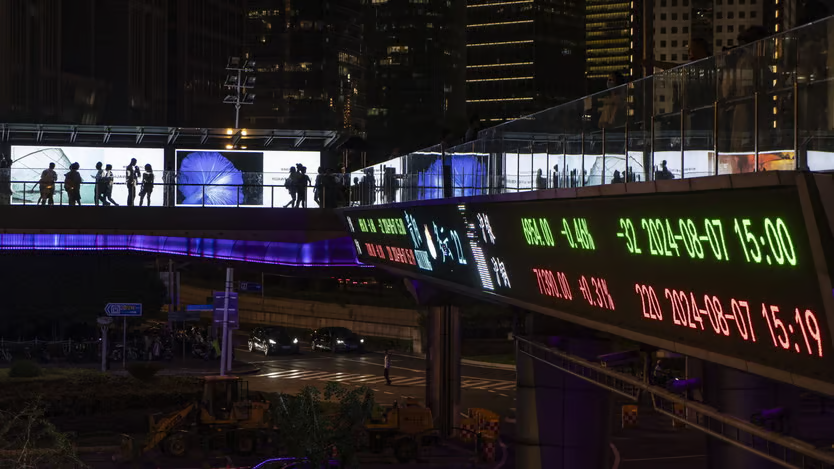
Photograph: Getty Images 照片盖蒂图片社 Oct 3rd 2024 2024 年 10 月 3 日
China’s policymakers have blinked at last. For 18 months, even as deflation set in and economic sentiment curdled, stimulus was half-hearted and piecemeal. Then last week came a belated turnaround. Officials unleashed a range of easing measures, suggesting that their pain threshold had been reached.
中国的政策制定者们终于眨了眨眼睛。18 个月来,即使在通货紧缩和经济情绪低迷的情况下,刺激政策也是半心半意、零敲碎打。然而,上周出现了迟来的转机。官员们推出了一系列宽松措施,表明他们的痛苦阈值已经达到。
Stockmarkets are rejoicing. As Hong Kong’s market reopened on October 2nd after a public holiday, shares rose by more than 6%, capping a rally of over 20% in a mere six frenetic trading days. But China will need even more stimulus to escape from its deflationary trap.
股市欢欣鼓舞。10 月 2 日,香港股市在公众假期后重新开市,股价上涨超过 6%,在短短 6 个疯狂交易日内涨幅超过 20%。但是,中国需要更多的刺激措施才能摆脱通货紧缩的困境。

Chart: The Economist 图表经济学家
The mood shift began with the central bank. On September 24th, a week after America’s Federal Reserve had eased policy and given it more room for manoeuvre, the People’s Bank of China cut interest rates, eased reserve requirements for banks and reduced the cost of existing mortgages. It also introduced new tools to stoke the stockmarket. Two days later, China’s Communist Party promised to arrest the decline in the property market and to fight the economic slowdown more forcefully. Media reports suggest the central government may soon borrow an extra 2trn yuan ($285bn) or roughly 1.5% of GDP. Half will help local authorities deal with their debts; the other half will help consumers, including direct handouts to families with more than one child.
情绪的转变始于中央银行。9 月 24 日,在美国联邦储备委员会放宽政策并给予其更多回旋余地一周之后,中国人民银行降低了利率,放宽了对银行的准备金要求,并降低了现有抵押贷款的成本。它还推出了刺激股市的新工具。两天后,中国共产党承诺阻止房地产市场下滑,并更有力地应对经济放缓。媒体报道称,中央政府可能很快会额外借款 2 万亿元人民币(合 2,850 亿美元),约占国内生产总值的 1.5%。其中一半将用于帮助地方政府处理债务,另一半将用于帮助消费者,包括直接向有一个以上孩子的家庭发放补助。
The measures represent a long overdue change in the style and urgency of China’s policymaking. For months it seemed that the government was scared of doing too much, rather than too little, to help the economy. Xi Jinping, China’s ruler, had disdained generous handouts to households, which he feared would undermine their self-reliance. National leaders had failed to get a grip on the country’s property slump, leaving it to individual cities to cobble together responses without enough help from Beijing. Local governments were so strapped for cash that they worsened the slowdown by cutting spending and harassing firms for fees and back taxes.
这些措施代表着中国决策风格和紧迫性早该发生的变化。几个月来,政府似乎害怕在帮助经济方面做得太多,而不是太少。中国执政者习近平不屑于向家庭慷慨施舍,他担心这会削弱家庭的自立能力。国家领导人未能控制住中国房地产的低迷,任由各个城市在没有北京足够帮助的情况下拼凑对策。地方政府资金紧张,通过削减开支、骚扰企业索要费用和补税,加剧了经济放缓。
Compared with past stimulus efforts, the latest measures have been better communicated and co-ordinated, and more targeted at consumers. But after their sluggishness, officials will face an uphill task of reviving sentiment and spending. Even if all the reported fiscal measures are confirmed, they lack the necessary scale. To revive growth and inflation, many economists think China needs a stimulus of 7trn-10trn yuan, which would amount to 2.5-4% of GDP if spread over two years.
与过去的经济刺激措施相比,最新措施的沟通和协调性更好,也更针对消费者。但是,在经历了低迷之后,官员们将面临重振情绪和消费的艰巨任务。即使所有报告的财政措施都得到了确认,它们也缺乏必要的规模。许多经济学家认为,要重振经济增长和通胀,中国需要 7 万亿-10 万亿元人民币的刺激措施,如果分两年实施,相当于国内生产总值 的 2.5%-4%。
Officials must also say how they will stop the property slump. That may require the central government to guarantee the delivery of pre-sold but unfinished properties. It also needs to tackle the silent forests of flats that stand finished but unsold. Beijing wants state-owned firms to buy them and convert them into affordable homes. But it has not put enough money where its mouth is.
官员们还必须说明他们将如何阻止房地产下滑。这可能需要中央政府保证交付预售但未完工的房产。此外,中央政府还需要解决已完工但未售出的无声公寓问题。中国政府希望国有企业购买它们,并将其改造成经济适用房。但中国政府还没有投入足够的资金。
With a big enough stimulus, China’s economy would have a shot at escaping from its deflationary doldrums. In time, consumers might feel confident enough to spend, and companies to invest. China’s stimulus would also be felt around the world—but differently from in the past.
只要刺激力度足够大,中国经济就有机会摆脱通货紧缩的低谷。假以时日,消费者可能会有足够的信心进行消费,企业也会有足够的信心进行投资。全世界也会感受到中国的刺激,但与以往不同。
During the global financial crisis China helped revive the world economy, as the government unleashed a huge, infrastructure-heavy stimulus that stoked roaring demand for imported commodities. If a new package is targeted towards consumers, it will not fire up commodity markets as much. Instead, if Chinese households bought more cars and other manufactured goods, fewer of them would wash up in overseas markets that are fearful of Chinese competition. Stimulus would not just lift the spirits of shoppers at home. It might hearten China’s economic rivals abroad, too. ■
在全球金融危机期间,中国帮助重振了世界经济,因为中国政府推出了大规模、重基础设施建设的经济刺激政策,刺激了对进口商品的旺盛需求。如果新的一揽子计划是针对消费者的,就不会像现在这样刺激大宗商品市场。相反,如果中国家庭购买更多的汽车和其他制成品,那么在海外市场出现的汽车和其他制成品就会减少,因为海外市场害怕中国的竞争。刺激政策不仅能提振国内购物者的情绪,还能振奋中国的经济。它还可能鼓舞中国在海外的经济竞争对手。 ■