Beijing’s trade surplus is damaging economies across the West
北京的贸易顺差正在损害整个西方国家的经济
ROGER BOOTLE 罗杰-博特尔21 April 2024 • 3:00pm
2024 年 4 月 21 日 - 下午 3:00
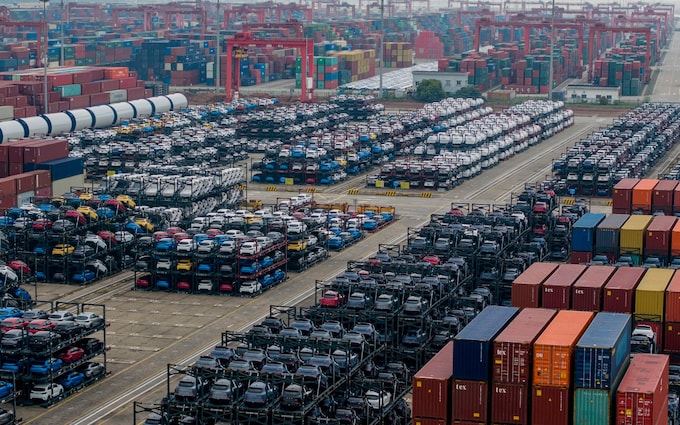
Chinese authorities have used massive state support to expand strategically important industries like battery and EV production CREDIT: STR/AFP via Getty Images
中国政府利用大规模的国家支持来扩大电池和电动汽车生产等具有重要战略意义的产业 CREDIT: STR/AFP via Getty Images
We all know that China is a strategic rival to the United States and poses a threat to the West in general across a broad front.
我们都知道,中国是美国的战略对手,对西方构成广泛的威胁。
It has supported Russia both politically, militarily and economically. It has infiltrated western institutions and it threatens to undermine the democratic process. And there is continued tension over Taiwan.
它在政治、军事和经济上支持俄罗斯。它对西方机构进行渗透,并威胁要破坏民主进程。台湾问题持续紧张。
Yet China also poses a threat in straightforward economic ways. The US Treasury Secretary, Janet Yellen, travelled to Beijing this month to discuss a range of subjects.
然而,中国也在直接的经济方面构成威胁。美国财政部长珍妮特-耶伦(Janet Yellen)本月访问北京,讨论了一系列议题。
The meeting was apparently friendly and Sino-American relations are evidently much better than they were a year ago. But China is continuing to run an extremely unbalanced economy with major consequences for the world.
这次会晤显然是友好的,中美关系显然比一年前要好得多。但是,中国仍在运行一个极不平衡的经济,给世界带来了重大影响。
The Chinese economy is now on a much lower growth path than it used to be.
中国经济目前的增长速度远低于以往。
Nevertheless, since the end of 2019, its industrial output has risen by about 25pc. Moreover, its trade surplus in goods has exceeded £800bn in each of the past two years. That is the equivalent of about 1pc of the GDP of the world (excluding China), twice as large as it was just before the financial crisis in 2007.
然而,自 2019 年年底以来,其工业产值已增长了约 25 个百分点。此外,在过去两年中,其货物贸易顺差每年都超过 8000 亿英镑。这相当于全球(不包括中国)GDP的约1个百分点,是2007年金融危机前的两倍。

Meanwhile, consumers’ expenditure still accounts for less than 40pc of China’s GDP – lower than in the year 2000, when it stood at 46pc.
与此同时,消费者支出仍占中国国内生产总值的不到 40%,低于 2000 年的 46%。
By contrast, in the US, consumers’ expenditure accounts for about 70pc of GDP. In most developed countries – including the UK – it lies somewhere between 60pc and 70pc.
相比之下,在美国,消费者支出约占 GDP 的 70%。在包括英国在内的大多数发达国家,消费者支出占 GDP 的比例介于 60% 和 70% 之间。
The Chinese authorities have used massive state support to expand key industries that they regard as strategically important, including batteries, high-end electronics and electric vehicles.
中国政府利用大规模的国家支持来扩大其认为具有重要战略意义的关键产业,包括电池、高端电子产品和电动汽车。
As Janet Yellen noted, a further export surge by Chinese businesses in these industries threatens to wipe out many companies in the US and elsewhere.
正如珍妮特-耶伦(Janet Yellen)所指出的,中国企业在这些行业的出口进一步激增,有可能使美国和其他地方的许多公司一蹶不振。
This concern is thoroughly understandable. There are undoubtedly some serious strategic and security issues at stake here.
这种担忧完全可以理解。这无疑关系到一些严重的战略和安全问题。
But there is also another issue that is plain vanilla economic. In principle, there is nothing wrong with the idea of Chinese industrial output booming or China selling large amounts of goods around the world.
但还有另一个问题是普通的经济问题。从原则上讲,中国工业产值蓬勃发展或中国在全球销售大量商品的想法并没有错。
The problem lies with the fact that it doesn’t buy anything like an equivalent amount in return, resulting in its massive trade surplus. What needs to happen is not some self-denying ordinance to reduce China’s exports, but rather a policy shift to increase its imports.
问题在于,中国并没有买到等量的东西作为回报,从而导致了巨额的贸易顺差。我们需要做的不是自我牺牲,减少中国的出口,而是转变政策,增加中国的进口。
Most economists would think China’s enormous trade surplus was bizarre. Although Chinese people, on average, have enjoyed a massive increase in living standards over the last 25 years, they still remain relatively poor compared to those in Europe and America. You would think that Chinese policy-makers would take steps to boost consumption. This would have the side-effect of increasing China’s imports and reducing her trade surplus.
大多数经济学家都会认为,中国的巨额贸易顺差是一种怪现象。虽然中国人的平均生活水平在过去 25 年里大幅提高,但与欧美国家相比,他们仍然相对贫穷。你会认为中国的政策制定者会采取措施促进消费。这样做的副作用是增加中国的进口,减少贸易顺差。
Why don’t the Chinese authorities act in this way? They see China’s interests as best served by continuing to invest a huge proportion of GDP in order to ensure future strong growth of the economy. Fair enough.
中国政府为什么不这样做呢?在他们看来,为了中国的利益,最好的办法就是继续将国内生产总值的很大一部分用于投资,以确保未来经济的强劲增长。有道理。
But alongside this, persistent current account surpluses result in the accumulation of financial assets in the form of claims on western countries. This is also a sort of investment. The Chinese authorities probably see this as boosting China’s power and security, although they are dismayed about having so much money tied up with China’s adversaries.
但与此同时,持续的经常账户盈余也导致了以对西方国家债权为形式的金融资产的积累。这也是一种投资。中国政府可能认为这增强了中国的实力和安全,尽管他们对如此多的资金与中国的对手绑在一起感到沮丧。
Quite apart from the security issues, should the countries of the West regard China’s surplus as a problem or should we just lie back and enjoy it?
除了安全问题之外,西方国家是否应该将中国的顺差视为一个问题,或者我们是否应该坐享其成?
After all, China’s burgeoning exports have been a major influence in keeping inflation down and thereby helping to boost the living standards of the average western worker. The price of the typical Chinese export is now more than 10pc lower than it was a year ago.
毕竟,中国蓬勃发展的出口在抑制通货膨胀方面发挥了重要作用,从而帮助提高了西方普通工人的生活水平。目前,中国典型出口商品的价格比一年前低了 10 个百分点以上。

But this reduction in inflation comes at a price. Without offsetting action, Chinese trade surpluses tend to depress aggregate demand in the West and thereby threaten to deprive Western workers of jobs and incomes.
但是,通胀的降低是有代价的。如果不采取抵消措施,中国的贸易顺差往往会抑制西方的总需求,从而有可能剥夺西方工人的工作和收入。
Given the policy objectives of central banks and governments, they have responded by trying to keep aggregate demand in line with potential output and thereby to keep employment high. This has been a leading factor behind the long period of very low interest rates, as well as the prevailing trend for loose fiscal policy.
鉴于中央银行和各国政府的政策目标,它们的对策是努力使总需求与潜在产出保持一致,从而保持较高的就业率。这是利率长期处于极低水平以及宽松的财政政策成为主流的主要因素。
Concern about global imbalances was all the rage at the time of the financial crisis in 2007/9 but it has faded since, as the world economy has been dominated by the effects of the pandemic, Russia’s invasion of Ukraine and the upsurge of inflation. But the issue is just as relevant today.
2007/9 年金融危机爆发时,对全球经济失衡的担忧风靡一时,但随着大流行病、俄罗斯入侵乌克兰和通货膨胀的加剧,这种担忧逐渐消失。但这一问题在今天同样具有现实意义。
You might well think that as long as western policy stimuli are effective, we can forget about China’s trade surpluses. But a long period of supportive monetary and fiscal policy has its costs.
你可能会认为,只要西方的政策刺激有效,我们就可以忘记中国的贸易顺差。但是,长期的支持性货币和财政政策是有代价的。
Ultra-low interest rates have boosted asset prices, leading to all sorts of distortions. Meanwhile, loose fiscal policy has resulted in a build-up of government debt which poses a serious challenge for the future. And all the while, countries that are running large current account deficits are diminishing their wealth stock, just as China is building up its own.
超低利率推高了资产价格,导致各种扭曲现象。同时,宽松的财政政策导致政府债务增加,给未来带来严峻挑战。与此同时,经常账户出现巨额赤字的国家正在减少其财富存量,而中国正在积累自己的财富。
In fact, China is far from being the only country in this position. As a percentage of GDP, Singapore and Hong Kong run much larger surpluses.
事实上,中国远非唯一处于这种状况的国家。从占国内生产总值的百分比来看,新加坡和香港的盈余要大得多。
Within Europe, Germany, the Netherlands, Norway and Switzerland also run huge surpluses. Indeed, Europe’s collective surplus exceeds China’s, at least on the official Chinese measure, although not when properly accounted for. The origins of Europe’s large collective surplus lie partly with the workings of the euro.
在欧洲,德国、荷兰、挪威和瑞士也有巨额顺差。事实上,欧洲的集体顺差超过了中国,至少在中国官方的衡量标准上是如此,尽管在正确计算的情况下并非如此。欧洲巨额集体顺差的部分原因在于欧元的运作。
The preparedness of both the United States and Europe to accept continuing huge Chinese trade surpluses is surely waning.
美国和欧洲接受中国持续巨额贸易顺差的准备肯定会减弱。
President Biden last week called for a tripling of tariffs on Chinese steel. If Donald Trump returns to the White House, punitive tariffs would be imposed on a broad swathe of China’s exports. This could herald the beginning of a bout of protectionism around the world.
拜登总统上周呼吁对中国钢铁征收三倍关税。如果唐纳德-特朗普重返白宫,将对中国大量出口商品征收惩罚性关税。这可能预示着全球保护主义的开始。
Roger Bootle is senior independent adviser to Capital Economics. roger.bootle@capitaleconomics.com
Roger Bootle 是资本经济公司的高级独立顾问。roger.bootle@capitaleconomics.com。