Economic logic was not enough to stop a ruinous Mao-era drive for self-reliance
经济逻辑不足以阻止毛泽东时代自力更生的破坏性动力
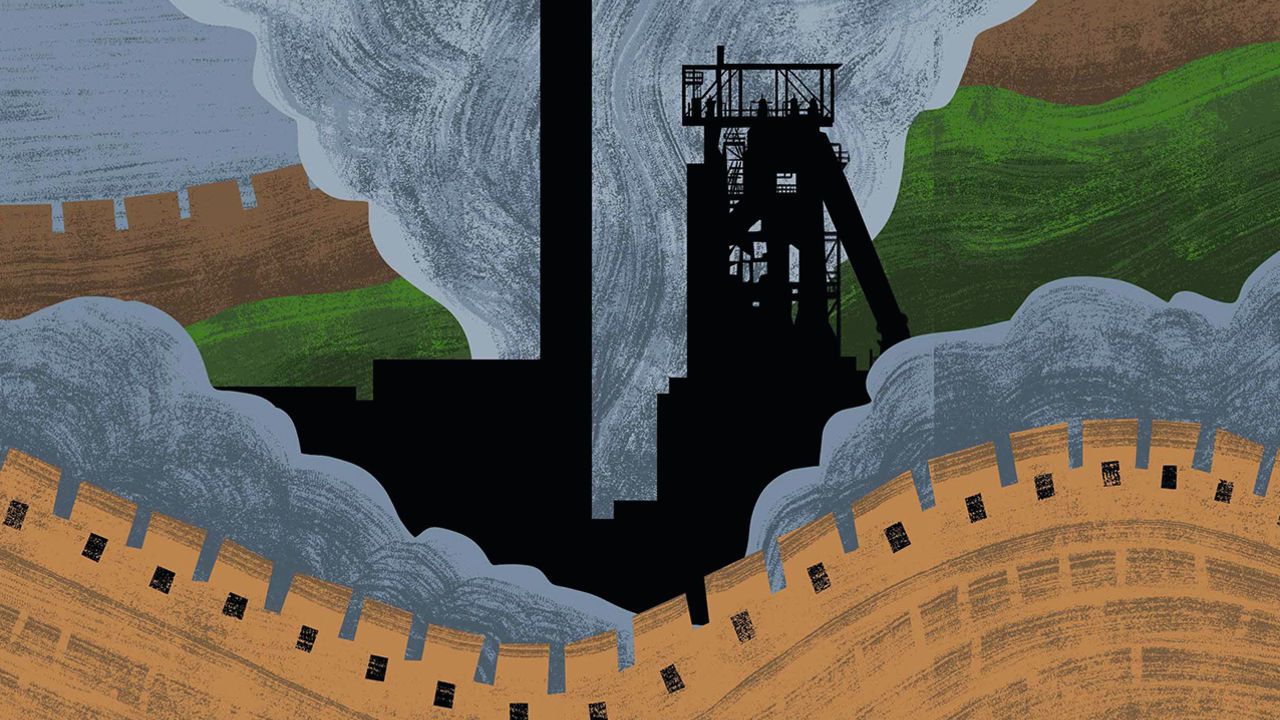 image: chloe cushman 图片:克洛伊-库什曼
Aug 31st 2023 2023 年 8 月 31 日
When foreign foes threaten, an impregnable fortress is worth more than a comfortable home. Time and again, that doctrine guided China’s Communist Party in its first decades of rule. Under Chairman Mao Zedong, talk of invasion was a constant. In those dark times, the usual priorities of peacetime government—feeding and clothing the masses, striving to raise living standards—were all too often neglected. In their stead came campaigns to ready China for war.
当外敌威胁时,坚不可摧的堡垒比舒适的家园更有价值。在中国共产党执政的最初几十年里,这一理论曾多次指导中国。在毛泽东主席的领导下,关于入侵的言论不绝于耳。在那个黑暗的年代,和平时期政府通常优先考虑的问题--让人民群众吃饱穿暖、努力提高生活水平--常常被忽视。取而代之的是让中国做好战争准备的运动。
One such campaign built a complete military-industrial complex in China’s inland mountains, known as the “Third Front”. Begun in 1964, it was a state secret for more than a decade, though it involved at least 15m workers and consumed resources at a fearsome rate. Chinese elsewhere paid an unwitting price in austerity and consumer shortages. Labourers were often recruited from coastal or border regions deemed at risk of attack by America, India, the Soviet Union and other hostile powers. Grouped into militarised brigades, they laid railways far into China’s rugged western and south-western interior. They built steelworks and mines, armaments factories and nuclear sites in remote valleys and deserts, some of them underground. Though rail lines and other infrastructure helped to open up inland China, the costs, both human and financial, were staggering. When the campaign wound down in the late 1970s, most Third Front projects were deemed unviable and were scrapped, merged or moved.
其中一场战役在中国内陆山区建立了一个完整的军工综合体,被称为 "三线"。它始于 1964 年,十多年来一直是国家机密,但至少有 1500 万工人参与其中,资源消耗速度惊人。其他地方的中国人在不知情的情况下付出了紧缩和消费短缺的代价。劳工通常是从被认为可能受到美国、印度、苏联和其他敌对势力攻击的沿海或边境地区招募的。他们被编入军事化的部队,在中国西部和西南部崎岖的内陆地区铺设铁路。他们在偏远的山谷和沙漠中建设钢铁厂、矿山、军工厂和核基地,其中一些还建在地下。虽然铁路线和其他基础设施帮助开辟了中国内陆,但付出的人力和财力代价也是惊人的。20 世纪 70 年代末,当运动结束时,大多数 "第三阵线 "项目被认为是不可行的,因此被取消、合并或转移。
Some tough but rational party bosses—among them Deng Xiaoping, the flinty survivor of several Maoist purges, and Mao’s eventual successor—tried to slow or shrink the Third Front when it was first mooted. Their resistance is ably described by Covell Meyskens, a historian at the Naval Postgraduate School in California, in his book “Mao’s Third Front: The Militarisation of Cold War China”. These relative pragmatists drafted a five-year plan that sought to restore orderly food production in rural areas and to develop modern factories, especially on the coast, to provide clothes and other necessities. Their plan was, in effect, a rebuke of Mao’s Great Leap Forward, an earlier exercise in grassroots radicalism that killed 30m people in a man-made famine.
一些强硬但理性的党内领导人--其中包括邓小平,他是毛泽东几次肃反运动的幸存者,也是毛泽东的最终接班人--在第三次阵线刚被提出时曾试图放慢或缩小它的步伐。加利福尼亚海军研究生院的历史学家科维尔-梅斯肯斯(Covell Meyskens)在其著作《毛泽东的第三条战线》(Mao's Third Front:冷战时期中国的军事化》一书中对他们的抵制作了精辟的描述。这些相对务实的人起草了一份五年计划,旨在恢复农村地区有序的粮食生产,发展现代化工厂,尤其是在沿海地区,以提供衣服和其他必需品。实际上,他们的计划是对毛泽东 "大跃进 "的抨击。"大跃进 "是早先的基层激进主义实践,在一场人为的饥荒中造成 3000 万人死亡。
Mao sensed opposition and counter-attacked. Party doctrine already described coastal development as a legacy of colonialism. Mao called coastal cities easy targets for foreign attack, too. He ordered key industries to move to remote mountain ranges, aping tactical retreats staged by early communist guerrillas. The country must build a rear base before war broke out, Mao insisted. Still, central planners and allies in the leadership played for time and called for more studies—right up to the moment in August 1964 that America accused North Vietnam of attacking one of its warships, bringing conflict and a superpower’s armed forces to China’s southern border. Mao used this security crisis to outflank other leaders, argues Mr Meyskens. Bowing to Mao as their supreme military strategist, top officials approved his most urgent priorities within days, including the building from scratch of Panzhihua, a steelmaking city in the mountains of the south-west, and a ban on new industrial projects in 15 coastal cities.
毛泽东察觉到了反对意见,并进行了反击。党的理论已经把沿海开发说成是殖民主义的遗产。毛泽东还称沿海城市容易成为外国攻击的目标。他仿效早期共产党游击队的战术撤退,命令关键产业转移到偏远山区。毛泽东坚持认为,国家必须在战争爆发前建立后方基地。尽管如此,中央计划人员和领导层中的盟友仍在拖延时间,要求进行更多的研究--直到1964年8月,美国指责北越袭击了其一艘军舰,将冲突和超级大国的武装力量带到了中国的南部边境。Meyskens先生认为,毛泽东利用这场安全危机包抄其他领导人。作为最高军事战略家,毛泽东俯首称臣,高层官员在几天内就批准了他最紧迫的优先事项,包括从零开始建设西南山区的钢铁城市攀枝花,以及禁止在 15 个沿海城市开展新的工业项目。
History does not have to repeat perfectly to offer lessons in the present. Mao was a revolutionary who saw terror and anarchy as useful tools. By contrast, Xi Jinping, China’s supreme leader, is an austere nationalist obsessed with order and party control. For his part, Mao seems to have relished China’s break with the Soviet Union in the early 1960s and the turn to autarky that followed. Mr Xi’s calls for self-reliance in food and in core technologies are more complicated. Even as his regime abhors dependency on America, its envoys tirelessly lobby Western allies in Asia and Europe to provide know-how that China needs to grow strong. For all those differences, the Third Front should be studied by blithe sorts who insist that Mr Xi’s party must deliver growth and material prosperity to maintain its legitimacy, and so will never break with the rich West. Economic self-interest is a powerful force. But a lesson from 1964 is that once America seemed truly to threaten China, economic planners fell silent and security fanatics took charge.
历史不一定要完美地重演,才能为现在提供借鉴。毛泽东是一位革命家,他将恐怖和无政府状态视为有用的工具。相比之下,中国的最高领导人习近平则是一位严谨的民族主义者,执着于秩序和党的控制。就毛泽东而言,他似乎很享受中国在 20 世纪 60 年代初与苏联的决裂以及随后的自给自足。习先生呼吁在粮食和核心技术方面实现自力更生则更为复杂。尽管他的政权憎恶对美国的依赖,但其特使却不懈地游说亚洲和欧洲的西方盟国提供中国强大所需的技术。对于所有这些分歧,"第三阵线 "应该被那些坚持认为习先生的政党必须实现增长和物质繁荣才能维持其合法性,因此绝不会与富裕的西方国家决裂的人所研究。经济利益是一种强大的力量。但 1964 年的教训是,一旦美国似乎真的威胁到中国,经济规划者就会沉默,而安全狂热者则会掌权。
Once, Panzhihua was too secret to appear on maps. Today, it is a sleepy city of 1.2m people in southern Sichuan, anchored by its still-active, state-owned steelworks, and by mines for iron ore, titanium and vanadium. Chaguan reached the city by high-speed train from Kunming, two and a half hours to the south. The Kunming-Chengdu rail line was also a Third Front project, cut through barren mountains at a cost of two deaths per kilometre of track. In the city centre high-arched bridges cross the Jinsha river, whose fast brown waters drowned pioneering workers crossing by boat. In the air, a faint oily tang is the only trace of the steelmaking that once poisoned local skies and water sources.
曾经,攀枝花是一个秘密的城市,在地图上都找不到它的踪迹。如今,攀枝花已成为四川南部一个拥有 120 万人口的沉睡城市,其支柱产业是仍在运营的国有钢铁厂以及铁矿、钛矿和钒矿。查广乘坐高速列车从昆明抵达这座城市,向南两个半小时车程。昆明至成都的铁路线也是 "第三阵线 "的项目,以每公里死亡两人的代价穿越荒山。在市中心,高拱桥横跨金沙江,湍急的褐色江水淹没了乘船渡江的先驱工人。空气中弥漫着淡淡的油味,这是曾经毒害当地天空和水源的炼钢厂留下的唯一痕迹。
In a dangerous age, old instincts stir
在危险的时代,古老的本能蠢蠢欲动
The city’s harsh beginnings are hard to imagine now: the lack of fresh food, the wolves that terrorised the first arrivals, the tents and huts of earth and straw that housed workers sent to terrace steep mountainsides. But several middle-aged residents are proud to recall fathers sent to the Third Front six decades ago, toiling alone for years before sending for wives and children to join them.
现在已很难想象这座城市最初的艰辛:缺乏新鲜食物,狼群恐吓首批抵达者,帐篷和土草棚里住着被派往陡峭山坡上修整梯田的工人。但几位中年居民自豪地回忆起六十年前被派往第三战线的父辈们,他们独自劳作多年后,才把妻儿送去与他们团聚。
A phrase of Mao’s, “Until Panzhihua is built, I won’t sleep”, is carved on a boulder outside the city’s Museum of the Third Front, near another old slogan: “Good People and Good Horses Go to the Third Front”. Inside, a father and his 12-year-old son from Guangxi, in China’s far south, examine a life-size diorama of a mine entrance. Grumbling that today’s young take comfort for granted, the man brought his son to discover how earlier generations endured hardship. He praises Mr Xi for updating Mao’s calls for self-reliance, predicting that a global contest for resources is “definitely going to cause a war”. Not all Chinese feel such danger. For those that do, Panzhihua awaits their visit. ■
城市三线博物馆外的一块巨石上刻着毛泽东的一句话:"不建成攀枝花,我就不睡觉",旁边还有另一句古老的标语:"好人好马上三线"。在博物馆内,来自中国最南部广西的一位父亲和他 12 岁的儿子正在参观一个真人大小的矿井入口模型。这位父亲抱怨说,现在的年轻人认为舒适是理所当然的,他带着儿子来探究上一代人是如何忍受苦难的。他赞扬习主席更新了毛泽东关于自力更生的号召,并预测全球资源争夺战 "肯定会引发战争"。并非所有中国人都感受到了这种危险。对于那些感到危险的中国人来说,攀枝花正等待着他们的到来。■