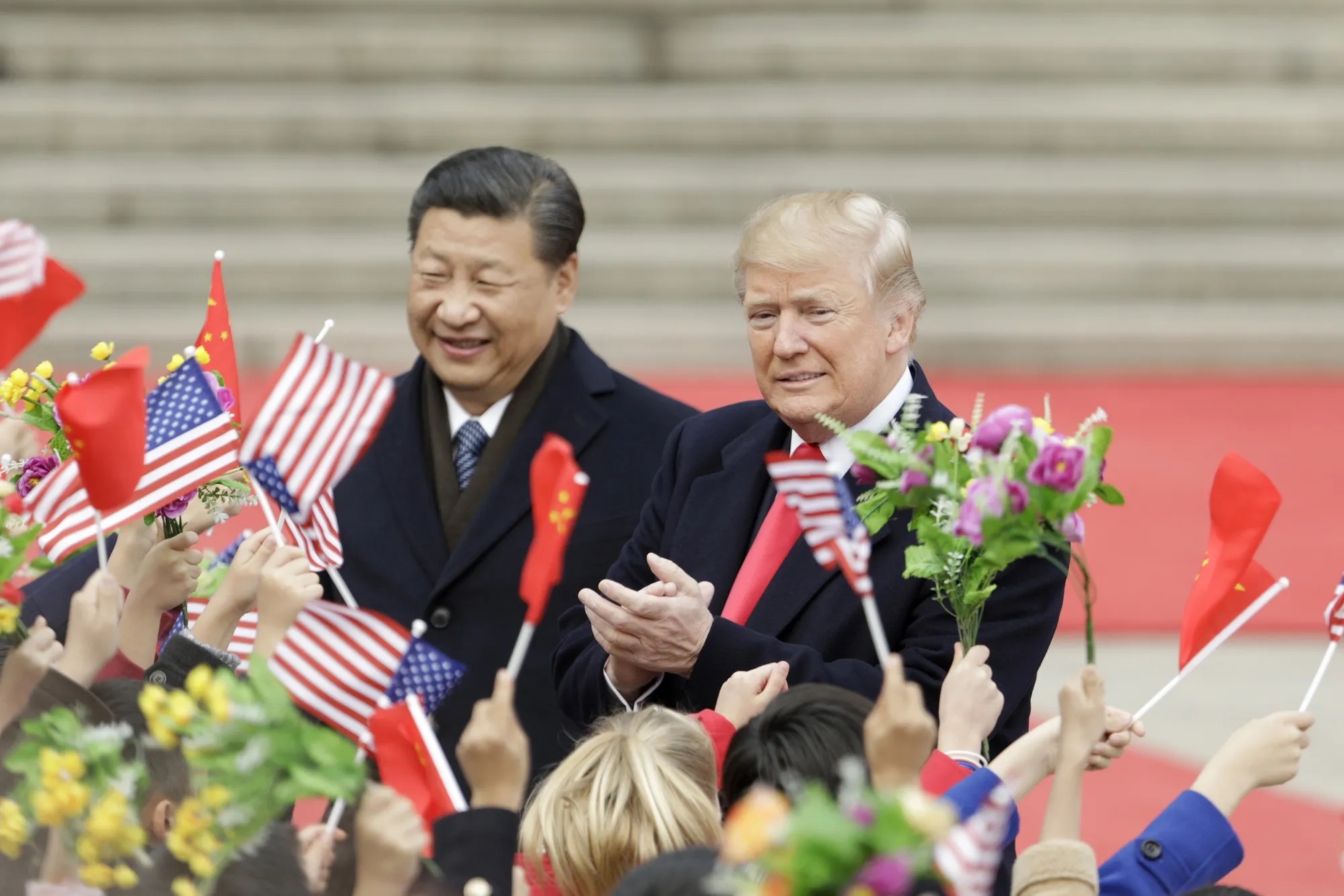
Trump’s tough talk and actions in 2017 set off a global contest, but Xi is the one with the long-term plan for victory.
特朗普2017年的强硬言论和行动引发了全球性的较量,但习近平才是制定长期胜利计划的人。
2025年4月28日 at GMT+8 03:00
By Hal Brands 作者: Hal Brands
Hal Brands is a Bloomberg Opinion columnist and the Henry Kissinger Distinguished Professor at Johns Hopkins University’s School of Advanced International Studies. 哈尔·布兰兹 (Hal Brands) 是彭博观点专栏作家,也是约翰·霍普金斯大学高级国际研究学院亨利·基辛格杰出教授。
Of all today’s crises and conflicts, the US-China rivalry will most fundamentally remake our world. A contest between the two top powers will shape the international system and the lives of people everywhere. At best, it will be a long, tense struggle — a “New Cold War” — lasting many years. At worst, it could explode into nuclear catastrophe. For Americans, winning this competition will be the central challenge of our time.
在当今所有的危机和冲突中,中美竞争将从根本上重塑我们的世界。两大强国之间的较量将塑造国际体系和世界各地人民的生活。往好了说,这将是一场旷日持久、紧张的斗争——一场“新冷战”——持续多年。往坏了说,它可能爆发成核灾难。对美国人来说,赢得这场竞争将是我们这个时代的核心挑战。
Beijing understands the stakes. For decades, it has been working to overtake the US as Asia’s leading power. Its long-term goal, Chinese leader Xi Jinping has stated, is to make “a future where we will win the initiative and have the dominant position.” Since 2017, two different US presidents — Donald Trump and Joe Biden — have identified China as America’s foremost rival. America’s military, economy and government are being transformed by competition with Beijing. In a polarized country, anti-China policies are among the few measures that can still win broad, bipartisan support.
北京深知其中的利害关系。几十年来,它一直致力于超越美国,成为亚洲的领头大国。中国领导人习近平表示 ,其长期目标是“创造一个我们赢得主动、占据主导地位的未来”。自 2017 年以来,两位美国总统 ——唐纳德·特朗普和乔·拜登——都将中国视为美国最重要的竞争对手。与北京的竞争正在改变美国的军事、经济和政府。在一个两极分化的国家,反华政策是少数仍然能够赢得广泛两党支持的举措之一。
But are those policies effective? How is America faring in the defining fight of our time?
但这些政策有效吗?美国在我们这个时代这场决定性的斗争中表现如何?
That was the question I asked an all-star group of experts — academics, think-tankers, former US officials and others — at a conference at the Johns Hopkins School of Advanced International Studies earlier this month. Their answers will be published as a book this summer. What follows is my own take on the seven vital lessons for the new cold war.
本月早些时候,我在约翰·霍普金斯大学高级国际研究学院的一次会议上向一群明星专家——学者、智库专家、前美国官员等——提出了这个问题。他们的答案将于今年夏天出版成书 。以下是我对新冷战七个重要教训的看法。
The US has been waging that struggle for nearly a decade. It has made real, even historic progress on many fronts. Yet there are still crucial areas in which urgency, resources, or competitive capacity are lacking. And in Trump’s wild, sometimes self-destructive second presidency, it’s far from clear that the US has the winning approach.
美国已为此奋斗近十年,在许多方面取得了真正的、甚至是历史性的进展。然而,在一些关键领域,美国仍然缺乏紧迫感、资源或竞争力。在特朗普狂野、有时甚至带有自我毁灭倾向的第二任总统任期内,美国是否拥有制胜之道尚不明朗。
China's Empire Rises 中华帝国崛起
The first thing to know is that the new cold war is older than it may seem. That rivalry has been at the heart of US policy since 2017, when Trump labeled China a strategic competitor seeking to “shape a world antithetical to US values and interests.” Its origins run much deeper.
首先要知道的是,新冷战比它看起来的历史要悠久得多。自 2017 年特朗普将中国列为战略竞争对手以来,这种竞争一直是美国政策的核心,当时特朗普将中国列为战略竞争对手,试图“塑造一个与美国价值观和利益相悖的世界”。它的起源要深刻得多。
The US-China contest is the latest installment in an ages-old clash between reigning and rising powers. It is a battle in the longer war over whether dictatorships or democracies will run the globe. Not least, that struggle is tied to the longstanding strategic ambitions of China and its ruling elites.
美中之争是守成大国与崛起大国之间由来已久的冲突的最新一幕。这场较量是一场旷日持久的战争 ,关乎独裁统治还是民主统治。尤其重要的是,这场斗争与中国及其统治精英长期以来的战略野心息息相关。
When Xi touts the “great rejuvenation of the Chinese nation,” he’s saying that China — once the world’s greatest empire — must reclaim that lofty perch. Since the Chinese Communist Party took power in 1949, its leaders have believed their nation would one day surpass the US. Even when Washington was helping Beijing prosper economically in the 1980s and 1990s, Chinese leaders suspected that the US — the established, liberal hegemon — was set on containing and stifling an emerging, illiberal challenger. The US-Soviet cold war was ending, said CCP leader Deng Xiaoping in 1989, but a US-China cold war was already underway.
当习近平宣扬 “中华民族伟大复兴”时,他的意思是,中国——曾经是世界上最强大的帝国 ——必须夺回这一崇高地位。自 1949 年中国共产党执政以来,其领导人一直坚信,他们的国家终有一天会超越美国。即使在 20 世纪 80 年代和 90 年代华盛顿帮助北京实现经济繁荣的时候,中国领导人也怀疑美国——这个老牌自由主义霸主——一心想遏制和扼杀一个新兴的非自由主义挑战者。中共领导人邓小平在 1989 年宣称 ,美苏冷战即将结束,但美中冷战却已然拉开帷幕。
China’s Military Just Gets Mightier
中国军事实力日益强大
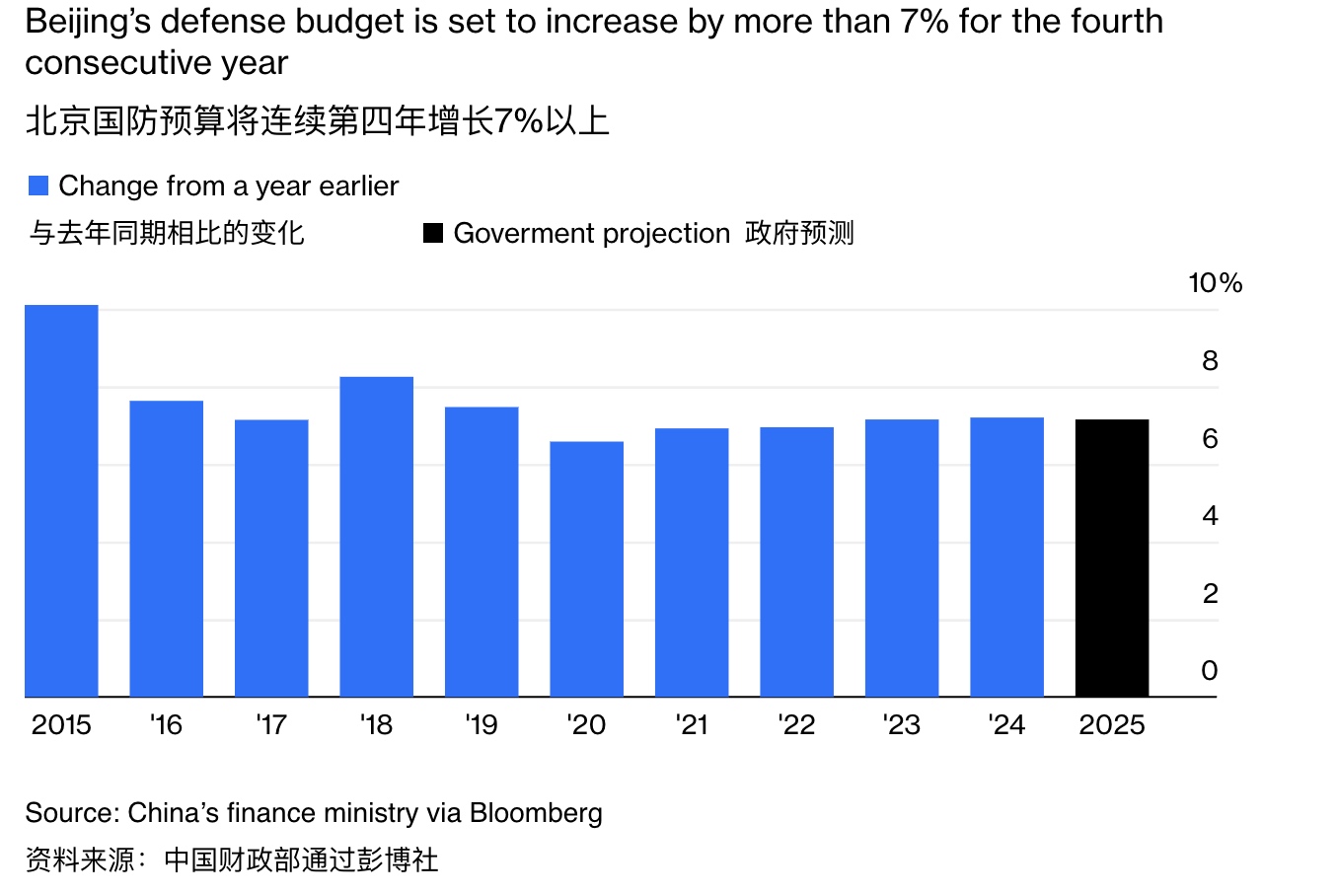
For decades, China has been building the capabilities to win that contest: Its record-busting military buildup began in the 1990s. America, too, has been competing with Beijing for longer you may think.
几十年来,中国一直在打造赢得这场竞争的能力:其破纪录的军事建设始于 20 世纪 90 年代。美国与北京的竞争时间也比你想象的要长。
After the first Cold War, the US pursued lucrative, mutually enriching trade with China. Yet it also kept its alliances, and plenty of military power, in the Pacific to keep Beijing from coercing its neighbors. Even economic engagement had sneakier, more subversive motives: The goal was to tame a rising China by binding it to a US-led global order, and even transform it by empowering liberal influences within. When CCP officials accuse America of trying to change and constrain China, they’re not totally wrong.
第一次冷战后,美国与中国开展了利润丰厚、互利共赢的贸易。然而,它也在太平洋地区保持了盟友关系和强大的军事力量,以阻止北京胁迫邻国。即使是经济接触也隐藏着更隐蔽、更具颠覆性的动机:其目标是通过将崛起的中国与美国主导的全球秩序捆绑在一起来驯服它,甚至通过增强其内部自由主义势力来改变它。当中共官员指责美国试图改变和遏制中国时,他们的说法并非完全正确。
What changed, during the 2010s, was that a subtle, ambiguous rivalry turned into something sharper, more overt. Economic engagement was hardly moderating a China that had turned more aggressive, more authoritarian, especially once Xi took power in 2012. In fact, engagement had backfired: China became wealthy, powerful and confident enough to challenge the American-led order in Asia and around the globe. Chinese ambition was triggering American anxieties. The upshot was the starker, uglier competition we know today.
2010年代的变化是,微妙而模糊的竞争变成了更尖锐、更公开的对抗。经济接触几乎未能缓和中国日益强硬、专制的局面,尤其是在2012年习近平上台之后。事实上,这种接触适得其反:中国变得富裕、强大,并且足够自信,足以挑战美国主导的亚洲乃至全球秩序。中国的野心引发了美国的焦虑。结果就是我们今天所看到的更加严峻、更加丑陋的竞争。
Globalization Is Dead 全球化已死
A second lesson is that the new cold war has killed globalization — so winning means moving from “one world” to two. The Sino-American contest is, fundamentally, a techno-economic contest. Economic power underpins strategic power. As the old saying goes, those who rule in key technologies rule the world. For years, Americans bet that the rise of a single, integrated global economy would be a force for peace. But today, interdependence is a source of conflict and vulnerability.
第二个教训是,新冷战扼杀了全球化——因此,赢得胜利意味着从“一个世界”变成两个世界。中美竞争从根本上来说是一场技术经济竞争。经济实力是战略实力的基础。俗话说,谁掌握了关键技术,谁就掌握了世界。多年来,美国人一直坚信,一个单一、一体化的全球经济的崛起将成为一股和平的力量。但如今,相互依存却成了冲突和脆弱性的根源。
China is striving to control technological chokepoints and supply chains. It uses its vast market, world-beating manufacturing base, and unfair trade practices to coerce other states. The US has responded with tariffs, export controls and other weapons of economic warfare. Under President Joe Biden, America made groundbreaking investments in semiconductors and electric vehicles, as well.
中国正努力控制技术瓶颈和供应链。它利用其庞大的市场 、世界一流的制造业基础和不公平的贸易行为来胁迫其他国家。美国则以关税、出口管制和其他经济武器作为回应。在乔·拜登总统的领导下,美国在半导体和电动汽车领域也进行了突破性的投资。
This tech and trade rivalry is a fight for economic supremacy. It’s also a battle to influence other states. China’s Belt and Road Initiative uses lending, infrastructure development and trade to tempt nations into Beijing’s orbit. Huawei’s global 5G push is meant to entrench Chinese influence in countries around the world.
这场科技和贸易竞争是一场争夺经济霸权的斗争,也是一场影响其他国家的斗争。中国的“一带一路”倡议利用贷款、基础设施建设和贸易吸引各国加入北京的轨道。华为的全球 5G 战略旨在巩固中国在世界各国的影响力。
Even before Trump imposed his mega-tariffs on China, the heady globalization of the post-Cold War era was over. Yet prevailing in this tense new era requires more than a US-China divorce.
甚至在特朗普对中国征收巨额关税之前,后冷战时代令人激动的全球化就已经结束。然而,要在这个紧张的新时代取得胜利,需要的不仅仅是美中分道扬镳。
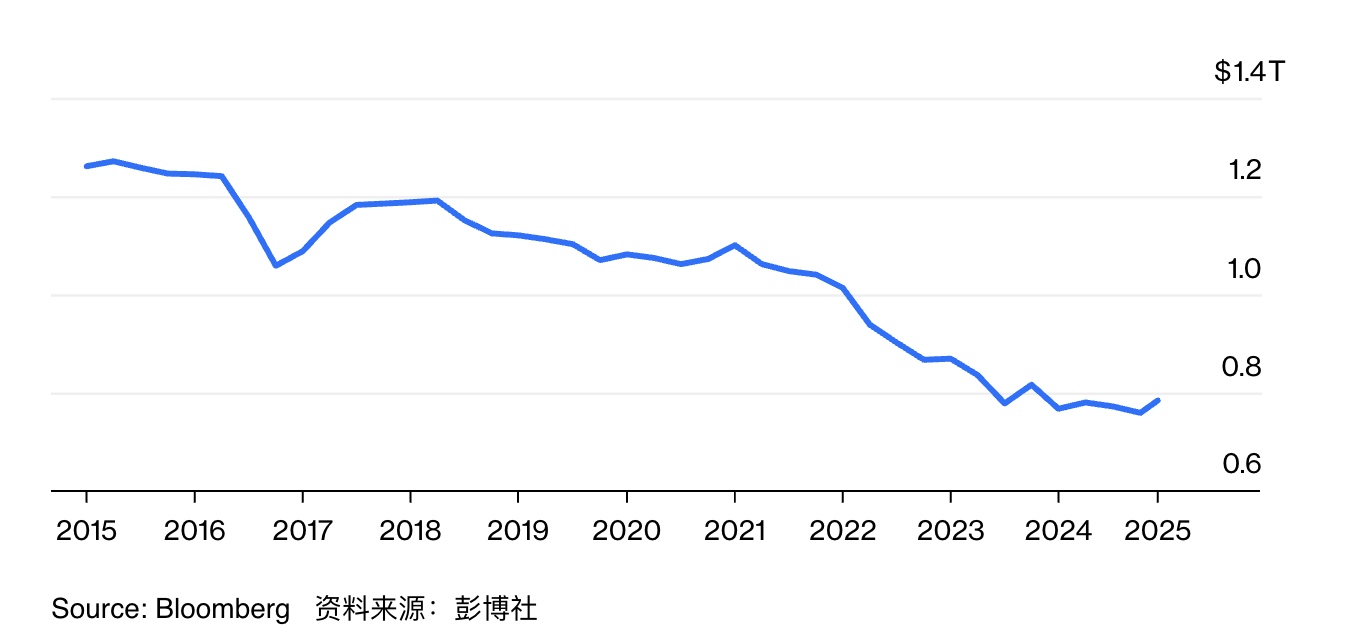
China Ditches US Debt 中国放弃美国债务
Beijing’s holdings of Treasury securities have fallen by half in the past decade
过去十年,北京持有的美国国债减少了一半
Yes, America and its friends must limit China’s access to Western money, markets and technology — and decrease their dependence on a hostile state. Yet Washington must also deepen integration with friendly countries, to build resilience without sacrificing efficiency — and generate the collective heft needed to outcompete the world’s factory floor. The alternative, indiscriminate protectionism, will only doom the coalitions and the prosperity needed to keep the democratic community dominant. “One world” is yesterday’s dream. “Two worlds” is the path to victory in the new cold war.
诚然,美国及其盟友必须限制中国获取西方资金、市场和技术,并减少其对敌对国家的依赖。然而,华盛顿也必须深化与友好国家的融合,在不牺牲效率的情况下增强韧性,并形成超越世界工厂所需的集体实力。另一种选择,即不加区分的保护主义,只会毁灭联盟以及维持民主社会主导地位所需的繁荣。“一个世界”已是昨日黄花。“两个世界”才是新冷战的胜利之路 。
Making and Breaking Coalitions
建立和打破联盟
Third, great-power struggles are contests in coalition-making and coalition-breaking: Every part of US policy toward China will go better if America has powerful friends on its side. Yet assembling that coalition is tricky, because Beijing uses positive inducements — like legitimate trade deals — as well as negative ones like economic and military pressure to wedge those relationships apart.
第三,大国之争是建立联盟和破坏联盟的较量 :如果美国拥有强大的盟友,美国对华政策的方方面面都会更加顺利。然而,组建这样的联盟并非易事,因为北京既会利用合法贸易协议等积极诱因,也会施加经济和军事压力等消极因素来分化这些关系。
For most of the last decade, the US was ahead in that contest, mostly because of Chinese strategic self-harm. Beijing’s belligerence toward neighbors created enmity from India to Japan.
过去十年的大部分时间里,美国在这场竞赛中一直处于领先地位,这主要是因为中国战略上的自我伤害。北京对邻国的好战态度引发了从印度到日本的敌意。
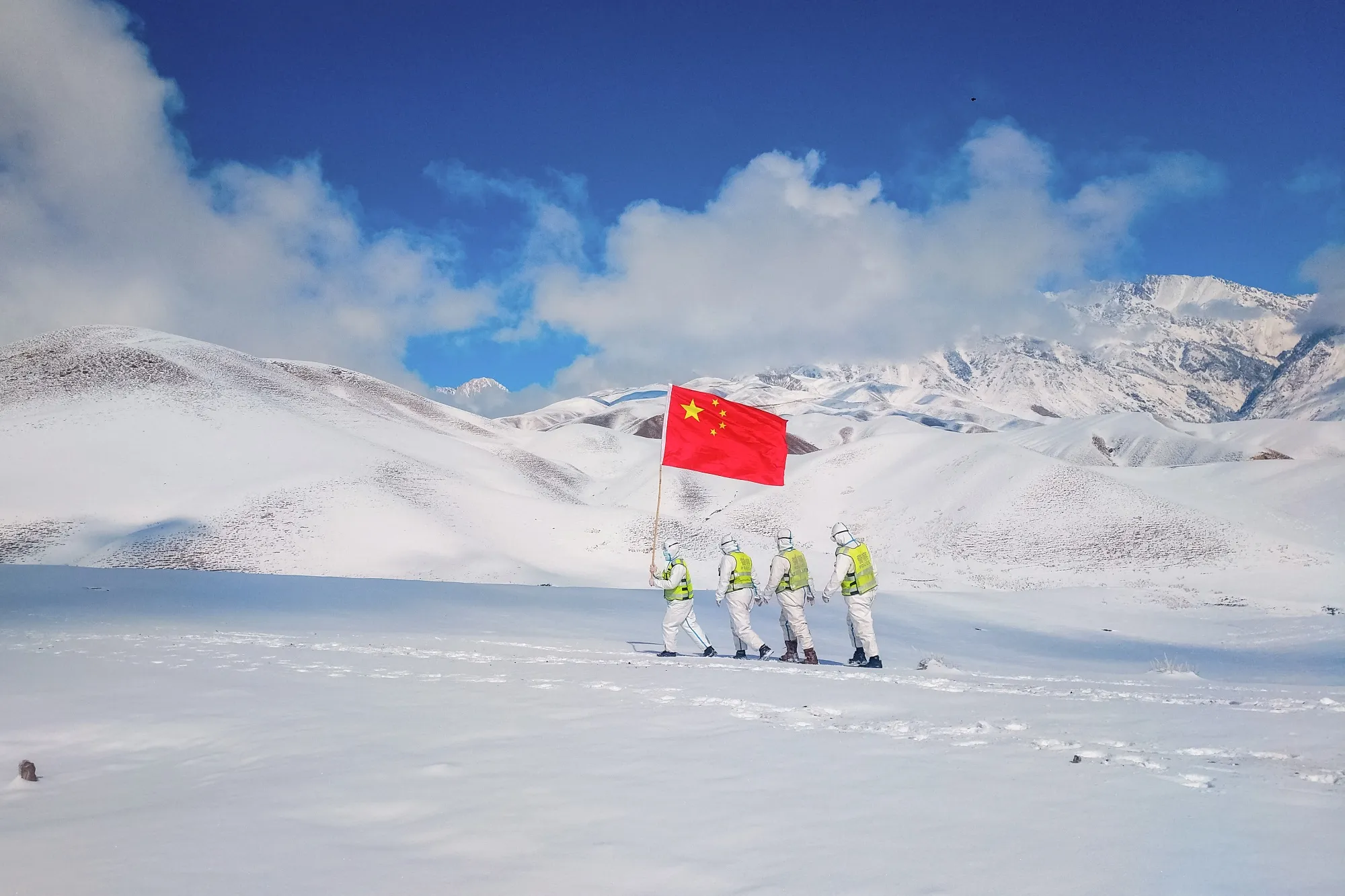
China is taking the high ground in the Himalayas.Source: AFP/Getty Images
中国正在喜马拉雅山脉占据制高点。 来源:法新社/盖蒂图片社
Its backing for Russia’s assault on Ukraine alienated most of Europe. America thus began lining up the advanced democracies against Chinese coercion. It built coalitions to check China’s push for primacy in 5G telecommunications and semiconductors. In the Indo-Pacific, an array of innovative partnerships — the Quad, the Squad, AUKUS and many others — was creating a nascent counter-China security web.
美国支持俄罗斯攻打乌克兰,疏远了大多数欧洲国家。因此,美国开始联合发达民主国家对抗中国的胁迫。它建立联盟,以遏制中国在 5G 电信和半导体领域争夺主导地位的努力。在印太地区,一系列创新伙伴关系——“四方安全对话 ”(Quad)、“小队”(Squad) 、美国陆军航空部队(AUKUS)等等——正在构建一个新兴的反华安全网络。
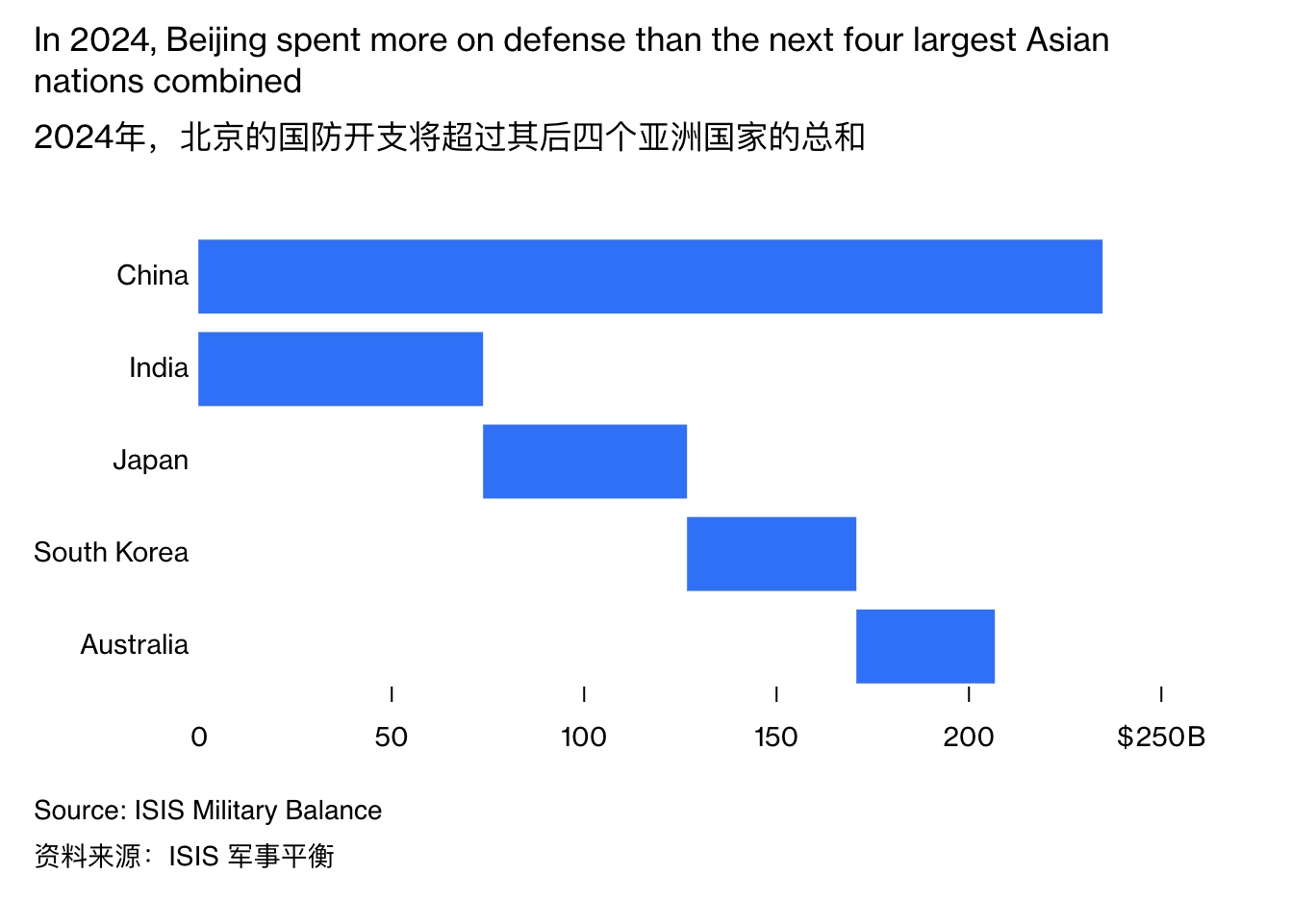
But “nascent” is the vital adjective. There are interlocking alliances but no multilateral treaty in the Indo-Pacific — no equivalent to the North Atlantic Treaty Organization. So resisting Chinese aggression would still be a perilously ad hoc affair. Asia’s vast geography also makes countries strategically parochial: India wants Washington’s aid along its fraught Himalayan frontier but might not help if Beijing assaults Taiwan. Military spending among the western Pacific democracies remains anemic; trade and technological dependence on China is still severe.
但“新生”才是关键的形容词。印太地区存在着相互关联的联盟,但缺乏多边条约——没有类似北大西洋公约组织的组织。因此,抵抗中国的侵略仍将是一项危险的临时任务。亚洲幅员辽阔,也使各国在战略上狭隘:印度希望华盛顿在其喜马拉雅边境地区提供援助,但如果北京进攻台湾,印度可能不会提供帮助。西太平洋民主国家的军费开支仍然低迷;对中国的贸易和技术依赖仍然严重。
China’s Military Spending Dwarfs Its Neighbors
中国军费开支远超邻国
Not least, Trump’s administration has been calling on US allies to counter China while also enacting policies — ruinous trade wars, picking pointless fights with Europe, even trying to take territory from some of those same countries — that could tear America’s coalition apart.
尤其是,特朗普政府一直呼吁美国盟友对抗中国,同时还制定政策——毁灭性的贸易战、与欧洲挑起毫无意义的争斗、甚至试图从其中一些国家夺取领土——这些政策可能会撕裂美国的联盟。
And America isn’t the only great power with friends. Xi’s “no limits” partnership with Russia is a way of insulating China from US sanctions, gaining access to sensitive military technology, and ensuring that two Eurasian behemoths can fight “back to back” against the democratic world. US officials worry that Moscow could aid China in a war against Washington in the Pacific, perhaps as payback for America’s lethally effective proxy fight against Russia in Ukraine.
美国并非唯一拥有盟友的大国。习近平与俄罗斯的“无限制”伙伴关系,旨在使中国免受美国制裁,获得敏感军事技术,并确保两个欧亚大陆的庞然大物能够“背靠背” 地对抗民主世界。美国官员担心 ,莫斯科可能会在太平洋地区协助中国对抗华盛顿,或许是为了报复美国在乌克兰对俄罗斯发动的致命而有效的代理人战争。
A strong, global group of democracies still outweighs a pack of Eurasian autocracies. But today, one of Washington’s biggest challenges is that alliance politics are shifting on both sides.
一个强大的全球民主国家集团仍然胜过一群欧亚独裁国家。但如今,华盛顿面临的最大挑战之一是双方的联盟政治格局正在发生变化。
US Military Is Falling Behind
美国军事正在落后
Having friends helps in a hot war, even more than a cold war: Deterring the former is the prerequisite to waging the latter. But a fourth lesson is that the risks of a violent showdown are rising, and the US isn’t adequately prepared.
在热战中拥有朋友比在冷战中更有益处:遏制热战是发动冷战的先决条件。但第四个教训是,暴力摊牌的风险正在上升,而美国尚未做好充分准备。
A generation ago, the People’s Liberation Army was bloated and retrograde. Today, it boasts the world’s largest navy and missile force. Its rapid, sustained nuclear-weapons buildup is transforming the strategic balance. Complex, menacing exercises around Taiwan are the norm. “China is preparing for a war,” Secretary of the Air Force Frank Kendall warned two years ago, “and specifically for a war with the United States.”
一代人之前,中国人民解放军臃肿不堪,军事倒退。如今,它拥有世界最大规模的海军和导弹部队。其快速、持续的核武器建设正在改变战略平衡。在台湾周边举行的复杂且具有威胁性的演习已成常态。“中国正在为战争做准备,”美国空军部长弗兰克·肯德尔两年前警告说 ,“尤其是与美国的战争。”
A Close Race at Sea
海上激烈角逐
While China's navy leads in quantity, America's leads in quality
中国海军在数量上领先,而美国海军在质量上领先
Source: IISS Military Balance
来源:IISS 军事平衡
Note: Principal combatants include aircraft carriers, but have been broken out here.
注:主要战斗人员包括航空母舰,但在这里已被分解。
Maybe the PLA will try to grab Taiwan this decade — or maybe it won’t feel ready until the 2030s. What’s indisputable is that the military balance is eroding, and the US is struggling to respond.
或许解放军会试图在十年内攻占台湾——又或许直到2030年代才做好准备。毋庸置疑的是,军事平衡正在瓦解,而美国正疲于应对。
The US has gotten access to new bases in the Philippines and other front-line locations, but the military services have been slow in transforming their concepts and capabilities to meet a Chinese assault. There are promising ideas, like using drones to make the Western Pacific a deadly “hellscape” for Chinese forces, but also glaring weaknesses.
美国已获得在菲律宾和其他前线地区设立新基地的许可,但各军种在转变作战理念和能力以应对中国军队进攻方面进展缓慢。虽然有一些可行的方案,例如使用无人机将西太平洋变成中国军队的致命 “地狱”,但也存在明显的弱点。
America doesn’t have enough laser-guided bombs and long-range missiles to fight even a short war. Its defense industrial base certainly isn’t ready for a long one. Case in point: America has an amazing Navy, but its shipyards can’t rapidly replace vessels sunk in combat. That’s the same problem that doomed Japan in World War II.
美国没有足够的激光制导炸弹和远程导弹来打一场短期战争。其国防工业基础显然还没有做好长期战争的准备。例如:美国拥有一支强大的海军,但其造船厂却无法快速替换在战斗中沉没的舰船。这正是二战中日本遭遇的宿命 。
Proponents of an “Asia First” strategy seek salvation in prioritization. By moving resources from the Middle East and Europe to Asia, they argue, the US can get ahead of the threat from Beijing. Yet the defense budget isn’t big enough to handle China even if Washington simply abandons other theaters.
“亚洲优先” 战略的支持者试图通过优先排序来寻求救赎。他们认为,通过将资源从中东和欧洲转移到亚洲,美国可以领先于来自北京的威胁。然而,即使华盛顿放弃其他战场,其国防预算也不足以应对中国。
China's first aircraft carrier, the Liaoning.Photographer: Anthony Wallace/AFP/Getty Images
中国首艘航空母舰辽宁舰。 摄影:Anthony Wallace/法新社/盖蒂图片社
And leaving isn’t easy: Just as Trump’s team was finalizing a China-focused defense strategy last month, it was sending aircraft carriers and strategic bombers to face down Iran and the Houthis in the Middle East. The US needs more military resources in Asia. It won’t find them just by skimping elsewhere.
而撤军并非易事:就在特朗普团队上个月敲定以中国为重点的国防战略之际,美国却派遣航空母舰和战略轰炸机前往中东,对抗伊朗和胡塞武装。美国需要在亚洲增加军事资源。仅仅在其他地方节省开支是不够的。
The cost of weakness could be hideous. If America loses the edge in the Western Pacific, Taiwan might capitulate to China. Or perhaps Beijing will try to take Taiwan, humiliate America, and remake the region through force of arms. If a Sino-American war does erupt, it could cause a global depression by tearing up trade routes and supply chains — or even climax in the most destructive nuclear cataclysm humanity has ever seen. The greatest danger of the coming years is that insufficient US power could turn Cold War 2 into World War III.
软弱的代价可能是可怕的。如果美国失去西太平洋的优势,台湾可能会向中国屈服。又或许,北京会试图夺取台湾,羞辱美国,并通过武力重塑该地区。如果中美战争真的爆发,它可能会破坏贸易路线和供应链,引发全球经济衰退,甚至会发展成人类历史上最具破坏性的核灾难。未来几年最大的危险是,美国实力不足可能会将第二次冷战演变成第三次世界大战。
Washington Is Losing Friends
华盛顿正在失去朋友
Great rivalries don’t just turn on crises and war plans. They require winning the intelligence contest, waging the information war and amassing soft power. America did well enough to win at these subtler forms of rivalry in the Cold War. Today, it’s behind the curve.
伟大的竞争不仅仅取决于危机和战争计划。它们需要赢得情报竞赛,发动信息战,并积累软实力。美国在冷战时期就足够出色地赢得了这些更为微妙的竞争形式。如今,它却落后了。
The US has long struggled to mobilize the resources to compete with Chinese infrastructure projects in the Global South: Washington, unlike Beijing, can’t simply tell its firms and banks to go serve the nation’s interests abroad. The US gutted its information-war apparatus after the Cold War. Its intelligence community is, reportedly, still recovering from the evisceration of its spy networks in China. Until recently, America was at least gradually getting back into the fight in these and other areas. Now, it’s unilaterally disarming.
美国长期以来一直难以调动资源,与中国在全球南方的基础设施项目竞争:与北京不同,华盛顿不能简单地命令其企业和银行去服务于国家在海外的利益。冷战后,美国摧毁了其信息战机制。 据报道 ,其情报部门仍在从其在中国的间谍网络被摧毁的阴影中恢复 。直到最近,美国才至少在这些领域和其他领域逐渐重返战场。现在,它正在单方面解除武装。
Trump has shuttered the US Agency for International Development, halting key foreign aid programs. He has starved the National Endowment for Democracy of funds. Closing Radio Free Asia is, likewise, an own-goal in the information contest. America is also losing ground in the values game.
特朗普关闭了美国国际开发署,暂停了关键的对外援助项目。他还切断了美国国家民主基金会的资金。关闭自由亚洲电台同样是信息竞赛中的乌龙球 。美国在价值观博弈中也节节败退。
China has its own vulnerabilities in this area. Beijing’s presence in the Global South is vast, but often promotes corruption and autocracy. The “wolf warrior” diplomacy of the Covid years alerted global audiences to just how nasty an ascendant China might be. Most people don’t seem to want a world under Chinese leadership. But they’re losing confidence in Washington, as well.
中国在这方面也有自身的弱点 。北京在全球南方影响力巨大,但往往助长腐败和独裁。新冠疫情期间的 “战狼” 外交让全球民众意识到崛起的中国可能多么险恶。大多数人似乎并不希望世界被中国领导。但他们对华盛顿的信心也在逐渐丧失。
The polarized, dysfunctional nature of America’s politics is undermining its image. So is an administration that disdains democratic constraints at home and downgrades the defense of liberal values abroad. Those tendencies could worsen a global democratic recession that only aids an autocratic China. A fifth lesson, then, is it takes more than hard power to win the new cold war.
美国政治两极分化、功能失调的本质正在损害其形象。同样如此的是,一个在国内蔑视民主约束、在国外轻视捍卫自由价值观的政府。这些倾向可能会加剧全球民主衰退,而这只会助长专制的中国。因此,第五个教训是,要赢得新冷战,仅仅依靠硬实力是不够的。
A Zero-Sum Contest 零和博弈
Maybe there are outcomes between winning and losing. The first Trump administration declared China a strategic adversary, but then chased a trade deal that was supposed to transform the relationship. (It didn’t.) Biden then tried, without success, to enlist China’s help on climate change even as it intensified the technological and security rivalry. In his second term, Trump has pummeled China with tariffs while also talking up a grand bargain with Beijing. Other analysts have proposed securing Sino-American peace by sacrificing Taiwan. It’s all an exercise in futility: A sixth lesson is that there is no big, beautiful deal at hand.
或许胜败之间,存在着某种结果。特朗普第一届政府宣布中国为战略对手,但随后却试图达成一项旨在改变两国关系的贸易协议。(结果并非如此。)拜登随后试图争取中国在气候变化方面的帮助,尽管这加剧了两国在技术和安全方面的竞争,但最终未能成功。在第二任期内,特朗普一边用关税打击中国,一边又大谈与北京达成一项“大交易”。其他分析人士则提议牺牲台湾来确保中美和平。这一切都是徒劳的:第六个教训是,目前并不存在任何宏大而美好的协议。
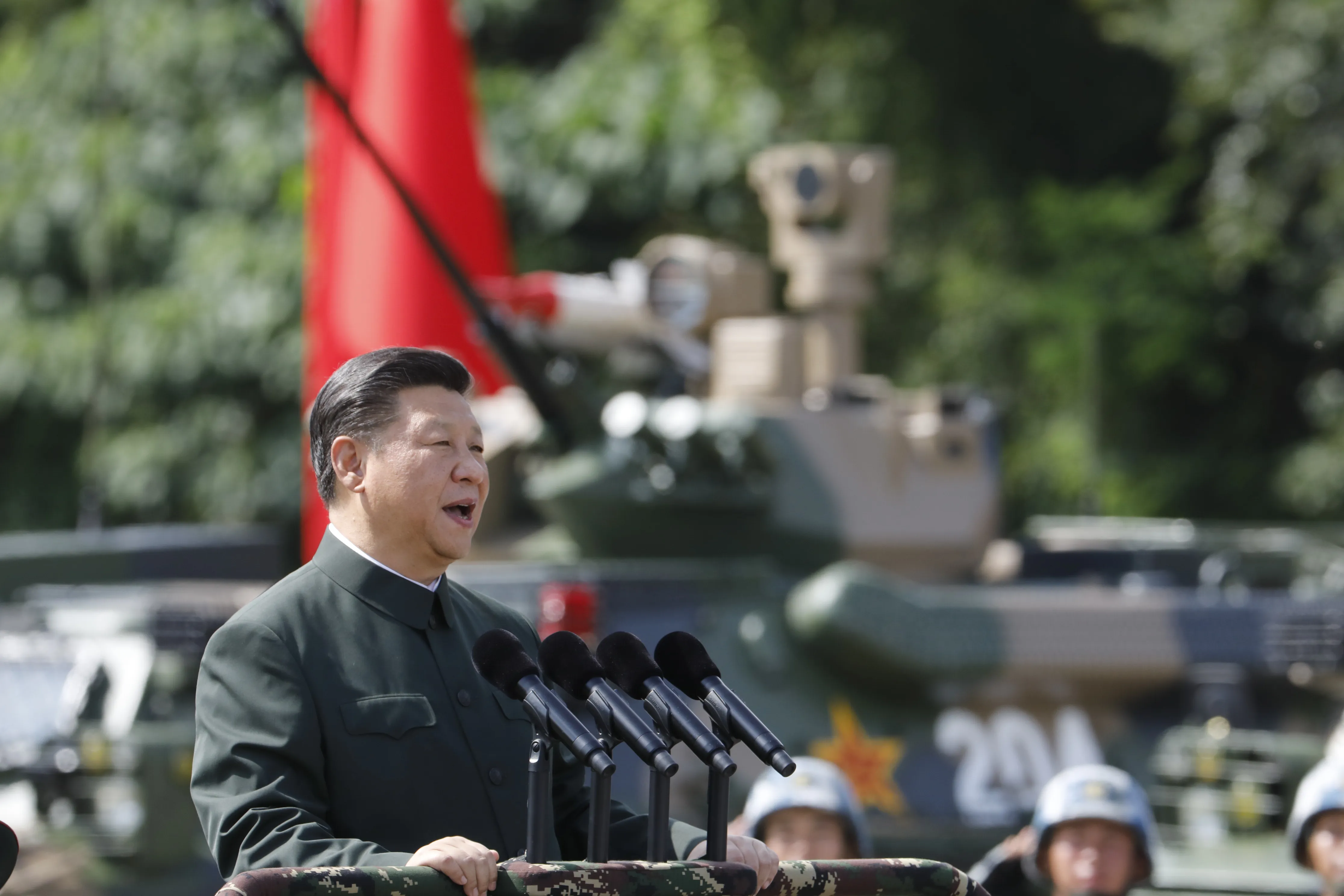
Wartime leader.Photographer: Anthony Kwan/Bloomberg
战时领导人。 摄影:Anthony Kwan/Bloomberg
Contests to set the terms of the world order, between geopolitical and ideological antagonists, rarely end in compromise. Sometimes, they explode in violence. When they end peacefully, as the Cold War did, it’s typically because one side surrenders. Don’t expect the US-China rivalry to go differently: That contest is essentially zero-sum.
地缘政治和意识形态对手之间争夺世界秩序的角逐, 很少以妥协告终。有时,它们会爆发暴力冲突。如果像冷战那样和平结束,通常是因为一方投降。别指望美中竞争会有什么不同:这场竞争本质上是零和博弈。
China can’t dominate the Asia-Pacific and win global primacy without eclipsing or destroying US power. America can’t preserve its own position without depriving China of the greatness Xi seeks. Maybe the US could buy a temporary détente if it betrayed Taiwan or blessed Chinese hegemony in East Asia. But why expect that arrangement to hold as China’s confidence, coercive leverage, and contempt for a retreating enemy grew?
中国若不超越或摧毁美国的力量,就无法主宰亚太地区并赢得全球主导地位。美国若不剥夺中国习近平所追求的伟大,就无法保住自身地位。如果美国背叛台湾或支持中国在东亚的霸权,或许可以换来暂时的缓和。但随着中国信心、强制手段以及对正在撤退的敌人的蔑视日益增强,我们又何必指望这种安排能够持续下去呢?
To be sure, dialogue isn’t pointless, and war isn’t unavoidable. Diplomacy can help avoid miscalculation. Sometimes common interests — such as US-Soviet cooperation to limit nuclear proliferation — emerge over time. But this struggle will likely last until it produces a winner. Accepting that reality is the first step toward coming out on top.
诚然,对话并非毫无意义,战争也并非不可避免。外交手段有助于避免误判。有时,共同利益——例如美苏合作限制核扩散——会随着时间的推移逐渐显现。但这场斗争很可能会持续下去,直到产生最终的胜利者。接受现实是迈向胜利的第一步。
Two Powerful Personalities
两位强大的人物
The Hopkins conference occurred two days after “liberation day” — when Trump capsized global markets by imposing the highest US tariffs in a century. Just days later, he backtracked after taking a beating from the bond market, pausing most tariffs on other countries while raising them higher against Beijing. The chaotic course of his second term contains a final insight: The US-China contest will ultimately be decided by the choices of individuals — and, perhaps, by the dramatic changes Trump has unleashed on America itself.
霍普金斯会议是在“解放日”两天后举行的——特朗普当天征收了美国百年来最高的关税,颠覆了全球市场。仅仅几天后,在债券市场遭受重创后,他又收回了之前的立场,暂停了对其他国家的大部分关税,同时提高了对中国的关税。他第二任期的混乱历程蕴含着一个最终的洞见:美中之争最终将取决于个人的选择——或许,也取决于特朗普在美国自身引发的巨大变化。

A News Quiz for Risk-Takers
面向冒险者的新闻测验
Play Pointed, the weekly quiz that tests what you know — and how confident you are that you know it.
玩 Pointed,每周进行一次测验,测试您所知道的知识 — — 以及您对所知道的知识的自信程度。
[
Play Now 立即播放立即播放立即播放
](https://www.bloomberg.com/games/pointed?source=plug "Play Now")
Personality matters in China, too. Beijing’s foreign policy found a new level of global assertiveness under Xi, who has a tolerance for strategic risk — and US hostility — far greater than his immediate predecessors. Xi has steeled China for a “new long march” by deemphasizing all-out growth in favor of ideological fervor and stricter authoritarianism. His impact on the US-China contest is challenged only by Trump’s.
在中国,人格魅力也至关重要。在习近平的领导下,北京的外交政策在全球展现出新的自信 ,他对战略风险——以及美国敌意——的承受力远超其前任。习近平淡化了全面发展,转而强调意识形态狂热和更严格的威权主义,为中国“新长征”做好了准备。他对中美竞争的影响力,只有特朗普能与之匹敌。
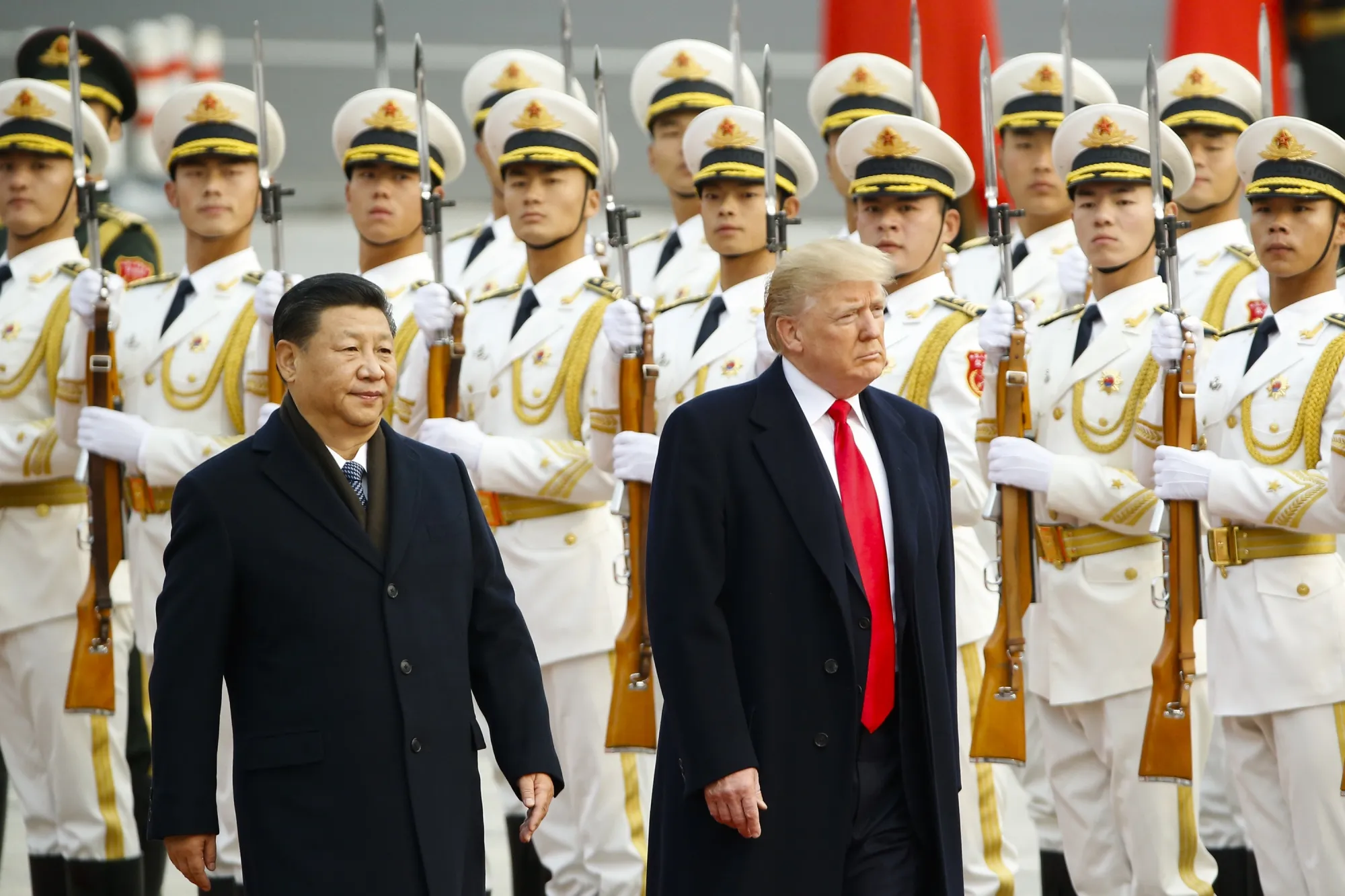
Mano a mano.Photographer: Thomas Peter/Getty Images
手拉手。 摄影师:Thomas Peter/Getty Images
Trump was the original “new cold warrior.” His first administration laid much of the groundwork — on trade, technology and defense issues — that Biden then built upon. Yet Trump’s presidency also led to anxious allies, flagrantly antidemocratic behavior and deep uncertainty about America’s global engagement. His second term is already a story of even starker extremes.
特朗普是最初的“新冷战战士”。他的第一届政府奠定了贸易、技术和国防等诸多基础,拜登随后在此基础上继续推进。然而,特朗普的总统任期也导致盟友焦虑不安、公然的反民主行为以及对美国全球参与的深度不确定性。他的第二任期已经呈现出更加极端的情况。
Since January, Trump has rained tariffs on China and promised a trillion-dollar defense budget. But he has also called Xi “one of the smartest people in the world.” He has antagonized, and sought to wrest territorial concessions from, fellow democracies. He has tested the boundaries of executive power and weaponized the strengths of the federal government against his political foes.
自一月份以来,特朗普对中国不断加征关税,并承诺提供数万亿美元的国防预算。但他也称习近平是“世界上最聪明的人之一”。他与民主国家对抗,并试图迫使它们做出领土让步。他试探行政权力的界限,并利用联邦政府的力量来对付他的政治对手。
His careless, improvisational style, and his neck-snapping policy reversals, are surely a source of alarm for countries that rely on the steady, competent application of American power.
他漫不经心、即兴发挥的风格以及令人咋舌的政策逆转,无疑会让那些依赖美国力量的稳定和有效运用的国家感到警惕。
It's hard to say where this will lead, or what sort of country Trump’s tenure will leave behind. But it has raised the disturbing prospect that the new cold war could become a brawl between two bellicose, disruptive states trying to topple the liberal international order. So many nations would lose in that scenario, regardless of whether Beijing or Washington won.
很难说这将导致什么结果,也很难说特朗普任期内会留下一个什么样的国家。但它提出了一个令人不安的前景:新冷战可能演变成两个好战、破坏性国家之间的争斗,旨在颠覆自由主义国际秩序。在这种情况下,无论北京还是华盛顿获胜,都会有许多国家遭受损失。
Perhaps the most sobering lesson regarding Cold War 2 is this: The future of that rivalry will depend on whether Donald Trump responsibly wages the great-power contest he declared almost a decade ago, or goes about wrecking those things we once expected a US president to defend.
或许关于第二次冷战最令人警醒的教训是:这场竞争的未来将取决于唐纳德·特朗普是否会负责任地开展他近十年前宣布的大国竞争,还是会破坏我们曾经期望美国总统捍卫的东西。
Brands is also a senior fellow at the American Enterprise Institute, co-author of “Danger Zone: The Coming Conflict with China,” and a senior adviser to Macro Advisory Partners.
布兰兹还是美国企业研究所的高级研究员、《危险地带:即将到来的与中国的冲突》一书的合著者,以及宏观咨询合作伙伴的高级顾问。
More From Hal Brands at Bloomberg Opinion:
彭博观点 Hal Brands 的更多评论:
- If Trump Makes Aggression Normal, Putin and Xi Win
如果特朗普让侵略行为正常化 ,普京和习近平就会获胜 - Every President Has a Foreign Policy. Trump Has Five.
每位总统都有一项外交政策。 特朗普有五项。 - America’s Best Strategy for Cold War II Is 200 Years Old
美国应对第二次冷战的最佳战略已有 200 年历史
Want more Bloomberg Opinion? Terminal readers head to OPIN
想了解更多彭博观点? 终端读者请前往 “OPIN
This column reflects the personal views of the author and does not necessarily reflect the opinion of the editorial board or Bloomberg LP and its owners.
本专栏仅反映作者的个人观点,并不一定反映编辑委员会或彭博有限合伙企业及其所有者的观点。