America must understand China’s weaknesses as well as its strengths
美国必须了解中国的弱点和优势
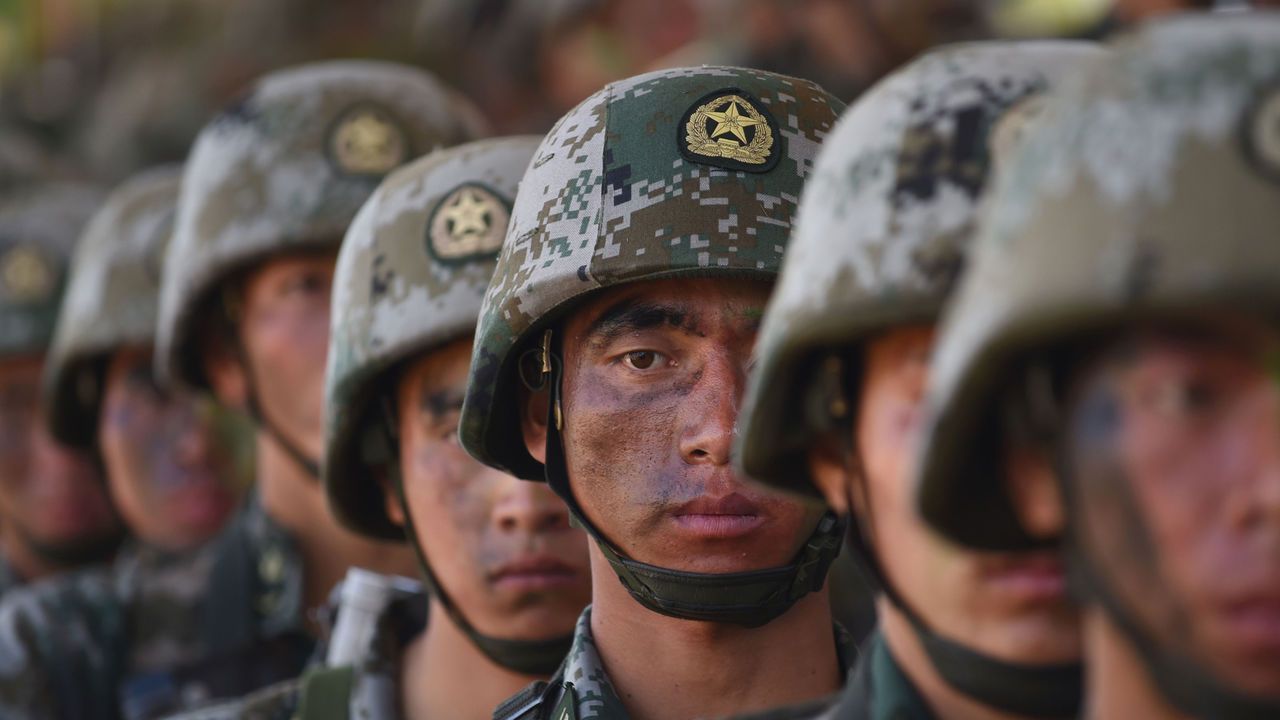
image: getty images
Nov 9th 2023
When joe biden meets Xi Jinping in San Francisco next week, the stakes will be high. Fighting in the Middle East threatens to become another theatre for great-power rivalry, with America backing Israel, and China (along with Russia) deepening links to Iran. In the South China Sea, China is harassing Philippine ships and flying its planes dangerously close to American ones. Next year will test Sino-American relations even more. In January a candidate despised by Beijing may win Taiwan’s presidential election. For most of the year, the race for the White House will be a cacophony of China-bashing.
亨乔·拜登下周在旧金山会见习近平,赌注会很高。中东的战斗有可能成为大国竞争的另一个战场,美国支持以色列,而中国(以及俄罗斯)加深了与伊朗的联系。在南中国海,中国正在骚扰菲律宾船只,并危险地将其飞机靠近美国船只。明年将进一步考验中美关系。今年1月,一位被北京鄙视的候选人可能会赢得台湾总统大选。在今年的大部分时间里,白宫的竞争将是抨击中国的嘈杂声。
America’s anti-China fervour is partly an overcorrection for its previous complacency about the economic, military and ideological threat the autocratic giant poses. The danger from China is real, and there are many areas where Mr Biden’s administration should stand up to its Communist rulers. But there is also a risk that America’s view of Chinese power slides into caricature, triggering confrontations and, at worst, an avoidable conflict. Even without war, that rush would incur huge economic costs, split America from its allies and undermine the values that make it strong. Instead, America needs a sober assessment not just of China’s strengths, but also of its weaknesses.
美国的反华狂热在一定程度上是对其先前对这个专制巨人构成的经济、军事和意识形态威胁的自满情绪的过度矫正。来自中国的危险是真实存在的,拜登政府应该在许多领域对抗共产党统治者。但也存在一种风险,即美国对中国实力的看法滑向讽刺,引发对抗,最坏的情况是引发一场本可避免的冲突。即使没有战争,这种匆忙也会造成巨大的经济成本,使美国与盟国分裂,并破坏使其强大的价值观。相反,美国不仅需要对中国的优势进行清醒的评估,还需要对其弱点进行清醒的评估。
What are those weaknesses? Among the least understood are its military shortcomings, which we describe in a special report on the People’s Liberation Army (pla). After decades of modernisation, it is formidable—terrifying, even. With 2m personnel and an annual budget of $225bn, it has the world’s biggest army and navy and a vast missile force. By 2030 it could have 1,000 nuclear warheads. Mr Xi has ordered it to be capable of invading Taiwan by 2027, say America’s spies. And the pla projects force more widely, too. It intimidates China’s neighbours in the South China Sea and skirmishes with India. It has a base in Africa and is seeking one in the Middle East.
这些弱点是什么?其中最不为人所知的是它的军事缺陷,我们在一份关于中国人民解放军(PLA)的特别报告中对此进行了描述。经过几十年的现代化改造,它令人生畏,甚至令人恐惧。它拥有200万人员和2250亿美元的年度预算,拥有世界上最大的陆军和海军以及庞大的导弹部队。到2030年,它可能拥有1000枚核弹头。美国间谍说,习近平已下令它能够在2027年之前入侵台湾。解放军项目的力量也更广泛。它恐吓中国在南中国海的邻国,并与印度发生小规模冲突。它在非洲有一个基地,并正在寻求在中东的一个基地。
Yet look more closely and the problems leap out. Drilled for decades on Soviet and then Russian military dogma, the pla is trying to absorb the lessons from Ukraine and to co-ordinate “joint” operations between services, which would be key to any successful invasion of Taiwan. Recruitment is hard. Despite the efforts of films such as “Wolf Warrior” to glamorise dreary military careers with mediocre pay, the pla struggles to hire skilled people, from fighter pilots to engineers. It has almost no experience of combat—Mr Xi calls this “the peace disease”. Its most deadly engagement in the past four decades or so was massacring its own citizens around Tiananmen Square in 1989.
然而,仔细观察,问题就跳出来了。几十年来,解放军一直在苏联和俄罗斯的军事教条上进行训练,试图吸取乌克兰的教训,并协调各军种之间的“联合”行动,这将是成功入侵台湾的关键。招聘很难。尽管《战狼》等电影努力以平庸的薪水美化沉闷的军事生涯,但解放军仍在努力雇用从战斗机飞行员到工程师的熟练人才。它几乎没有战斗经验——习近平称之为“和平病”。在过去四十年左右的时间里,它最致命的行动是1989年在天安门广场周围屠杀自己的公民。
Although China has made technological leaps, from hypersonic missiles to stealth fighters, its military-industrial complex trails behind in areas such as engines for aircraft and ships, and still relies on some foreign parts. American embargoes on semiconductors and components could make it harder to catch up with the global technological frontier. Despite Mr Xi’s endless purges, corruption appears to be pervasive. It may explain why General Li Shangfu was sacked as China’s defence minister this year after only a few months in the job.
尽管中国已经取得了技术飞跃,从高超音速导弹到隐形战斗机,但其军工联合体在飞机和船舶发动机等领域落后,并且仍然依赖一些外国零件。美国对半导体和零部件的禁运可能会使美国更难赶上全球技术前沿。尽管习近平进行了无休止的清洗,但腐败似乎无处不在。这也许可以解释为什么李尚福将军在上任仅几个月后就被解除了今年中国国防部长的职务。
China’s military frailties exist alongside its better-known economic ones. A property crunch and the Communist Party’s growing hostility towards the private sector and foreign capital are impeding growth. China’s gdp will increase by 5.4% this year and by only 3.5% in 2028, says the imf. Investment by multinational firms into China turned negative in the third quarter, for the first time since records began in 1998. China’s $18trn economy is big. But despite its much larger population, its gdp is unlikely to exceed America’s by much or at all by mid-century.
中国的军事弱点与其众所周知的经济弱点并存。房地产紧缩以及共产党对私营部门和外国资本日益增长的敌意正在阻碍增长。国际货币基金组织表示,中国今年的GDP将增长5.4%,到2028年仅增长3.5%。跨国公司对中国的投资在第三季度转为负值,这是自1998年有记录以来的首次。中国18万亿美元的经济规模很大。但是,尽管其人口要多得多,但到本世纪中叶,其GDP不太可能超过美国。
Behind China’s military and economic weaknesses lies a third, and deeper problem: Mr Xi’s dominance of an authoritarian system that no longer allows serious internal policy debate. Decision-making is deteriorating as a result. Economic technocrats have been sidelined by loyalists. By one estimate, pla troops spend a quarter of their time on political education, poring over such inspiring works as “Xi Jinping Thought on Strengthening the Military”. Mr Xi’s ideology is that the party, led by him, should command all things, always.
在中国军事和经济弱点的背后,隐藏着第三个更深层次的问题:习近平主导着一个不再允许严肃的内部政策辩论的威权体制。因此,决策正在恶化。经济技术官僚被忠诚者排挤在外。据估计,解放军部队将四分之一的时间花在政治教育上,仔细研究《习近平加强军队思想》等鼓舞人心的著作。习近平的意识形态是,以他为首的党应该永远指挥一切。
Personalised rule is bad for China—and perilous for the world. Lacking sound advice, Mr Xi might miscalculate, as Vladimir Putin did on Ukraine. However, he may be deterred by the knowledge that if he invades Taiwan but fails to conquer it, he could lose power. One thing is clear: despite periodic and welcome bouts of constructive diplomacy, such as recently resumed ministerial contacts with America, Mr Xi’s commitment to undermining liberal values globally will not diminish.
个人化统治对中国不利,对世界也是危险的。由于缺乏合理的建议,习近平可能会像弗拉基米尔·普京(Vladimir Putin)在乌克兰问题上所做的那样,打错算盘。然而,他可能会因为知道如果他入侵台湾但未能征服台湾,他可能会失去权力而感到畏惧。有一点是明确的:尽管定期进行建设性外交,例如最近恢复了与美国的部长级接触,但习近平破坏全球自由主义价值观的承诺不会减少。
How should America respond? Judiciously. Trying to cripple China’s economy by isolating it could cut global gdp by 7%, reckons the imf. Closing America’s borders to Chinese talent would count as self-sabotage. Any excessively hawkish policy risks dividing America’s network of alliances. Worst of all, too rapid an American military escalation could provoke a disastrous war if Mr Xi mistakes it for the prelude to American aggression, or worries that unifying Taiwan with the mainland—peacefully or by force—will only grow harder should he continue to bide his time.
美国应该如何应对?明智。国际货币基金组织(IMF)估计,试图通过孤立中国来削弱中国经济,可能会使全球GDP下降7%。对中国人才关闭美国边境将被视为自我破坏。任何过于强硬的政策都有可能分裂美国的联盟网络。最糟糕的是,如果习近平误以为美国军事升级是美国侵略的前奏,那么过快的军事升级可能会引发一场灾难性的战争,或者担心如果他继续拖延时间,台湾与大陆的统一——无论是和平的还是武力的——只会变得更加困难。
From complacency to confrontation to calibration
从自满到对抗再到校准
Instead, America needs to calibrate its China policy for the long run. Regarding the economy, that means openness, not isolation. The Economist supports limited controls on exports of technology with possible military applications, but not the broad embrace of tariffs and industrial policy that began under President Donald Trump and has continued under Mr Biden. To maintain its economic and technological edge, America should stay open for business—unlike China.
相反,从长远来看,美国需要调整其对华政策。就经济而言,这意味着开放,而不是孤立。《经济学人》支持对可能具有军事用途的技术出口进行有限控制,但不支持广泛接受唐纳德·特朗普总统领导下开始并在拜登领导下继续实施的关税和产业政策。为了保持其经济和技术优势,美国应该对商业保持开放——这与中国不同。
Militarily, America should seek deterrence but not domination. The Biden administration has rightly sold more arms to Taiwan, built up forces in Asia and renewed defence alliances there. But America should avoid a nuclear arms race or being seen to support formal independence for Taiwan. Dealing with China requires a realistic view of its capabilities. The good news is that its weaknesses and Mr Xi’s mistakes give the West time to counter the threat it poses.■
在军事上,美国应该寻求威慑,而不是统治。拜登政府正确地向台湾出售了更多武器,在亚洲集结了军队,并在那里恢复了防务联盟。但美国应该避免核军备竞赛,或被视为支持台湾正式独立。与中国打交道需要对中国的能力有一个现实的看法。好消息是,它的弱点和习近平的错误让西方有时间应对它构成的威胁。