保罗·克鲁格曼2023年9月1日
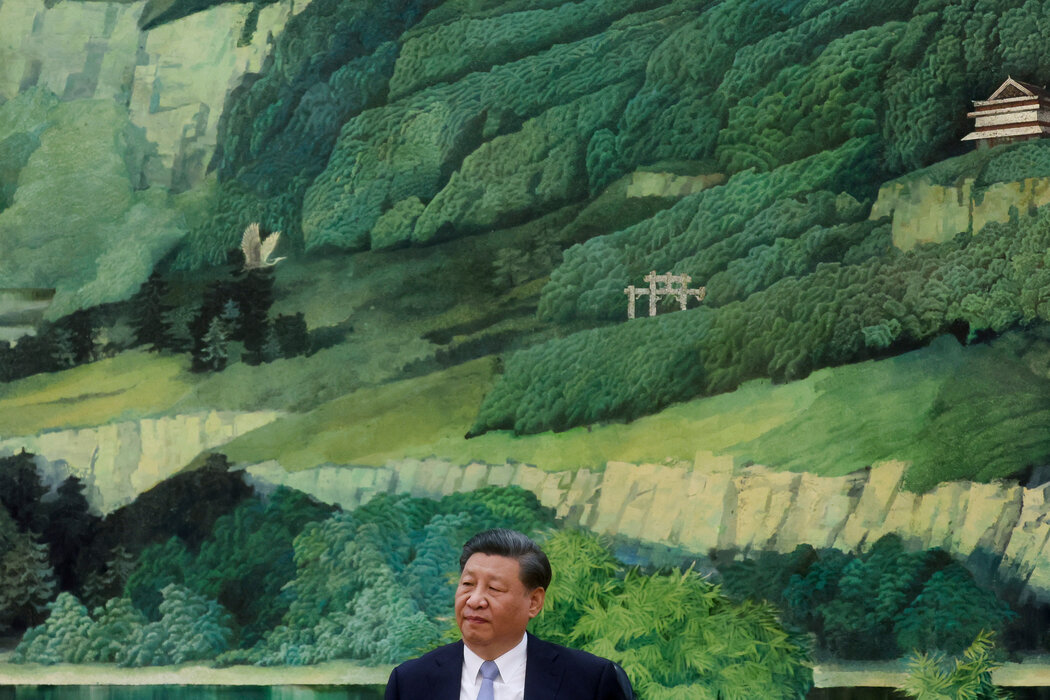 POOL PHOTO BY LEAH MILLIS
The narrative about China has changed with stunning speed, from unstoppable juggernaut to pitiful, helpless giant. How did that happen?
关于中国的叙述以惊人的速度发生了变化,从势不可挡的巨无霸变成了可怜无助的巨人。这是怎么发生的?
My sense is that much writing about China puts too much weight on recent events and policy. Yes, Xi Jinping is an erratic leader. But China’s economic problems have been building for a long time. And while Xi’s failure to address these problems adequately no doubt reflects his personal limitations, it also reflects some deep ideological biases within China’s ruling party.
我的感觉是,很多关于中国的文章过于强调近期的事件和政策。没错,习近平是一位反复无常的领导人。但中国的经济问题由来已久。习近平未能充分解决这些问题,无疑反映了他个人的局限性,但同时也反映了中国执政党内部一些深刻的意识形态偏见。
Let’s start with the long-run perspective.
让我们从长远角度出发。
For three decades, after Deng Xiaoping took power in 1978 and introduced market-based reforms, China experienced an enormous surge, with real gross domestic product increasing more than sevenfold. This surge was, to be fair, only possible because China started out technologically backward and could rapidly increase productivity by adopting technologies already developed abroad. But the speed of China’s convergence was extraordinary.
1978年邓小平掌权并推行市场化改革后的30年间,中国经历了一次巨大的飞跃,实际国内生产总值增长了七倍多。平心而论,中国之所以能够实现这一飞跃,完全是因为中国一开始技术落后,可以通过采用国外已开发的技术,迅速提高生产率。但中国的融合速度是惊人的。
Since the late 2000s, however, China seems to have lost a lot of its dynamism. The International Monetary Fund estimates that total factor productivity — a measure of the efficiency with which resources are used — has grown only half as fast since 2008 as it did in the decade before. You should take such estimates with large handfuls of salt, but there has been a clear slowdown in the rate of technological progress.
然而,自2000年代末以来,中国似乎失去了很多活力。国际货币基金组织估计,2008年以来,全要素生产率(衡量资源利用效率的指标)的增速仅为10年前的一半。我们应该慎重对待这样的估计,但技术进步的速度已经明显放缓。
And China no longer has the demography to support torrid growth: Its working-age population topped out around 2015 and has been declining since.
此外,中国的人口结构也不再能够支撑高速增长:其劳动年龄人口在2015年左右达到顶峰,此后一直在下降。
Many analysts attribute China’s loss of dynamism to Xi, who took power in 2012 and has been consistently more hostile to private enterprise than his predecessors. This seems to me to be too glib. Certainly Xi’s focus on state control and arbitrariness haven’t helped. But China’s slowdown began even before Xi took power.
许多分析人士将中国失去活力归咎于2012年上台的习近平,与前任相比,他一直对私营企业持敌视态度。在我看来,这种说法过于轻率。当然,习近平对国家控制的重视和独断专行对事态没有帮助。但中国的经济放缓在习近平上台之前就已经开始了。
And in general nobody is very good at explaining long-run growth rates. The great M.I.T. economist Robert Solow famously quipped that attempts to explain why some countries grow more slowly than others always end up in “a blaze of amateur sociology.” There were probably deep reasons China couldn’t continue to grow the way it had before 2008.
总的来说,没有人能很好地解释长期增长率。麻省理工学院的杰出经济学家罗伯特·索洛有一句著名的俏皮话:在试图解释为什么一些国家的经济增长速度比其他国家慢的时候,到最后永远就是“一通业余社会学咆哮”。中国不能像2008年以前那样继续增长,可能有深层次的原因。
In any case, China clearly can’t sustain anything like the high growth rates of the past.
无论如何,中国显然无法维持过去那样的高增长率。
However, slower growth needn’t translate into economic crisis. As I’ve pointed out, even Japan, often held up as the ultimate cautionary tale, has done fairly decently since its slowdown in the early 1990s. Why do things look so ominous in China?
然而,增长放缓并不一定会转化为经济危机。正如我所指出的,即使是经常被视为终极警示故事的日本,自上世纪90年代初经济放缓以来,也表现得相当不错。为什么中国的情况看起来如此不妙?
At a fundamental level, China is suffering from the paradox of thrift, which says that an economy can suffer if consumers try to save too much. If businesses aren’t willing to borrow and then invest all the money consumers are trying to save, the result is an economic downturn. Such a downturn may well reduce the amount business are willing to invest, so an attempt to save more can actually reduce investment.
从根本上说,中国正遭受节俭悖论的困扰——如果消费者试图储蓄太多,经济就会受到影响。如果企业不愿意借钱,然后把消费者试图储蓄的钱全部用于投资,那么结果就是经济衰退。这样的经济衰退很可能会减少企业愿意投资的金额,因此试图增加储蓄实际上会减少投资。
And China has an incredibly high national savings rate. Why? I’m not sure there’s a consensus about the causes, but an I.M.F. study argued that the biggest drivers are a low birthrate — so people don’t feel they can rely on their children to support them in retirement — and an inadequate social safety net, so they don’t feel that they can rely on public support either.
而中国的国民储蓄率高得令人难以置信。为什么?我不知道大家对原因是否有共识,但国际货币基金组织的一项研究认为,最大的驱动因素是低出生率,导致人们觉得不能依靠子女来支持退休后的生活——还有不充分的社会保障网络,导致人们觉得不能依靠公共支持度过退休后的生活。
As long as the economy was able to grow extremely fast, businesses found useful ways to invest all those savings. But that kind of growth is now a thing of the past.
只要经济能够以极快的速度增长,企业就会找到有用的方式来投资所有这些储蓄。但现在这种增长已成为过去。
The result is that China has a huge quantity of savings all dressed up with no good place to go. And the story of Chinese policy has been one of increasingly desperate efforts to mask this problem. For a while China maintained demand by running huge trade surpluses, but this risked a protectionist backlash. Then China channeled excess savings into a monstrous real estate bubble, but this bubble is now bursting.
其结果是,中国拥有大量储蓄,但却没有好的去处。而中国的政策则是越来越不遗余力地掩盖这一问题。有一段时间,中国通过巨额贸易顺差维持了需求,但这有可能引发保护主义反弹。然后,中国将过剩的储蓄投入到巨大的房地产泡沫中,但这个泡沫现在正在破裂。
The obvious answer is to boost consumer spending. Get state-owned enterprises to share more of their profits with workers. Strengthen the safety net. And in the short run, the government could just give people money — sending out checks, the way America has done.
显而易见的解决方法是刺激消费者支出。让国有企业与工人分享更多利润。强化社会保障体系。在短期内,政府可以直接给人们发钱——像美国那样发支票。
So why isn’t this happening? Several reports suggest that there are ideological reasons China won’t do the obvious. As best I can tell, the country’s leadership suffers from a strange mix of hostility to the private sector (just giving people the ability to spend more would dilute the party’s control); unrealistic ambition (China is supposed to be investing in the future, not enjoying life right now); and a sort of puritanical opposition to a strong social safety net, with Xi condemning “welfarism” that might erode the work ethic.
那么,为什么这种情况没有发生呢?几份报告指出,出于意识形态的原因,中国不会采取这样显而易见的行动。据我所知,这个国家的领导层对私营部门有着奇怪的敌意(让人们有能力花更多的钱就会削弱党的控制);不切实际的野心(中国应该投资未来,而不是享受现在的生活);还有一种对强大社会保障的清教徒式反对意见——习近平谴责“福利主义”可能会侵蚀勤劳的美德。
The result is policy paralysis, with China making halfhearted efforts to push the same kinds of investment-led stimulus that it used in the past.
其结果是政策失灵,中国只能半心半意地推行过去那种以投资为主导的刺激政策。
Should we write China off? Of course not. China is a bona fide superpower, with enormous capacity to get its act together. Sooner or later it will probably get past the prejudices that are undermining its policy response.
我们应该彻底不再把中国当回事吗?当然不应该。中国是一个真正的超级大国,有巨大的能力来协调行动。它可能迟早会摆脱那些目前正在破坏其政策反应的偏见。
But the next few years may be quite ugly.
但未来几年可能会相当糟糕。