The feud may have more to do with politics than health.
这场不和可能更多地与政治有关,而不是与健康有关。
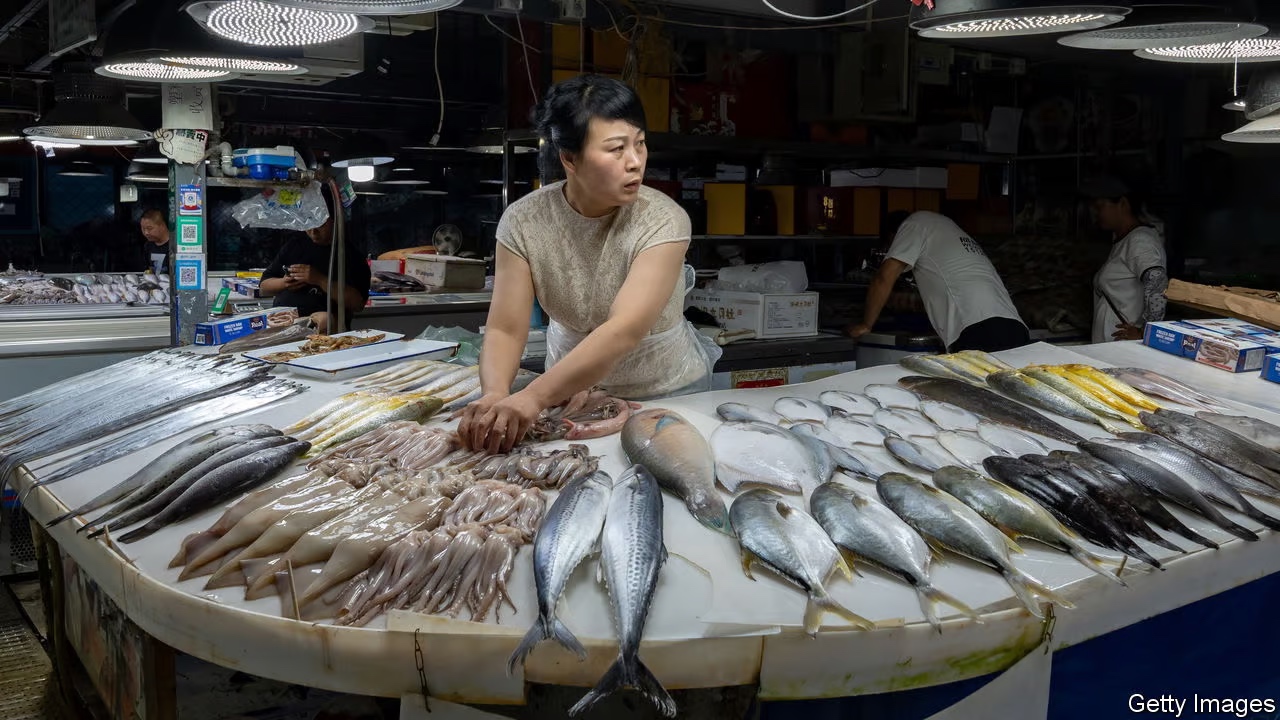
A vendor arranges seafood at her stall at a seafood market in Beijing, China.中国北京一家海鲜市场,一名小贩在摊位上摆放海鲜。
Aug 30th 2023 | BEIJING
Share
On august 24th the government of Japan began releasing water into the ocean. This is not just any water, mind you, but treated waste water from the Fukushima nuclear plant, which was destroyed 12 years ago by a tsunami. So Japan has dealt with the situation carefully, putting the liquid through an advanced filtration and dilution process. It still contains a potentially harmful radionuclide called tritium. But experts say the levels are so low that this is not a concern. Japan wants to release more than a million tonnes of the water over the next 30 years. Many scientists back the plan, as does the un’s International Atomic Energy Agency.
8 月 24 日,日本政府开始向海洋放水。请注意,这不是普通的水,而是福岛核电站处理后的废水,该核电站于 12 年前被海啸摧毁。因此日本谨慎处理了这一情况,对液体进行了先进的过滤和稀释处理。它仍然含有一种潜在有害的放射性核素,称为氚。但专家表示,含量如此之低,因此不必担心。日本希望在未来 30 年内释放超过 100 万吨的水。许多科学家支持该计划,联合国国际原子能机构也是如此。
China, though, has blasted Japan’s actions, calling them reckless. The government has banned imports of Japanese seafood. State media has endlessly covered the story, with little mention of the scientists who support the plan. Nationalist netizens have taken it from there, promoting unfounded claims about contaminated fish and poisoned humans, and calling for a boycott of Japanese goods. A few Chinese cities have experienced a salt-buying frenzy, with people queuing for hours to purchase a bag. Some seem to think that salt may become tainted or that it is useful in treating radiation sickness (it isn’t).
不过,中国谴责了日本的行为,称其鲁莽。政府已禁止进口日本海鲜。官方媒体无休止地报道这个故事,却很少提及支持该计划的科学家。民族主义网民则从那里开始宣扬有关鱼类受污染和人类中毒的毫无根据的说法,并呼吁抵制日货。中国的一些城市出现了抢购盐的热潮,人们排几个小时的队才能买到一袋盐。有些人似乎认为盐可能会被污染或者它有助于治疗放射病(事实并非如此)。
There are, to be sure, scientists and environmental activists who also oppose Japan’s plan. Some claim that more studies are needed to assess the potential impact. Others say that the authorities in Japan are not to be trusted. The disaster in Fukushima exposed alarming levels of official corruption, incompetence and deception.
可以肯定的是,也有科学家和环保活动人士反对日本的计划。一些人声称需要更多的研究来评估潜在的影响。还有人说日本当局不可信。福岛灾难暴露了官员腐败、无能和欺骗的惊人程度。
But China’s response may have more to do with politics than anything else. Anti-Japanese sentiment in the country runs deep. Chinese nationalists often invoke Japan’s invasion and occupation of China during the 1930s and 1940s. A dispute over five islets in the East China Sea a decade ago led to talk of war. More recently, officials in Beijing have watched with frustration as Japan draws closer to America and shows increasing support for Taiwan, a self-governing island that China claims. On the waste-water issue, Japan says China has rebuffed its offers to hold meetings where it would address any worries.
但中国的反应可能更多地与政治有关。该国的反日情绪根深蒂固。中国民族主义者经常援引日本在 1930 年代和 1940 年代对中国的入侵和占领。十年前,东海五个岛屿的争端引发了战争的讨论。最近,北京官员沮丧地看到日本与美国走得更近,并对中国声称拥有主权的台湾岛表示越来越多的支持。在废水问题上,日本表示,中国拒绝了举行会议以解决任何担忧的提议。
A different type of meeting has also complicated the situation. On August 18th President Joe Biden hosted Japan’s prime minister, Kishida Fumio, and South Korea’s president, Yoon Suk-yeol, for an unprecedented summit. A rancorous history has often divided Japan and South Korea. China’s assertiveness has brought them closer. Now, though, China may spy an opportunity to drive a wedge between them. South Korea’s government has supported Japan’s waste-water plan, but the Korean opposition and much of the public are against it. (The Japanese public is also divided on the issue.)
不同类型的会议也使情况变得复杂。 8 月 18 日,美国总统乔·拜登接待了日本首相岸田文雄和韩国总统尹锡烈,举行了一场史无前例的峰会。充满敌意的历史常常导致日本和韩国分裂。中国的自信使他们的关系更加紧密。不过现在,中国可能发现了一个离间他们的机会。韩国政府支持日本的废水处理计划,但韩国反对派和许多公众都反对。 (日本公众在这个问题上也存在分歧。)
For China, the waste-water release has come at a convenient time. The country’s economy is struggling. Each week seems to bring a new batch of disappointing data. Japan’s actions have provided a distraction from the bad news. But concerns about the economy may undermine China’s response. No country buys more seafood from Japan. The ban on imports risks hurting Chinese businesses nearly as much as Japanese fishermen. It may not last long. ■
对于中国来说,废水排放来得正是时候。该国经济陷入困境。每周似乎都会带来一批新的令人失望的数据。日本的行动分散了人们对坏消息的注意力。但对经济的担忧可能会削弱中国的应对措施。没有哪个国家从日本购买更多的海鲜。进口禁令对中国企业的伤害几乎与日本渔民一样大。它可能不会持续太久。 ■