It is already changing how pharma companies make drugs
它已经改变了制药公司生产药品的方式
Aug 29th 20232023 年 8 月 29 日 经济学人
“America is the piggy-bank of the pharma world,” gripes David Mitchell of Patients for Affordable Drugs, a consumer lobbying group. There is some truth to this. America is the world’s largest pharmaceutical market, with $630bn in sales in 2022, or 42% of the worldwide total. Its contribution to profits—65% of the global haul—is greater still. American patients have long borne the burden of these juicy returns. Prescription medicines in America cost two to three times more on average than in other wealthy countries (see chart). Patients’ out-of-pocket expenses, the slice of drug costs not covered by insurance, are also among the highest in the world.
“美国是制药界的存钱罐,”消费者游说组织平价药物患者组织的戴维·米切尔抱怨道。这有一定道理。美国是全球最大的医药市场,2022 年销售额将达到 6300 亿美元,占全球总销售额的 42%。它对利润的贡献更大——占全球利润的 65%。美国患者长期以来一直承受着这些丰厚回报的负担。美国的处方药平均价格是其他富裕国家的两到三倍(见图表)。患者的自付费用(保险未涵盖的部分药物费用)也是世界上最高的。

One reason for high prices is that, unlike other countries, America has not regulated drug prices. Until recently it was illegal for Medicare, the government-funded health insurance for over-65s, to haggle with drug companies. That is set to change. The Inflation Reduction Act (ira), passed last August, gives Medicare the power to negotiate directly with pharmaceutical firms. It also forces companies to pay a rebate to Medicare if their drug prices rise faster than inflation. The Congressional Budget Office, a federal agency, estimates that price-capping measures will lop $96bn from the federal deficit by 2031.
价格高的原因之一是,与其他国家不同,美国没有对药品价格进行监管。直到最近,医疗保险(Medicare)(政府资助的针对 65 岁以上老年人的健康保险)与制药公司讨价还价还是违法的。这种情况将会改变。去年八月通过的《降低通货膨胀法案》(ira) 赋予医疗保险直接与制药公司谈判的权力。如果药品价格上涨速度快于通货膨胀,它还迫使公司向医疗保险支付回扣。联邦机构国会预算办公室估计,到 2031 年,价格上限措施将使联邦赤字减少 960 亿美元。
On August 29th the government named the first ten drugs chosen for price negotiation, which will take effect in 2026. Pharma firms have little choice but to agree to the price set by officials. Any that walk away will have to choose between paying stringent fines, or withdrawing all of their drugs from the Medicare programme.
8月29日,政府公布了首批10种药物进行价格谈判,该价格谈判将于2026年生效。制药公司别无选择,只能同意官方制定的价格。任何放弃的人都必须做出选择:要么支付严厉的罚款,要么从医疗保险计划中撤回所有药物。
The backlash from the pharma industry has been fierce. “This is not ‘negotiation.’ It is tantamount to extortion,” protested Merck, an American drugmaker, in a lawsuit against the government. A slew of pharma giants—Astellas, Boehringer Ingelheim, Bristol Myers Squibb and Johnson & Johnson—have joined the legal bandwagon, challenging price-setting provisions in the ira. Pharma bosses are bracing for price cuts of between 25% and 95% in drugs chosen for price negotiation. Since the law’s passage over 50 companies have blamed the ira in earnings calls for clouding their prospects. It is already having some unwanted side-effects.
制药行业的强烈反对。 “这不是‘谈判’,这等于敲诈勒索,”美国制药商默克公司在针对政府的诉讼中抗议道。许多制药巨头——安斯泰来、勃林格殷格翰、百时美施贵宝和强生——都加入了法律行列,挑战了 ira 中的定价规定。制药公司老板们正准备将参加价格谈判的药品降价 25% 至 95%。自该法律通过以来,已有 50 多家公司在财报电话会议上指责 ira 给他们的前景蒙上了阴影。它已经产生了一些不需要的副作用。
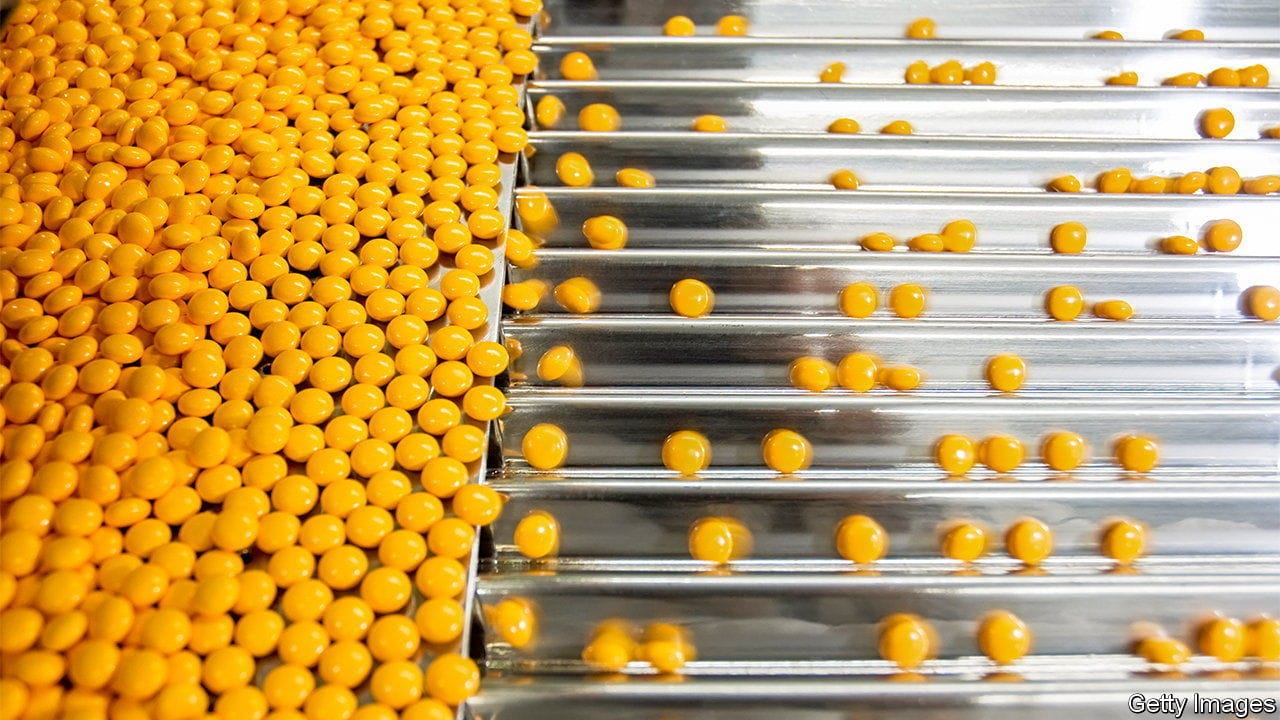
One issue is a provision in the law that could change the types of drugs that these companies develop. Most medicines are either small-molecule drugs or large-molecule drugs. The former are chemical-based pills of the kind that line medicine cabinets. Large-molecule drugs, also called biologics, are more complex and must be injected into the bloodstream. The ira grants biologics 13 years of pricing freedom after a drug is approved, whereas small-molecule drugs get only nine years post-approval before they face Medicare’s bean counters. Jonathan Kfoury of lek, a consultancy, estimates that small-molecule brands could lose between 25% and 40% in overall revenue due to early price caps.
一个问题是法律中的一项条款可能会改变这些公司开发的药物类型。大多数药物要么是小分子药物,要么是大分子药物。前者是药柜里那种化学药丸。大分子药物,也称为生物制剂,更为复杂,必须注射到血液中。 ira 在药物获得批准后给予生物制剂 13 年的定价自由,而小分子药物在批准后仅获得 9 年的时间,然后就将面临医疗保险的细算。咨询公司 lek 的 Jonathan Kfoury 估计,由于早期的价格上限,小分子品牌的总收入可能会损失 25% 至 40%。
Executives fret that the new rules will dissuade innovation in small-molecule pills. Last November Eli Lilly, a big American drugmaker, binned a small-molecule cancer drug from its pipeline, blaming the ira for making the investment unviable. In the same month Alkermes, an Irish biotech firm, announced plans to spin off its biologics-focused oncology business into an independent company. Richard Pops, the company’s chief executive, explained that the ira had “made biologic medicines more valuable”.
高管们担心新规定将阻碍小分子药物的创新。去年 11 月,美国大型制药商礼来 (Eli Lilly) 将一种小分子抗癌药物从其产品线中剔除,并指责 ira 导致这项投资不可行。同月,爱尔兰生物技术公司 Alkermes 宣布计划将其专注于生物制剂的肿瘤业务剥离为一家独立公司。该公司首席执行官理查德·波普斯 (Richard Pops) 解释说,爱尔兰共和军“使生物药品变得更有价值”。
Another contentious provision in the law starts the pricing clock at a drug’s launch. Pharma firms usually introduce a new drug to small patient populations, like those with rare conditions or late-stage diseases, who have few alternatives, before widening availability to others. With only nine years in which to maximise returns, companies will try to “delay the clock” by launching their drug for the largest disease areas, believes David Fredrickson, who leads the oncology division of AstraZeneca, an Anglo-Swedish pharma giant. Genentech, an American biotech firm owned by Roche, a Swiss drugmaker, is considering postponing the launch of its upcoming small-molecule drug for ovarian cancer. Instead, the company may wait a few years until the drug has been cleared for use in the much larger prostate cancer market.
该法律中另一项有争议的条款是从药物上市时开始定价。制药公司通常会先向少数患者推出新药,例如患有罕见疾病或晚期疾病的患者,他们几乎没有其他选择,然后再向其他人提供新药。英瑞制药巨头阿斯利康 (AstraZeneca) 肿瘤部门负责人大卫·弗雷德里克森 (David Fredrickson) 认为,要实现回报最大化,公司将在九年内尝试通过推出针对最大疾病领域的药物来“拖延时间”。瑞士制药商罗氏旗下的美国生物技术公司基因泰克正在考虑推迟推出即将推出的治疗卵巢癌的小分子药物。相反,该公司可能会等待几年,直到该药物被批准用于更大的前列腺癌市场。
The impact of the ira may be muted, at least until the end of this decade: JPMorgan Chase, a bank, suggests that the new law’s price cuts will be only a “modest drag” on big pharma’s growth in its first few years. But as more medicines are added, drugmakers will feel more pain. And if the new rules dissuade pharma firms from developing small-molecule drugs, they could prove counterproductive, by raising prices in the long term. Unlike biologics, which are harder to copy, small-molecule pills are flooded with cheaper knockoffs once their patent expires.
至少在本十年末之前,爱尔兰共和军的影响可能会减弱:摩根大通银行表示,新法律的降价只会对大型制药公司最初几年的增长产生“适度的拖累”。但随着更多药物的添加,制药商会感受到更多的痛苦。如果新规定阻止制药公司开发小分子药物,从长远来看,它们可能会提高价格,从而适得其反。与难以复制的生物制剂不同,小分子药丸一旦专利到期,就会充斥着更便宜的仿制品。
Alexis Borisy, a biotech investor, notes that uncertainty around the returns for small-molecule medicines is already influencing funding decisions. That is a problem. Big pharma relies on smaller, more agile biotech firms for ideas. Between 2015 and 2021, 65% of the 138 new drugs launched by big pharma originated in external partnerships, mostly with smaller firms. Given America’s disproportionate role in the discovery of new therapies, disruptions to the innovation pipeline could have far-reaching consequences.■
生物技术投资者 Alexis Borisy 指出,小分子药物回报的不确定性已经影响了融资决策。这是一个问题。大型制药公司依赖更小、更灵活的生物技术公司来获取创意。 2015 年至 2021 年间,大型制药公司推出的 138 种新药中,65% 源自外部合作伙伴关系,其中大部分是与较小的公司合作。鉴于美国在发现新疗法方面发挥着不成比例的作用,创新渠道的中断可能会产生深远的影响。